

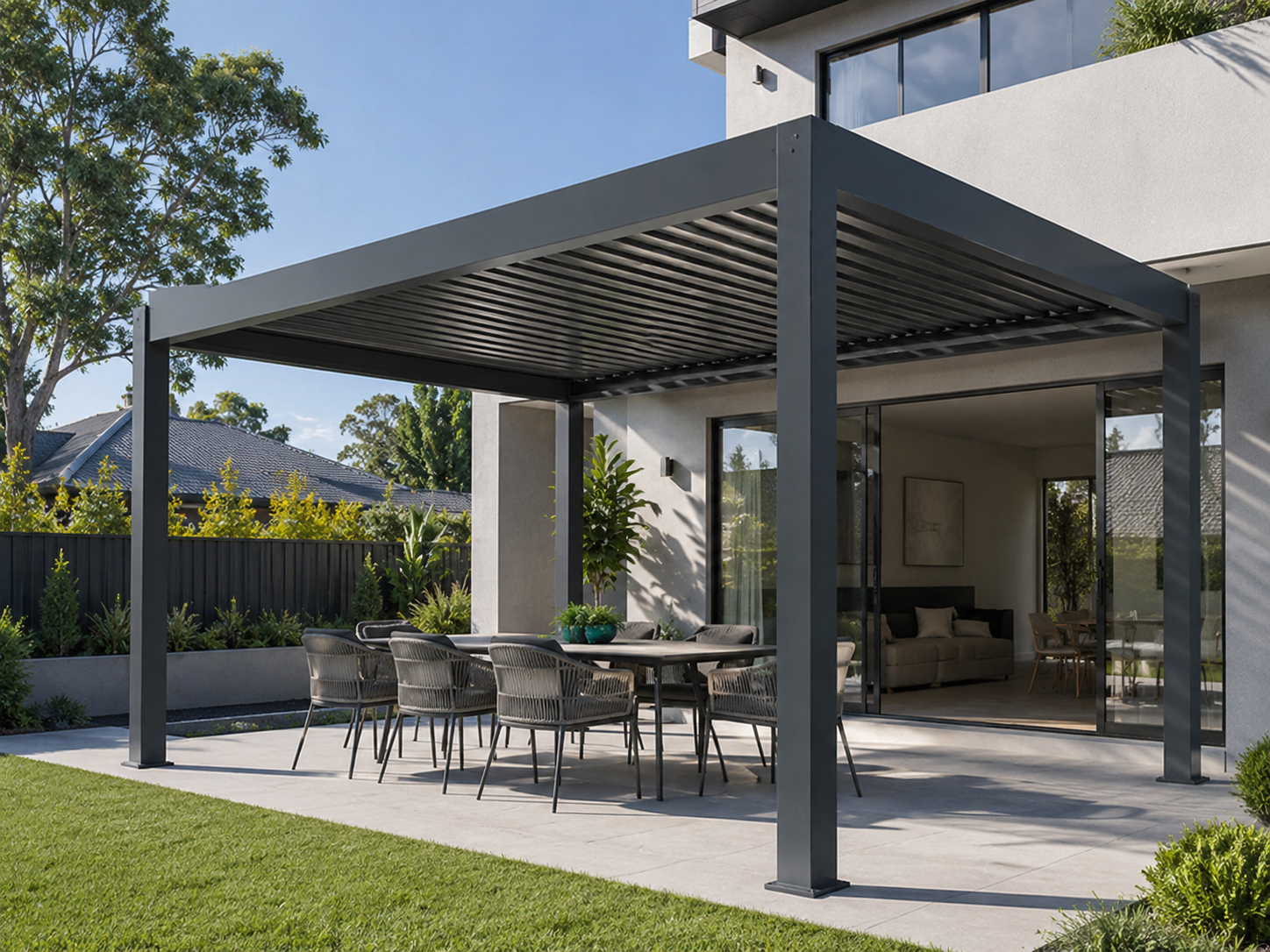
A pergola kit can look easy to choose online. One neat photo, one size dropdown, one colour option, and the job feels almost done. However, the real decision starts before checkout. The frame has to suit the patio, the wall, the furniture, the afternoon sun, and the way the outdoor area is used on a normal weeknight.
This guide keeps the decision practical. It covers material, size, freestanding and wall-mounted layouts, manual or motorised louvres, delivery access, installation support, warranty notes, and the point where a quick size check with Everpergo can prevent an awkward order.
Material
Material is the first check because it decides how the structure feels after the first summer, not just how it looks on the product page. Timber can look warm, yet it may need staining and more upkeep. Steel can feel strong, yet surface care and corrosion checks matter in exposed outdoor areas. For many Australian patios, a powder-coated aluminium pergola kit is the more sensible starting point.
Aluminium keeps the frame clean, sharp, and low-maintenance. It also works well with rendered walls, brick homes, tiled patios, pool paving, and modern outdoor furniture. More importantly, the structure does not fight the rest of the house. It can sit beside sliding doors or garden edges without looking like a temporary shade add-on.
Everpergo aluminium louvred pergolas are built around a modular pergola system. That matters because the frame is not only a roof. It becomes the base for a dining corner, lounge zone, BBQ setting, poolside shade, LED lighting, wind blinds, or a more finished outdoor room later.

What to check in the material details
- Check the frame material, coating finish, and colour against the house exterior.
- Look at post and beam proportions, because these parts stay visible every day.
- Check how the louvres operate, not only whether the roof opens and closes.
- Think about future accessories, such as LED lighting, blinds, or side protection.
- Read warranty wording carefully, especially for structure, motors, accessories, and exclusions.
However, material should not be judged from one photo. A small courtyard near a brick wall has different needs from a poolside area with wind exposure. The right product should match the real location, not only the cleanest lifestyle image.
Size
Size is where many pergola kit mistakes happen. A 3×3 metre frame may look generous online, yet a dining table, four chairs, chair pull-back space, and a walking line can use that area quickly. At the same time, choosing the largest size first can make a narrow patio feel heavy.
The better method is simple. Measure the patio, then mark the post positions with tape, chalk, or four small boxes. After that, walk through the layout for five minutes. Open the door, pull back a chair, move around the BBQ, and check whether a post blocks the natural path from the kitchen to the table.
For compact patios, the P120 is a practical starting point because it is designed around smaller outdoor areas and simple manual control. For broader dining areas, garden-facing lounges, and larger patio zones, the P180 offers more sizing flexibility and a stronger visual presence.

A quick size planning table
| Outdoor use | What to check before ordering | Common mistake |
|---|---|---|
| Small lounge corner | Mark sofa depth, coffee table space, and the main walking line. | Posts sit too close to the seating edge. |
| Outdoor dining | Allow enough room for chairs to pull back on the active sides. | The table fits, but movement feels tight. |
| Poolside shade | Check paving edges, drainage, and the direction of the lounge chairs. | Shade lands away from the main sitting area. |
| Wall-side patio | Check door clearance, gutter position, downpipes, and wall height. | The beam line clashes with existing house details. |
Which Everpergo model fits which space?
P120
Best for compact patios, courtyards, balconies, small gardens, and simple shade needs. It suits spaces where a clean aluminium frame and manual louvres are enough.
P180
Best for medium to larger patios, outdoor dining, garden lounges, and spaces where manual or motorised louvres may both be worth comparing.
Custom sizing
Best when posts, doors, drainage, walls, or furniture lines do not match standard sizes. Photos and measurements make this conversation much clearer.
In practice, the best pergola kit is not always the biggest one. A better fit comes from matching shade, furniture, door movement, post locations, and the way the area feels at 3 pm, when glare and heat usually become more obvious.
Freestanding vs wall mounted
Freestanding and wall-mounted layouts solve different problems. A freestanding pergola works well when the outdoor zone sits away from the house. Poolside paving, a garden dining area, or a separate lounge corner can all feel natural with four posts and a clear frame.
By contrast, a wall-mounted layout often feels right when the patio starts at the back door. It can make the space feel like a direct extension of the kitchen or living room. However, the wall, gutter line, downpipes, window height, and door clearance must be checked before the order is finalised.

When freestanding usually makes more sense
A freestanding layout usually works best when the pergola is meant to define a separate outdoor room. For example, a poolside lounge may need shade over the chairs, not a direct connection to the back door. In that case, the key checks are slab condition, post position, drainage, and space around all four sides.
When wall-mounted usually feels better
A wall-mounted layout usually feels better when the outdoor space is part of everyday movement. The table may sit near the kitchen. The lounge may face the garden. The roof line may need to sit neatly under an eave. Still, this is not a layout to guess from a product photo. Wall fixing, drainage, and door swing deserve a proper check.
Manual vs motorised
Manual or motorised louvres are not only a convenience choice. They decide how often the roof will actually be adjusted. A manual system can work very well on a compact patio where the handle is easy to reach and the routine is simple: open for morning air, adjust at lunch, close when the sun shifts.
Motorised louvres make more sense when the structure is larger, the roof is adjusted often, or the outdoor space is used for longer meals and weekend gatherings. Nobody wants to move chairs and reach for a handle halfway through dinner if a motorised option would suit the way the space is used.
However, motorised does not automatically mean better for every home. A small courtyard with one bistro table may not need it. A larger dining area with LED lighting, deeper coverage, and regular evening use may benefit from it every week. That is the real difference.

A clear rule before choosing
Manual louvres suit smaller areas, simpler routines, and tighter budgets. Motorised louvres suit larger roofs, frequent adjustments, and patios used across more hours of the day. This rule is blunt, but it prevents two common mistakes: paying for features that will not be used, or saving money on a roof that becomes annoying to adjust.
Delivery and installation
Delivery and installation checks should happen before checkout. A modular pergola system includes large structural components, so access matters. A narrow side path, steep driveway, apartment loading zone, low carport, or tight courtyard can change how the order should be planned.
Installation also deserves a realistic view. Some straightforward patios may suit experienced DIY work. However, wall-mounted layouts, larger spans, uneven paving, drainage questions, and motorised options usually need more planning. It is better to check early than to discover a wall light, downpipe, or slope after the frame arrives.
Approval rules can vary by state, council area, structure size, attachment method, and site condition. As a useful outside reference, the Australian Government’s YourHome shading guide explains how orientation and shading affect comfort around a home. Local building and planning requirements should still be checked before finalising an attached or larger outdoor structure.
Pre-order checklist
- Measure width, depth, height, door clearance, and the main walking path.
- Mark post positions on the ground and test real movement for five minutes.
- Confirm whether the structure should be freestanding or wall-mounted.
- Choose manual or motorised louvres based on daily use, not only price.
- Check delivery access from the street to the final outdoor area.
- Review warranty notes for the frame, motorised parts, accessories, and exclusions.
- Prepare photos of the patio, wall, gutter, downpipes, doors, paving, and drainage direction.
For example, a brick wall may look simple until a downpipe sits exactly where a beam needs to land. A poolside layout may look open until the best shade position places a post too close to the paving edge. Small details like these are easy to miss online, but they are easy to catch with photos and measurements.
Related reading
These guides connect the main ordering checks with height, wall-mounted layouts, custom sizing, and drainage planning.
Next Step Before Ordering
A good pergola kit decision should feel calm, not rushed. The material should suit the home. The size should match furniture movement. The layout should work with doors, walls, gutters, and drainage. The louvre option should match the way the outdoor area is actually used.
Before ordering, prepare four things: patio measurements, two or three site photos, the preferred layout, and a short note about how the space will be used. A compact lounge, a BBQ corner, a poolside setting, and a full dining area do not need the same answer.
Explore Everpergo aluminium louvred pergolas, compare P120 and P180 against the planned space, and contact the team when size, installation, or configuration details need a second look. The right pergola kit should fit the site before it fits the cart.
Explore Everpergo Aluminium Pergolas Contact the Team for Size Support
Three practical actions before ordering
- Measure the patio twice, then mark post positions on the ground before choosing the final size.
- Choose freestanding or wall-mounted after checking doors, gutters, walls, downpipes, and drainage.
- Confirm manual or motorised louvres, delivery access, warranty notes, and installation support before payment.
FAQ
What should be checked before ordering an aluminium pergola online?
Check the measured size, post positions, roof operation, configuration, delivery access, warranty notes, and installation requirements. Photos of the patio, walls, doors, and drainage direction make the final check much more useful.
Is a freestanding pergola better than a wall-mounted pergola?
Neither layout is automatically better. Freestanding structures suit garden, poolside, and open paved areas. Wall-mounted structures suit patios connected to a door, kitchen, or lounge area. The wall, gutter line, and fixing surface should be checked first.
Are manual or motorised louvres better for a backyard pergola?
Manual louvres suit compact areas and simple routines. Motorised louvres suit larger outdoor rooms, frequent adjustments, and spaces used for dining or entertaining across the day. The better choice depends on use pattern and roof size.
Can a modular pergola system fit a small patio?
Yes, a modular pergola system can work well in a small patio when size, post positions, and furniture movement are planned carefully. The layout should leave enough room for door swing, chair movement, and a clear walking line.
Why contact Everpergo before finalising the order?
A quick check can reveal details that a product page cannot show, such as downpipes, uneven paving, tight access, wall height, or awkward post locations. Measurements and photos help reduce the risk of choosing the wrong size or configuration.
Share:
Patio Roof Options in Australia: Which Roof Type Is Right for Your Home?
Aluminium Pergola Kit vs Traditional Patio Cover: Which Gives Better Long-Term Value?