

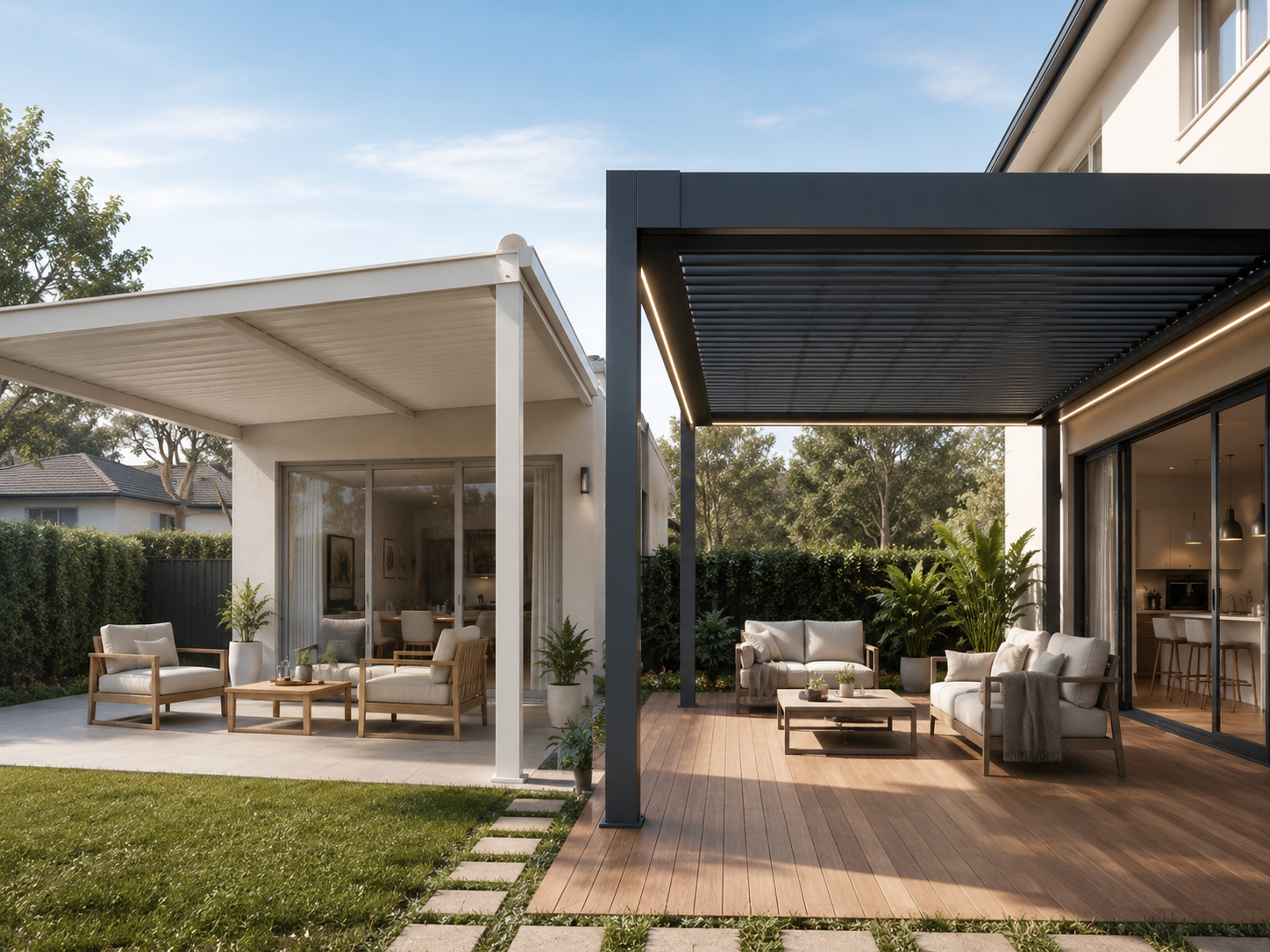
A shaded patio can look finished on day one, then feel limited after the first hot weekend. That is why the pergola kit and patio cover comparison matters. A traditional patio cover can be useful for simple shade. However, an aluminium pergola kit can do more for daily outdoor living because it helps manage light, airflow, rain response, furniture layout and long-term value in one structure.

Initial Cost
At first, a traditional patio cover can feel like the easier call. It is familiar, direct and often chosen when the immediate problem is harsh sun over a paved area. However, the first cost does not show how the space will feel at 8 am, 2 pm and 7 pm.
For example, a west-facing patio may need shade in the afternoon, airflow before dinner and softer light when the house starts to cool. A fixed cover usually stays in one mode. By contrast, an aluminium pergola kit with adjustable louvres can change with the day.
Therefore, long-term value should be judged by use, not only by the first invoice. A patio used twice a month has different needs from an outdoor dining space used several nights a week. In that second case, a pergola kit can justify the extra planning because it improves comfort across more situations.
| Comparison point | Traditional patio cover | Aluminium pergola kit |
|---|---|---|
| Main purpose | Creates fixed shade and overhead cover | Creates a flexible outdoor living zone |
| Daily comfort | Mostly fixed after installation | Adjusts light, airflow and shade angle |
| Future use | May need separate shade or lighting upgrades | Can pair with blinds, lighting and glass doors |
| Best suited to | Simple shade zones, side paths and utility areas | Dining patios, poolside lounges and everyday alfresco areas |
Materials
Material choice is where the value gap starts to show. Traditional patio cover options can include timber, steel, polycarbonate or mixed roofing systems. Some look warm and familiar. However, each material brings a different cleaning, repainting or replacement routine over time.
An aluminium structure has a cleaner long-term rhythm. It suits modern brick, render, weatherboard and garden-facing homes because it looks structured without feeling heavy. Also, powder-coated aluminium does not need the same staining or sealing routine that timber often asks for after a few seasons.
This is one reason Everpergo focuses on aluminium louvred pergolas across the range. For a wider look at available models, the Everpergo Products collection helps compare compact, mid-size and larger pergola options before narrowing the layout.

Where aluminium makes practical sense
In a paved courtyard, the pergola frame often sits close to doors, windows and outdoor furniture. As a result, the structure needs to look intentional from both inside and outside the house. Aluminium works well here because the lines stay crisp and the roof does not visually crowd the area.
In a poolside or garden lounge, the same material has another advantage. It can define a seating zone without turning the backyard into a heavy extension. That balance matters when the goal is comfort without losing the open feeling of the garden.
Weather Control
Weather control is the strongest reason to compare a pergola kit against a traditional patio cover. A fixed cover gives shade, and that may be enough for a narrow walkway or a small laundry-door area. However, a main outdoor living space usually needs more than shade from above.
Adjustable louvres help because they can open for airflow and close for stronger overhead shelter. In the morning, a partly open roof can keep the space bright. Later, when the afternoon sun drops lower, the louvres can be angled to reduce glare across a table or lounge chair.
The Australian Government’s YourHome guidance notes that pergolas can help shade homes, while low-angle eastern and western sun may still need careful planning. So, the best outdoor cover is not only about roof area. It is also about orientation, sun angle, side exposure and how the patio is used through the day.
That is where an aluminium louvred pergola feels more complete than a simple patio cover. It does not promise total protection from every weather event. Instead, it gives the outdoor area more useful settings for real Australian conditions.

A simple comfort test
A useful test is to stand in the patio area at three times: late morning, mid-afternoon and early evening. If the space feels too bright, too still or too exposed at any of those times, a fixed patio cover may solve only part of the problem.
By comparison, an aluminium pergola kit can support a more layered setup. The louvres handle overhead light and rain response. A side blind can reduce crosswind or low sun. Lighting can help the same area stay usable after dinner starts.
Maintenance
Maintenance is easy to ignore before installation. However, it becomes very real after autumn leaves, dry summer dust and the first storm of the season. A patio cover that needs constant attention can lose its value faster than expected.
Traditional patio cover maintenance depends on the material. Timber may need staining or sealing. Some roof panels may need checks for marks, fixings or ageing. Gutters and drainage paths still need attention after heavy rain.
An aluminium structure usually keeps the routine simpler. The main tasks are practical: wash the frame when dust builds up, keep drainage areas clear and check moving parts if the louvres feel uneven. These small jobs matter because the pergola is exposed every day, not just during weekend use.
Also, maintenance should be considered before the layout is chosen. If roof channels are hard to reach, cleaning becomes annoying. If one post sits where leaves collect, drainage checks become more frequent. A clean plan at the start saves work later.
Maintenance questions to ask before choosing
- Where will leaves, dust and rainwater move after a storm?
- Can the roof channels be reached safely for routine cleaning?
- Will the patio need side protection from wind or low-angle sun?
- Does the furniture layout leave enough space around posts and doors?
Design Flexibility
Design flexibility is not about adding every accessory. It is about matching the structure to the way the outdoor area works. A traditional patio cover can look neat over a simple rectangle. However, it may feel too fixed when the same area needs dining, lounging, privacy, evening light and airflow.
A modular pergola system gives more planning options. A compact P120 can suit a smaller courtyard or side patio. P180 can work for a balanced alfresco dining zone. P180 Pro is better suited to larger outdoor rooms, poolside settings or wider entertaining spaces where the structure needs stronger visual presence.
For model-by-model planning, the Everpergo Compare page is useful before deciding on size, roof style and accessories. It keeps the choice practical instead of relying only on one nice product photo.

Which option suits which space?
For a simple side path, bin area or small utility zone, a traditional patio cover may be enough. The job is basic, and the space may not need adjustable comfort. In that case, keeping the design simple can be sensible.
For a main backyard patio, the aluminium pergola kit has the stronger long-term value case. It can frame a dining table, support softer lighting, improve airflow and make the outdoor area feel more like part of the home. That is the difference between a roof over furniture and a real outdoor living space.
Best suited to P120
Compact courtyards, small patios, narrow outdoor dining corners and simple shade zones where a lighter pergola footprint makes sense.
Best suited to P180
Everyday alfresco dining, family patios, barbecue areas and garden-facing outdoor rooms that need balanced size and function.
Best suited to P180 Pro
Larger entertaining areas, poolside lounges and bigger backyards where the pergola needs more presence and stronger accessory planning.
CTA
A good patio decision should not start with the cheapest cover. It should start with the actual space. Where does the afternoon sun hit? Where does rain blow in? Where will chairs move when dinner starts? Those small details usually point to the better structure.
For a simple shade job, a traditional patio cover can still make sense. However, for a patio that needs to support outdoor living through more hours, an aluminium pergola kit usually gives better long-term value. It brings shade, airflow, weather control, design flexibility and accessory planning into one cleaner system.
Explore Everpergo aluminium louvred pergolas, compare the range, or contact the Everpergo team for size and installation support before finalising a patio cover plan.
Related Reading
These related Everpergo guides continue the same decision path from shade choice to lighting, drainage and long-term comfort.
FAQ
Is an aluminium pergola kit better than a traditional patio cover?
For a main outdoor living area, often yes. An aluminium pergola kit gives more control over light, airflow and rain response. However, a traditional patio cover can still suit simple shade zones and utility areas.
Does a louvred pergola need much maintenance?
Routine care is still needed. The frame should be cleaned when dust builds up, and drainage areas should stay clear after rain. Moving louvres should also be checked if the action feels uneven.
Which pergola size suits a compact Australian patio?
A compact courtyard or smaller patio often suits P120. A broader alfresco dining area may suit P180. Larger entertaining areas, poolside lounges or wide outdoor rooms may need P180 Pro or a project-specific layout.
Can accessories improve the long-term value of a pergola?
Yes, when each accessory solves a clear problem. Wind blinds can help exposed sides. LED lighting can extend evening use. Glass doors can create a more enclosed outdoor room feel where the site allows it.
What should be checked before choosing between a patio cover and pergola?
Check sun direction, low-angle glare, rain exposure, drainage, furniture movement, post positions and evening use. These details show whether simple fixed shade is enough or a more flexible pergola system makes better sense.
Final Takeaway
A traditional patio cover still has a place when the job is simple shade. However, for a backyard, alfresco dining area or garden lounge that needs comfort across more seasons, the pergola kit is the stronger long-term value choice. The reason is practical: an aluminium structure with adjustable louvres can manage shade, airflow, light rain response and design flexibility in one system.
- Watch the patio at 11 am, 2 pm and 5 pm before choosing any cover.
- Match the pergola size to furniture movement, not only to the slab size.
- Add accessories only when they solve a real issue, such as wind, privacy or evening light.
Share:
Pergola Kit Buying Guide: What to Check Before You Order Online
Patio Cover Cost Factors: Size, Roof Type, Installation and Accessories