

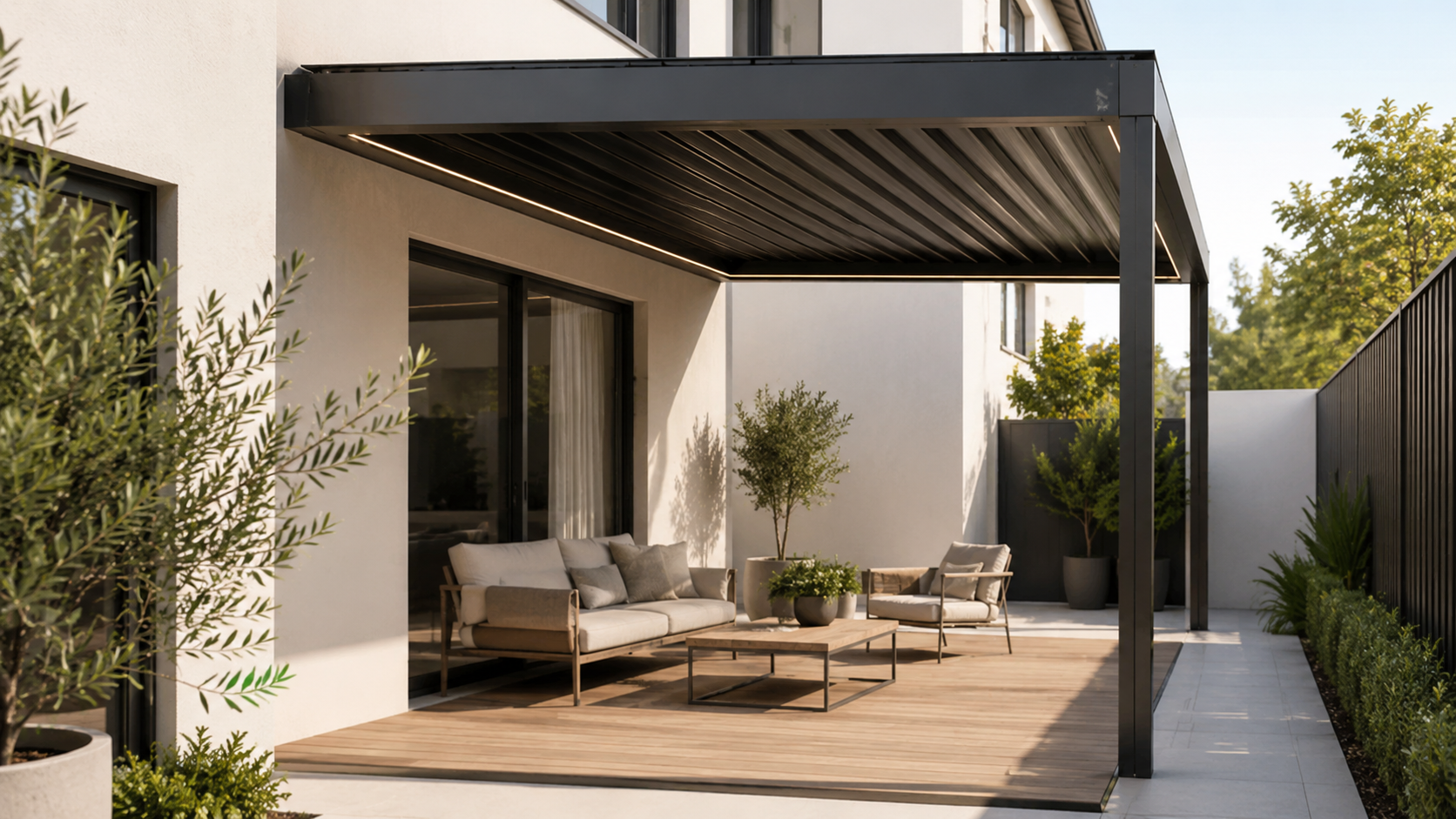
A wall mounted pergola can make a townhouse courtyard feel less cramped, but only when the layout respects the way the space is actually used. In a compact courtyard, one post in the wrong place can block a chair, tighten the back door area, or make a simple walk to the side gate feel awkward. The best design is not the biggest one. It is the one that keeps the floor open, the shade useful, and the courtyard easy to live with.
Why Choose a Wall Mounted Pergola for a Townhouse?
Townhouse courtyards are usually not empty leisure spaces. They often work as a breakfast corner, laundry path, barbecue spot, plant area, and back-door transition all at once. So the pergola has to protect comfort without stealing the little floor space that already feels precious.
This is where a wall-mounted layout makes sense. By attaching one side to the house, the structure can reduce the number of floor posts needed in the courtyard. That keeps the house-side area cleaner and leaves more room for chairs, planters, side access, and everyday movement.
The benefit is most obvious in small actions. A chair slides back without scraping a post base. The back door opens without feeling tight. A person can carry dinner outside without turning sideways. These details sound ordinary, but they decide whether the courtyard gets used.
The simple reason to choose it
Choose this layout when the courtyard needs shade, but the floor still needs to stay open. If the outdoor area already feels narrow, reducing post clutter is often more useful than adding a larger roof.

Best-Fit Scenes for a Wall Mounted Pergola Townhouse Layout
A wall mounted pergola townhouse layout works best when the outdoor area has a clear purpose. It does not need to cover everything. It needs to improve the part of the courtyard that is used most often.
Small dining court
Best when the table sits close to the house and chair movement needs to stay clear. The pergola should cover the dining zone without putting a post where chairs pull back.
Coffee or reading corner
Best when the courtyard only needs a calm shaded pocket. Two chairs, one low table, and a planter often feel better than a fully covered outdoor room.
Back-door rain cover
Best when the first step outside gets wet or too bright. The layout should focus on the door threshold, drainage path, and the most-used strip of paving.
Narrow barbecue zone
Best when shade is needed but airflow cannot be blocked. Keep enough standing room and avoid making smoke or heat feel trapped near the wall.
The common thread is simple: the pergola should support the main use of the courtyard. If the outdoor area is mainly for two morning coffees, it does not need the same roof depth as a dining layout for four.
How to Judge Whether It Is the Right Choice
The easiest way to judge a small courtyard pergola is to ignore the roof for a moment and look at the floor. The floor tells the truth. If the chairs, door, side gate, and storage already fight for space, the pergola must reduce clutter, not add more.
Before choosing a model, place the furniture where it will actually sit. Pull the chairs back. Open the door fully. Walk from the kitchen to the table while holding something in both hands. If the movement feels tight, post placement should become the first decision.
Next, check light and rain. A courtyard that feels too bright at 3 p.m. may need adjustable shade. A threshold that stays wet after rain may need better roof positioning and drainage thinking. A seat that feels exposed at night may need privacy planning before accessories are added.
Quick buying judgement
- Choose it if the house wall is suitable and floor space needs to stay open.
- Avoid rushing if the gutter, downpipe, or door swing conflicts with the beam line.
- Consider custom sizing if a standard frame blocks the walking path or misses the real seating zone.
- Take rainy-day photos before making the final layout decision.

Wall, Door and Drainage Checks Before Buying
An attached pergola depends on the house wall, so the wall should be checked early. Brick, rendered masonry, cladding, windows, outdoor lights, taps, vents, and downpipes can all affect where the beam can sit.
Door clearance matters just as much. Sliding doors are usually easier, while hinged doors need space to swing freely. A layout that looks neat on an empty plan can feel awkward once a chair, doormat, dog bowl, or planter sits near the threshold.
Drainage is the detail that should not be left until the end. After rain, check where water already collects. A dark wet strip by the door or a puddle near the fence gives useful clues about paving fall and roof direction.
External shading reference
For shade planning, orientation matters. YourHome notes that shading should work with home orientation and that fixed or adjustable structures, including pergolas and louvres, can help manage unwanted sun while supporting comfort.
Use this YourHome passive design shading guide as a general reference when thinking about sun direction, low-angle afternoon sun, seasonal shading and courtyard comfort.
Prepare these before asking for layout advice
- One photo of the full wall from left to right.
- One photo from inside the home looking out.
- Close-up photos of the gutter, downpipe, door threshold, and paving.
- A simple measurement of wall width, paving depth, and door position.
- A quick furniture sketch with chair pull-back space included.
For installation, expectations should stay clear. Everpergo does not directly provide installation services, but can recommend experienced installers and provide installation guides and technical support. This is especially important for wall-attached layouts, because wall fixing and drainage conditions vary from site to site.
When Custom Sizing Helps
Custom sizing is useful when a standard pergola almost works, but not quite. In a townhouse courtyard, that “almost” can matter. A post may land too close to the chair path, the roof may stop short of the useful shade zone, or a downpipe may interrupt the clean wall line.
The point of custom sizing is not to make the project sound bigger. It is to make the layout feel more natural. A slight width adjustment can avoid a door conflict. A slightly different depth can keep the first metre outside the house usable during rain.

For compact spaces, the better question is not “How large can the pergola be?” The better question is “What size keeps the courtyard comfortable after furniture, walking space, drainage, and privacy are included?”
This is where wall mounted pergola planning becomes more practical. A custom discussion can focus on the exact courtyard, instead of forcing the space to fit a standard rectangle.
Common Mistakes That Make a Small Pergola Feel Wrong
Most small pergola problems are not dramatic. They come from small decisions made too quickly. The structure may look fine in a product photo, but the courtyard feels less easy to use after installation.
Mistake 1: Choosing the largest size first
Bigger can make a compact courtyard feel darker. Cover the useful zone first, then leave some open edge for light, plants, drainage, or access.
Mistake 2: Ignoring chair movement
A table that fits under the roof is not enough. Chairs need space to pull back, and people need room to move behind them.
Mistake 3: Leaving privacy until later
Shade does not fix an exposed seating position. Check side views early, especially from neighbouring upper windows after dark.
Mistake 4: Forgetting cleaning access
A courtyard still needs space to rinse paving, wipe surfaces, clear leaves, and check drainage after wind or rain.
Extended Reading and Useful Pages
These pages are the most useful next steps if the courtyard needs a compact wall-mounted option or a more exact custom layout.
Brand and range overview
Review aluminium pergola styles, finishes, layouts, and outdoor living options.
Everpergo aluminium pergolasCompact wall-mounted option
A practical starting point for small patios, courtyards, and everyday shade.
P120 Wall MountedCustom layout support
Useful when the house wall, gutter, doorway, furniture path, or courtyard size needs a more exact configuration.
Customize Your PergolaFAQ
Is a wall mounted pergola suitable for a townhouse courtyard?
Yes, it can suit a townhouse courtyard when the wall, gutter, door clearance, drainage, and post positions all work together. The main benefit is keeping more of the courtyard floor clear.
What should be checked before choosing an attached pergola?
Check the wall surface, fixing area, gutter line, downpipe, door swing, threshold, paving fall, sun direction, and main walking path. These details decide whether the pergola feels natural or awkward.
Does a small courtyard pergola need custom sizing?
Not always. Standard sizes can work when the wall and floor layout are simple. Custom sizing helps when a standard frame clashes with a downpipe, walkway, door, or furniture layout.
Should sun direction be checked before choosing the roof depth?
Yes. A compact courtyard can feel very different in morning, midday, and afternoon sun. Check the direction of glare, the time you use the space most, and whether adjustable louvres would help manage both shade and daylight.
Does Everpergo directly provide installation services?
Everpergo does not directly provide installation services, but can recommend experienced installers and provide installation guides and technical support.
A Better Townhouse Pergola Starts With Clear Space
A townhouse courtyard does not need a huge structure to feel better. It needs a clearer walking line, useful shade, sensible drainage, and a layout that works with the door, wall, gutter, sun direction, and fence line.
Before choosing the final configuration, measure the wall, photograph the drainage marks after rain, and decide whether the pergola is mainly for dining, lounging, barbecue use, or back-door cover. These three steps make the next conversation much easier.
Share:
White Pergola vs Grey Pergola: Which Finish Fits Your Home?
Pergola Height Guide for Comfortable Outdoor Living