

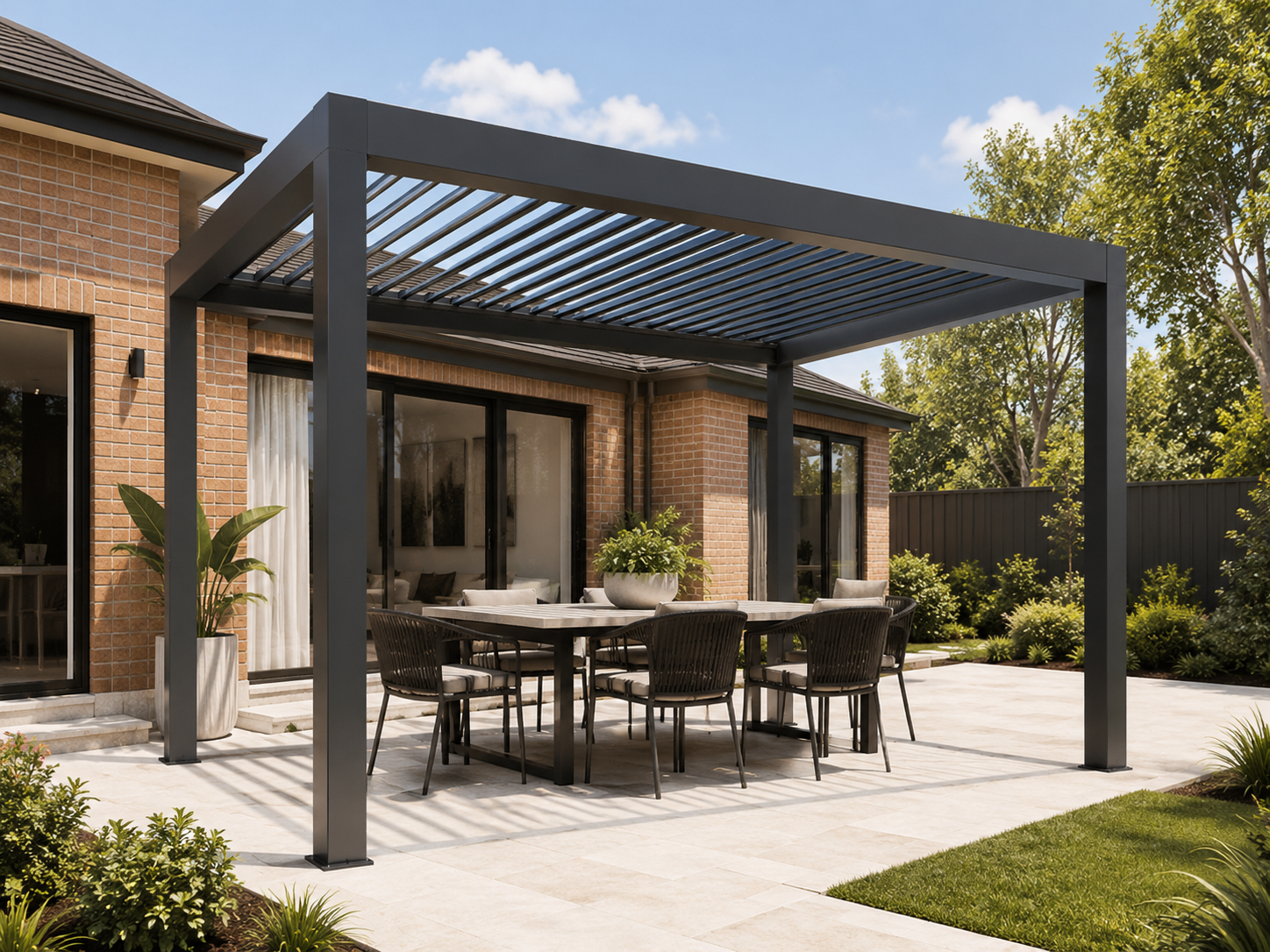
A patio roof can look like a simple outdoor upgrade, but the wrong choice shows up quickly. On a hot Saturday afternoon, the table may still sit in glare. After a short rain shower, water may run toward the door. Meanwhile, a fixed cover that looked practical in winter can feel too dark beside the living room in July.
For Australian homes, the real question is not only whether to cover the patio. It is whether the roof should stay fixed, use solid panels, or adjust with an aluminium louvre roof system. This guide compares those choices through shade, heat control, airflow, rain, drainage and long-term value, then connects the choice to real outdoor spaces.
Patio roof needs
Before comparing roof types, the outdoor space needs a clear purpose. A narrow courtyard beside a townhouse may only need shade over two chairs and a small table. However, a larger backyard dining zone needs more than cover; it needs light, airflow, movement space and a sensible rain path.
In Australia, the same patio can face three different problems in one day. Morning light may feel pleasant at 8 am, direct sun may become sharp after lunch, and a late shower may arrive before dinner. Therefore, a good patio roof should be judged by how it behaves through a normal week, not only by how tidy it looks in a product photo.
Start with the main use. Outdoor dining needs shade across chairs, not just across the centre of the table. A lounge area needs a calmer feeling, especially around cushions and side tables. Meanwhile, a barbecue zone needs ventilation first, because smoke and heat should not sit under a low, sealed cover.

What the roof needs to handle
A fixed patio roof gives constant cover. That can be useful for a service area, side path or simple shelter beside the house. However, it also means the light level stays the same on cool mornings, bright afternoons and cloudy days.
Panel roofs can work well when the goal is straightforward shade and rain cover. Clear, tinted or insulated panels each change the feel under the roof. Still, the result depends heavily on glare, rain noise, roof angle and how much light reaches nearby windows.
An adjustable roof works differently. Aluminium louvres can open for light and airflow, tilt for shade, or close for stronger overhead cover during light rain. Because of that, an adjustable roof usually suits outdoor areas used for dining, lounging or regular weekend entertaining.
Quick scene check
- Small side patio: simple shade and basic rain cover may be enough.
- Outdoor dining space: adjustable shade and clear drainage matter more.
- Large deck: stronger structure, airflow and furniture clearance should lead the choice.
- Poolside zone: glare control, open feeling and side exposure need careful planning.
Fixed vs adjustable
A fixed roof is the most direct option. It covers the area all day, so it can be practical where the main goal is permanent shelter. For example, a fixed roof can suit a laundry-side patio, a narrow walkway or a storage corner where light control is not the main concern.
However, fixed cover has a clear trade-off. It cannot respond when the sun shifts, when a cloudy morning needs more light, or when warm air builds under the roof. In a main outdoor living zone, that lack of movement can become noticeable after the first season.
Panel roofs offer another route. They can be clean and useful, especially when the home needs a simple roof line. Yet panel choice matters. Some panels keep the space bright but create glare. Others feel calmer under the sun but still stay fixed when more air or light would help.
An adjustable aluminium louvre roof system is better suited to patios that need to change during the day. The blades can open, angle or close, so the space can move between morning light, afternoon shade and light-rain cover without feeling like a fully sealed room.
| Option | Best for | Main benefit | Watch point |
|---|---|---|---|
| Fixed roof | Side paths, utility areas, simple shade zones | Constant cover | Less control over light and trapped heat |
| Panel roof | Bright patios and basic rain cover | Simple, familiar roof style | Glare, heat and rain noise vary by material |
| Adjustable roof | Dining, lounge, deck and poolside spaces | Adjustable shade, airflow and rain response | Needs careful sizing, drainage and layout planning |
For a compact patio, the smaller P120 can make sense when the layout is simple and manual louvre control suits the routine. For a larger outdoor dining or lounge area, P180 and P180 Pro usually deserve closer comparison. The Everpergo Compare page is the cleanest place to check model size, control style and layout options before narrowing the choice.

Heat and rain
Heat control is where the roof choice starts to feel personal. A shaded patio can still feel heavy if air sits under a fixed cover. Meanwhile, a bright panel roof can keep the space cheerful in the morning but too harsh after lunch.
Orientation matters here. The Australian Government’s YourHome shading guidance notes that low-angle eastern and western sun needs different shading strategies from simple overhead shade. That point is easy to notice in a backyard at 4 pm, when the glare comes from the side rather than straight above.
A louvre roof system helps because it does not rely on one fixed setting. In the morning, open blades can let in softer light. During the hottest part of the day, angled blades can cut direct sun while still allowing some air movement. After a light shower, closed blades can help guide water toward the drainage path.
Still, no outdoor roof should be treated like an indoor ceiling. Rain, wind direction, side exposure and ground slope all affect comfort. The practical goal is not to pretend the patio is indoors, but to make the space easier to use through more of the year.

Which spaces benefit most from adjustability?
Outdoor dining areas usually benefit first. A table that gets used for lunch, evening meals and weekend guests needs more than a fixed patch of shade. It needs a roof that can soften sun without killing the breeze.
Poolside seating is another strong fit. Water glare can be sharp in the afternoon, and open areas often get more wind. Therefore, adjustable louvres give the roof more range without closing the space down visually.
Courtyards need care. A small space can become dark if the roof is too heavy. In that setting, a compact aluminium pergola with adjustable louvres can feel lighter than a solid roof, especially when nearby glass doors bring light into the home.
Drainage
Drainage is the quiet detail that decides whether a covered patio feels finished. A roof may look clean from the garden, but if water drops near the door track or runs across the walking path, the layout still needs work.
Fixed roofs and panel roofs both need fall, guttering and a clear discharge path. The same applies to aluminium louvres. When the blades close, water still needs to move toward the frame and out through a sensible route.
Also, the floor below matters. Pavers, tiles, concrete and timber decking all handle water differently. For example, a tiled patio needs fall that moves water away from the house, while a deck may drain between boards but still need care around posts and footings.
Before choosing the final model, check where water should go after a 10-minute shower. Then check the same route with chairs pulled out and the barbecue in place. That small test often reveals whether the roof line, post positions and furniture layout are working together.
Drainage planning checklist
- Check the fall direction before placing the frame.
- Keep runoff away from door tracks, steps and main walking lines.
- Allow access for clearing leaves, dust and garden debris.
- Match post positions to furniture movement, not just roof symmetry.
- Use the Everpergo FAQs for common product, installation and care questions before final planning.
Long-term value
Long-term value is not only the first cost. It is how often the outdoor area feels useful after the new look wears off. A simple fixed cover may be enough for a side path. However, a main outdoor room needs stronger comfort across sun, rain, airflow and evening use.
This is where aluminium louvred pergolas have a clear role. They create a defined roof line like a permanent structure, yet they keep the top openable. That balance suits Australian backyards because the weather rarely behaves the same from breakfast to dinner.
For medium outdoor spaces, P180 is often the more balanced direction. It suits dining and lounge areas where adjustable louvre control, a stronger frame feel and optional lighting can help the patio work after dark. For larger decks or more open entertaining zones, P180 Pro is the stronger model to compare.
The better choice comes from the space, not from choosing the largest structure. A compact courtyard can look awkward if overbuilt. Meanwhile, a wide entertaining area can feel underdone if the roof looks too small or leaves the main seating exposed.

Which patio roof option fits which outdoor space?
| Outdoor space | Most suitable direction | Why it works |
|---|---|---|
| Small courtyard | P120 or compact adjustable roof | Keeps the space useful without making it feel crowded. |
| Main dining patio | P180 aluminium louvred pergola | Balances shade, airflow, lighting options and regular use. |
| Large deck or open backyard | P180 Pro or custom layout | Supports bigger furniture zones and stronger visual structure. |
| Poolside lounge | Freestanding adjustable roof | Helps manage glare while keeping the pool area open. |
CTA
For a simple side area, a fixed roof or panel roof may be enough. For a main outdoor living space, an adjustable aluminium pergola usually gives stronger day-to-day value because it can respond to sun, airflow and light rain. That is the cleaner choice when the patio is expected to work as a real outdoor room.
Before choosing a patio roof, take three practical steps:
- Watch the sun at 10 am, 2 pm and 5 pm, then mark where shade is actually needed.
- Place the table, chairs, barbecue and walking path before deciding post positions.
- Check drainage direction early, especially near doors, steps and paved edges.
After those checks, compare Everpergo aluminium louvred pergolas by size, control style and layout. For larger spaces, P180 Pro is worth reviewing. For sizing, model selection and installation support, contact the Everpergo team before locking in the final roof plan.
Contact Everpergo for Size and Installation Support
Related Reading
FAQ
Is a fixed roof better for a small patio?
A fixed roof can suit a small patio when the area only needs simple shelter. However, if the space sits beside glass doors or feels dark easily, an adjustable roof may keep the area more comfortable across different times of day.
What is the advantage of an adjustable roof in Australia?
An adjustable roof helps manage strong sun, changing glare and airflow. The louvres can open for light, tilt for shade or close for stronger overhead cover during light rain, depending on the setting and site conditions.
Can a louvre roof system help with rain?
A closed louvre roof system can help direct rain toward the drainage path. However, outdoor comfort still depends on installation, roof fall, side wind, ground levels and where the runoff is guided.
Which Everpergo model suits a larger outdoor area?
P180 Pro is designed for larger outdoor spaces where a stronger structure and wider layout may be needed. Still, final selection should consider patio size, furniture layout, wind exposure, drainage and wall or freestanding configuration.
What should be checked before choosing a roof over a deck?
Deck strength, post positions, walking paths, door clearance, drainage direction and furniture movement should all be checked. For larger decks, model comparison and installation support are especially important before final planning.
Share:
Covered Patio Design Guide: How to Create a More Usable Outdoor Room
Pergola Kit Buying Guide: What to Check Before You Order Online