

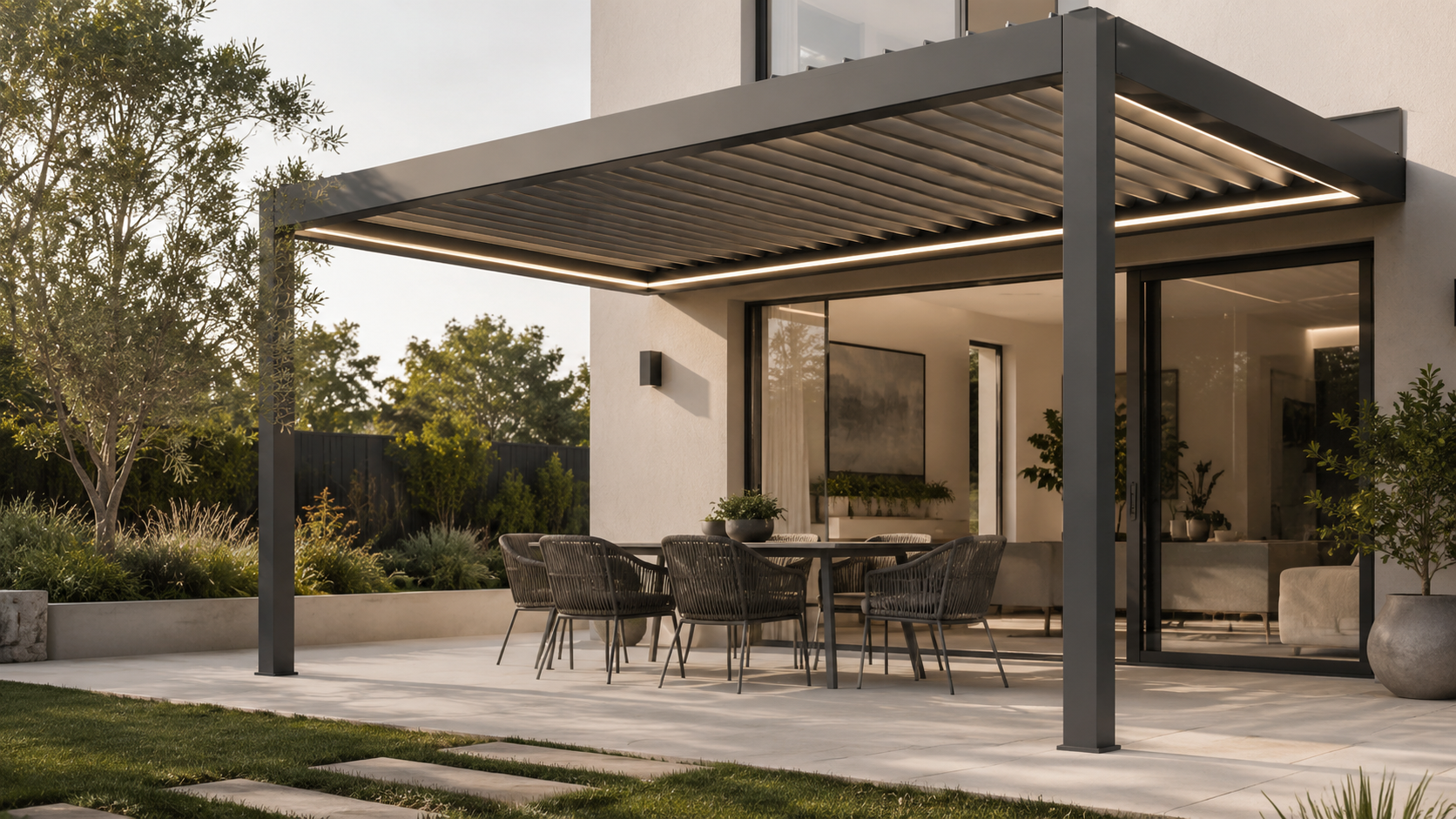
A pergola can look right in a product photo and still feel wrong once it sits beside a real home. The roof may feel too low when a chair is pulled back, too high when the afternoon sun slips under the edge, or awkward when the beam cuts across a sliding door.
This guide keeps the decision simple: choose the height that gives enough headroom, keeps shade useful, protects door clearance, and makes the outdoor room feel natural from inside and outside the house.
Why Pergola Height Matters for Outdoor Comfort
Height decides how the outdoor room feels after the first few minutes. A low roof may feel cosy at first, but it can trap heat closer to the table on a still afternoon. A very high roof can feel open, but it may let more side sun, wind, and rain reach the seating area.
The right height should support normal movement. A chair should pull back easily. A tray should pass through the door without the entrance feeling tight. The beam should not look like it has been placed randomly across the house wall.
Quick rule
Plan the height around the least comfortable hour of the day. For many patios, that is 3 pm to 5 pm, when the paving is warm, the sun is lower, and one side of the table may suddenly become uncomfortable.
Visual comfort matters too. If the roof line sits neatly under an eave or above a door, the whole structure feels more settled. If it cuts through a window line, the space can feel awkward even when the measurements look acceptable.
For shading direction, buyers can also refer to Australia’s YourHome shading guide, which explains how adjustable shading, louvres, pergolas, orientation, and low-angle sun can affect comfort around the home.
 View P180 Pergola
A Practical Height Starting Point
Most buyers do not need to start with an exact number. A better first step is to check whether the roof line gives comfortable headroom for walking, dining, opening doors, pulling chairs back, and using the outdoor area at the time of day it matters most.
For many outdoor living spaces, the height should feel high enough that the roof does not press down on the doorway or seating area, but not so high that shade becomes weak and the space feels exposed. Door clearance, eave position, deck height, furniture size, and louvre direction can all change the final decision.
Too low
The space may feel tight near doors, beams, tall guests, pendant lights, or BBQ areas.
Balanced
The outdoor room feels open, shade remains useful, and the roof line fits the home.
Too high
The area can lose shade, feel exposed to wind, and look less connected to the house.
If the pergola is attached or close to the home, always check local approval requirements before finalising the height. Council rules, building permits, setbacks, wind ratings, drainage, and attachment conditions can vary by state, council area, and site type.
Suitable Scenes: Match Height to Real Outdoor Use
A good height choice starts with the main use of the space. A dining area, poolside zone, BBQ corner, and narrow courtyard do not need the same feeling. The structure should fit how the space is actually used, not only the floor size.
Dining setting
Height should feel generous around the table edge. Chairs move, plates pass around, and people stand more often than expected.
Lounge setting
A slightly more sheltered roof line can feel calm with low seating, soft lighting, and a side table.
BBQ or outdoor kitchen
Heat and smoke need room to move. Height, louvre direction, and BBQ position should be planned together.
Poolside or open backyard
Larger spaces can usually carry more height, but side glare and wind still need checking.
For smaller patios, the goal is usually visual breathing room. The roof should not press down on the space, but it also should not sit so high that shade becomes weak and the seating feels exposed.
For larger outdoor rooms, height can be more generous. Still, the roof line should stay connected to the house. A tall structure that ignores the wall, windows, or eaves can look detached from the home.
How to Decide the Right Pergola Height Before Buying
The fastest way to decide is to test the space from the door first. Stand where the indoor room meets the outdoor area. Look at the door head, eave, gutter, window line, wall light, and any downpipe. These details often decide the practical height before furniture is even placed.
Next, check the movement path. Walk from the door to the table position. Pull a chair back. Stand near the outer edge where a beam may sit. If the space already feels tight without a structure, posts and beams will not make it feel easier.
The 5-minute decision test
- Measure from the finished floor or deck surface.
- Check the door head, eave, gutter, and window line.
- Mark the table, lounge, or BBQ position with tape or boxes.
- Stand at the edge and imagine the beam above that point.
- Check the space again during the warmest or sunniest hour.
Shade also needs a real-time check. Midday shade is not enough. If the outdoor area is mostly used after work, the late-afternoon sun matters more. A roof can feel right at lunch and still let low sun reach the table at 4:30 pm.
If the site has a low eave, raised deck, narrow side yard, tall sliding door, or window that needs daylight, standard sizing may feel forced. In that case, a custom pergola plan is usually the safer starting point.
 Customize Your Pergola
What to prepare before requesting a custom size
If the patio has mixed levels, a tight doorway, or an uncertain roof line, prepare three photos before asking about a custom size: one from inside the home, one straight-on from the garden, and one side angle showing the wall and paving.
Common Mistakes When Choosing Pergola Height
Most height mistakes come from judging the space too early. An empty patio often looks larger than it feels once chairs, posts, beams, blinds, and lighting are added. This is why the height should be checked with real movement in mind.
Mistake 1: choosing height from photos only
Product photos help with style, but they cannot show the exact door, eave, wall light, slope, or furniture layout at home.
Mistake 2: ignoring the doorway
The first step outside should feel easy. If the beam feels close from the doorway, the whole transition can feel cramped.
Mistake 3: only checking midday shade
Low afternoon sun can slip under the edge. Check the space at the time it will actually be used.
Mistake 4: forgetting future accessories
Blinds, glass doors, lighting, or heaters can change how enclosed the roof feels. Leave enough visual and practical room.
Another common mistake is assuming higher always means better. In some open backyards, extra height feels generous. In a narrow courtyard, it may make the seating feel exposed and reduce shade control. Proportion matters more than simply going taller.
When Custom Height Is the Better Choice
Custom height makes sense when the house has one detail that limits the design. A raised deck, low eave, tall sliding door, step-down courtyard, narrow side path, or window that needs daylight can all affect the final roof line.
Standard sizing may work well for a simple, flat, open patio. However, when the structure sits close to the house, height should be planned with width, depth, post position, and door clearance together.
Custom height is worth considering when...
- The roof line must sit below an eave.
- The sliding door needs more clearance.
- The patio has different floor levels.
- Furniture needs more edge space.
Standard height may be enough when...
- The slab is flat and open.
- No wall detail conflicts with the frame.
- The layout is freestanding and simple.
- The furniture plan is flexible.
Everpergo does not directly provide installation services, but can recommend experienced installers and provide installation guides and technical support. Clear photos and accurate measurements help make the height discussion more practical.
Before confirming a wall-mounted or custom-height pergola, check whether your local council, strata, body corporate, or state building rules require approval. Requirements can differ depending on attachment method, total size, site location, wind exposure, drainage, setbacks, and whether the structure is freestanding or fixed to the home.
 Plan a Custom Size
Before you request a custom plan
If the outdoor room needs to fit a specific door height, raised deck, or narrow courtyard, send the height, width, depth, and site photos through the custom page. It is easier to adjust the plan before the structure is chosen.
Extended Reading
Height is only one part of a comfortable outdoor room. These related guides help with size, layout, and installation planning.
Custom size planning
Useful when the patio, deck, wall height, or furniture layout needs a more precise fit.
Read the custom size guideInstaller questions
Helpful when comparing site checks, quote details, warranty responsibility, and support.
Read the installer questions guideCustom configuration
Best for submitting height, width, depth, colour, and layout needs together.
Customize Your PergolaFAQ: Pergola Height and Outdoor Room Comfort
What is a comfortable pergola height for outdoor living?
A comfortable height depends on door clearance, furniture, roof depth, and how the space is used. Dining areas usually need a more open feeling because people stand, move chairs, and carry plates. Lounge areas can feel comfortable with a slightly more sheltered roof line.
Is a higher pergola always better?
No. A higher roof can improve openness, but it may also allow more low-angle sun, wind, and side rain. A balanced height that suits the house, furniture, and sun direction is usually better.
When should custom height be considered?
Custom height is worth considering when the patio has a low eave, raised deck, step-down courtyard, tall sliding door, narrow side yard, or window that should keep natural light.
How does roof height affect shade?
Roof height changes where shade lands during the day. A taller roof may feel open, but low-angle sun can enter under the edge more easily. A lower roof may block side glare better, but it can feel warmer.
Do I need council approval for a pergola height change?
Approval rules can vary by council, state, site type, size, attachment method, and whether the pergola is freestanding or fixed to the home. It is best to check local requirements before confirming a custom height or wall-mounted layout.
Does Everpergo provide installation?
Everpergo does not directly provide installation services, but can recommend experienced installers and provide installation guides and technical support. Site photos and accurate measurements help make the height and layout discussion more useful.
A Better Height Decision Starts With the Real Space
A pergola height decision should feel practical, not complicated. Stand at the door, check the wall line, watch the afternoon shade, and imagine normal movement under the roof. If the space feels easy in those ordinary moments, the design is heading in the right direction.
- Measure from the finished floor to the door head, eave, and preferred roof line.
- Take photos from inside the home, from the garden, and from the side of the patio.
- Decide whether the space is mainly for dining, lounging, cooking, poolside shade, or a compact courtyard retreat.
- Check local approval requirements before confirming a custom or attached structure.
Plan the height, width and depth together
Share the outdoor area measurements, door clearance, preferred layout, and a few site photos. A custom plan is more useful when the roof height is considered with the real wall, real furniture, and real shade conditions.
Customize Your Pergola
Share:
Wall Mounted Pergola for Townhouses: Space-Saving Guide
Louvered Pergola Drainage: How Rainwater Is Manage