

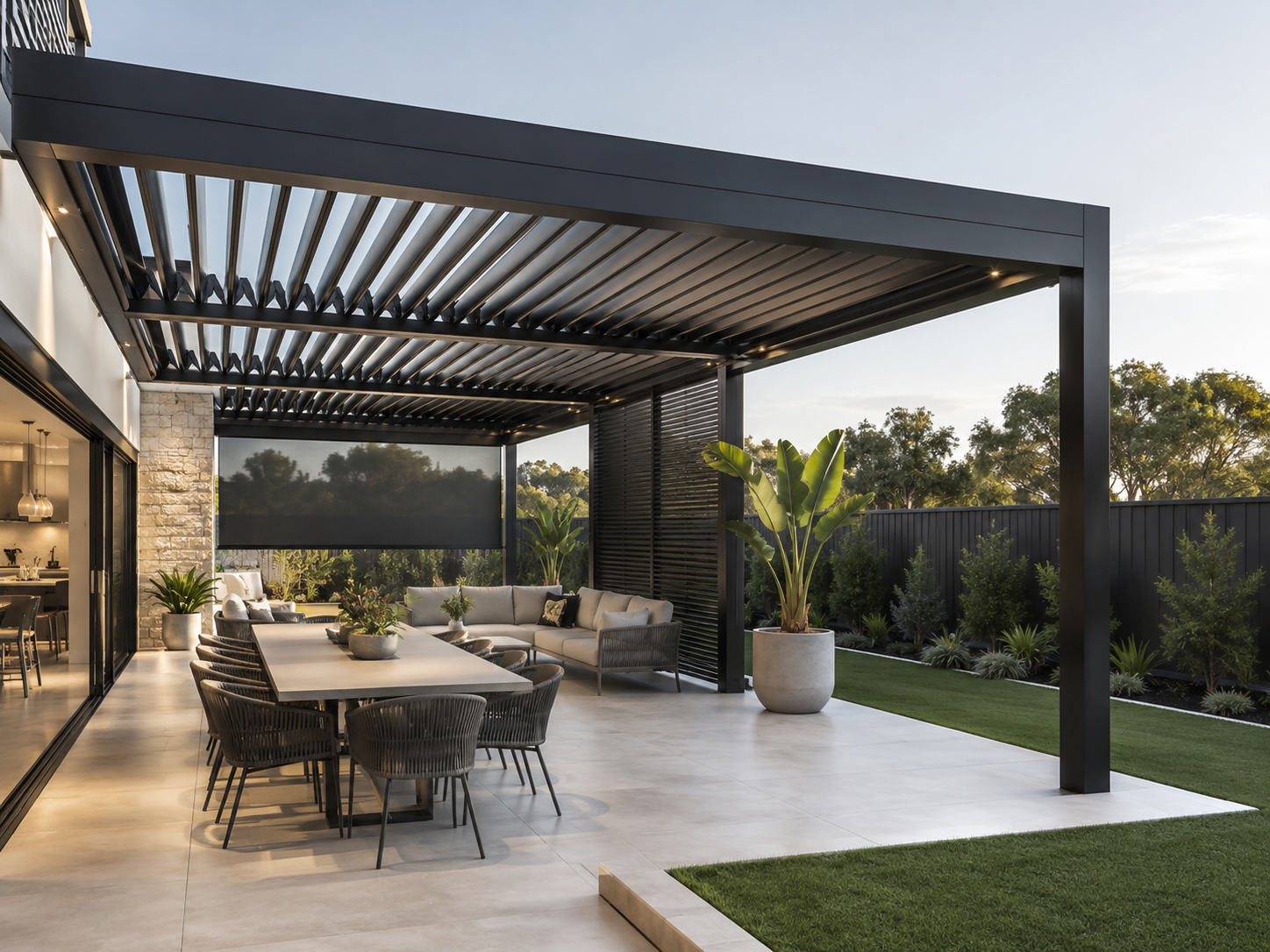
A covered patio works best when it feels like a real outdoor room, not just a roof placed over paving. The practical test is simple: shade should reach the furniture, rain protection should support everyday use, airflow should still feel fresh, and the path back to the house should stay clear at dinner time.
Layout planning
Good layout planning starts on the floor, not at the roofline. In a normal Australian backyard, the patio may sit between a sliding door, a barbecue, a pool fence, and a side gate. Therefore, the first step is to mark the walking path before choosing the final pergola position.
For example, a dining table may look compact until every chair is pulled back. Plates need to move from the kitchen, a side table may sit near the barbecue, and a garden path may still need to stay open. This is where furniture clearance becomes more important than a neat drawing.
Also, post positions need careful thought. A post placed too close to a step, pool gate, garden tap, or door track can make the outdoor room feel awkward every day. The structure should frame the usable area, not interrupt the route that already works.

Plan around the most-used hour
Instead of designing for a perfect photo, plan around the hour when the space is most likely to be used. In many homes, that is 6:30 pm on a weekday when dinner moves outside. In a smaller courtyard, it may be 8 am coffee beside the back door.
Then, the right layout becomes easier to see. The table should sit in shade at that hour. Chairs should pull back without hitting posts. Meanwhile, the door should open freely and the route to the barbecue should stay clear.
A compact modular pergola system can make sense when the best-used zone is modest. A well-planned 3 m area often feels better than a larger structure that blocks the natural path.
Sun and rain
Sun and rain decide how often a covered patio gets used. At midday, the area may look calm and shaded. However, by late afternoon, low sun can still reach under the roof and hit the dining table, lounge cushions, or pale paving.
Therefore, the plan should check morning light, midday shade, and late-day glare. Rain protection also needs the same practical thinking. Overhead cover helps, but open sides, wind direction, paving slope, and the position of soft furniture still matter.
For wider passive design context, the Australian Government’s YourHome shading guide explains how adjustable external shading can help homes respond to changing sun and climate conditions. That idea fits outdoor living because patios rarely face one kind of weather all day.

Check side sun before finalising the roof position
A common mistake is checking shade only at noon. By 4 pm, the sun can sit low enough to reach faces, plates, screens, and cushions. So, the main seating or dining position should be tested at the real use time.
A west-facing lounge may need stronger side control. A morning coffee spot may need filtered light rather than deep shade. Meanwhile, a south-facing patio may care more about brightness and dry seating through cooler months.
An aluminium louvred pergola helps because the roof can support different blade positions through the day. Part-open louvres can keep light and airflow moving, while a more closed position can create stronger shade or help manage overhead rain in suitable conditions.
Airflow
Airflow is the detail that separates a comfortable outdoor room from a hot box. Shade lowers glare, but still air under a roof can feel heavy after lunch. Therefore, at least one clear breeze path should stay open.
In practice, airflow depends on nearby walls, fences, trees, furniture height, and side screens. A high-backed sofa can block breeze at sitting level. Meanwhile, a solid side screen in the wrong place can make a compact patio feel flat by mid-afternoon.
This is where louvre control helps in a simple way. Slightly open blades can allow warm air to lift out of the covered area while the seating zone still has shade. It is not automatic climate control, but it gives the space more range than a fully fixed overhead cover.
Find the natural breeze path first
Before adding wind blinds or privacy features, the exposed sides should be observed in the late afternoon. Often, the breeze comes through a side gate, over a low fence, or around the corner of the house. That path should stay open unless there is a clear reason to control it.
Also, privacy and airflow do not need the same answer on every side. One exposed edge may need a blind, while another edge should remain open for the view and breeze. A balanced covered patio usually feels better than a patio closed on every side.
Furniture zones
Furniture zones make the patio feel intentional. A table, lounge set, barbecue, storage bench, and planters can all fit under a roof, but that does not mean they belong in the same tight corner. Each zone needs a clear job and enough room to work during normal use.
For dining, the table should sit close enough to the kitchen route to feel easy. However, it should not sit so close to the door that chairs block the threshold. For lounging, the sofa should face the calmest edge or best garden view, not simply the nearest wall.

Dining zones need movement space
A dining area under cover should work when every seat is occupied. Chair backs should not hit posts. The path between the table and the house should also stay clear when plates, drinks, and serving bowls move outside.
A rectangular table often suits a long patio beside the house. However, a round table can work better in a compact courtyard because chair movement feels less rigid. In either case, the table should not sit hard against the most exposed rain edge.
Which Everpergo setup fits the space?
Compact courtyard or small patio
P120 suits a smaller covered patio where the main need is practical shade, clean lines, and enough floor space for a small dining or sitting zone.
Larger dining or lounge area
P180 suits a larger outdoor room where regular dining, lounging, or entertaining needs a more generous pergola layout.
Exposed edge or low sun
Wind blinds make sense when one side needs privacy, filtered low-angle sunlight, light rain management, or calmer edge protection.
This choice logic keeps the article useful for real planning. It also gives a clear path from design idea to product selection without forcing a product into every paragraph.
Lighting and blinds
Lighting and blinds are not decorative extras. They decide whether the outdoor room works after sunset, during a breezy afternoon, or when low sun cuts across the table. Therefore, these details should be planned with the pergola layout, not added later as a patch.
LED lighting is most useful when it feels quiet. A harsh floodlight can make a patio feel like a driveway. However, warm integrated lighting can make a 7 pm dinner feel comfortable without adding visual clutter to the roofline.
Wind blinds need the same restraint. One exposed side may need protection from glare, wind, privacy, or light rain. Closing every side can make the patio feel too boxed in, especially in a compact courtyard.

Use lighting for real tasks
Mood matters, but task lighting matters more at 8:15 pm when plates are being cleared. A dining table needs enough light for food and glasses. A step needs enough light for safe movement without staring at the ground.
At the same time, too much light can make an outdoor room feel exposed. A better approach is layered and calm: integrated LED lighting around the pergola, small table lighting where suitable, and a little garden lighting beyond the patio if the view needs depth.
Place blinds where exposure actually happens
A blind should have a job. If the problem is low western sun, the blind belongs on that side. If the issue is privacy from a neighbour, the blind should protect the view line without blocking the best breeze path.
This keeps the patio feeling open. It also avoids the common mistake of turning an outdoor room into a half-indoor box. The more restrained design often feels better after three months because the garden, sky, and airflow still matter.
CTA
A more usable covered patio rarely comes from one dramatic design move. It comes from practical choices: a roof that manages sun and ordinary rain, enough furniture clearance, airflow that still feels fresh, lighting that works after dinner, and wind blinds placed only where the site needs them.
For a compact patio, P120 is the cleaner starting point. For a larger dining or lounge zone, P180 gives more room to plan around furniture, shade, and regular entertaining. For exposed edges, wind blinds and LED lighting can complete the space without making it feel closed off.
Related reading
Three practical steps before choosing a pergola
- Mark the main table or lounge zone on the patio floor, then check chair movement and walking space.
- Watch the sun at the real use time, especially late afternoon, before deciding roof position or blind placement.
- Match the setup to the site: P120 for compact layouts, P180 for larger rooms, and wind blinds for exposed edges.
FAQ
How much furniture clearance does an outdoor dining area need?
A dining area needs space for the table, chair pull-back, and a walking path behind the seats. Chairs should move without hitting posts, planters, steps, or the main door route.
Can wind blinds make a patio feel too enclosed?
Yes, especially when every side is closed. Wind blinds usually work best on the exposed side only, such as the side with low sun, regular breeze, light rain, or privacy pressure.
Where should LED lighting go in an outdoor room?
LED lighting should support real use. Dining areas need gentle light over the table, while steps and walking paths need enough visibility for safe movement after dark.
Is a louvred pergola useful for rain protection?
A louvred pergola can help manage overhead rain in suitable conditions, but open sides, wind direction, paving fall, and furniture placement still matter. Side rain and splash should be planned for, not ignored.
What makes a patio feel like a proper outdoor room?
A patio feels more like an outdoor room when the layout has a clear purpose, enough furniture clearance, useful shade, fresh airflow, calm lighting, and edge protection only where the site needs it.
Share:
Patio Covers for Outdoor Living: Fixed Roof, Awning or Louvre Pergola?
Patio Roof Options in Australia: Which Roof Type Is Right for Your Home?