

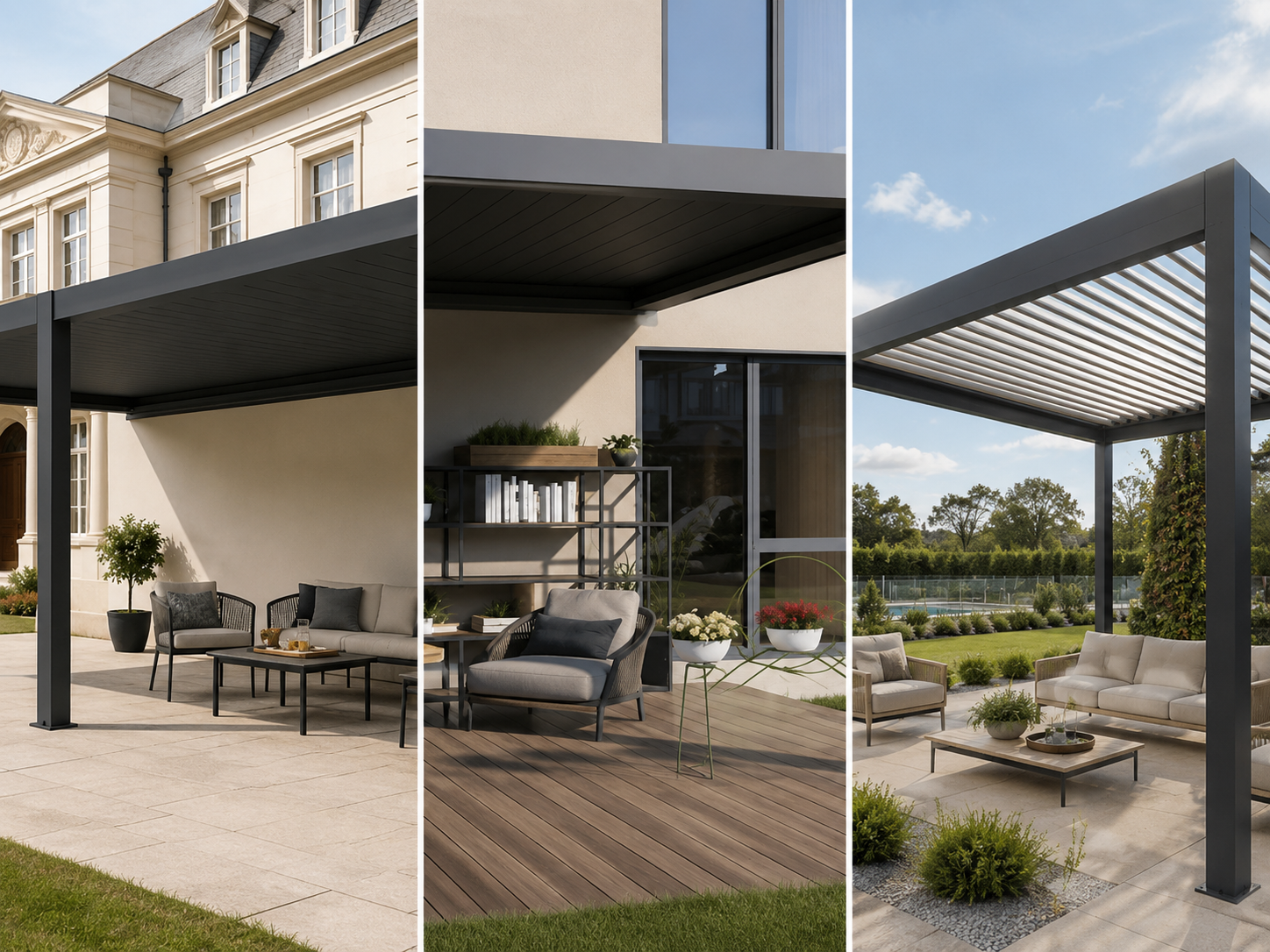
A patio can feel perfect at 9 am and uncomfortable by 2 pm. The sun moves across the table, a light shower arrives before dinner, and cushions suddenly need moving indoors. That is why comparing patio covers before choosing one matters. A fixed roof, awning, polycarbonate cover, and louvre pergola all create shade, but they do not create the same outdoor living experience.
The better choice depends on the space. A narrow side patio beside a laundry needs a different cover from a backyard dining zone, a poolside lounge, or a paved courtyard outside sliding doors. Also, the strongest-looking option is not always the most comfortable one. Sun angle, airflow, rain direction, furniture clearance, cleaning access, and long-term maintenance all shape the result.

Fixed roof
A fixed roof is the most permanent option. It may use metal sheeting, insulated panels, tiles, or another solid roofing system. Therefore, it often feels like an extension of the house rather than a light shade feature. For an outdoor kitchen, a barbecue zone, or a patio table that stays outside all year, that fixed protection can be useful.
However, a fixed roof makes one decision and keeps it in place through every season. The same roof that blocks harsh summer sun can also block winter light from nearby windows. In a hot west-facing backyard, that can be a fair trade. In a narrow courtyard beside a living room, it may make the indoor room feel darker than expected.
For rain control, a fixed roof can perform well when pitch, gutters, and downpipes are properly planned. Water still needs a clear route away from doors, steps, decking, and paving joints. Also, a roof that looks almost flat still needs fall. Without that detail, overhead cover may solve one problem while creating puddles at ground level.
A fixed roof works best when the outdoor area has one simple job: stay covered. It suits utility spaces, covered cooking areas, and dining zones where permanent shade is more important than seasonal flexibility. Still, it is less suitable when the same patio needs morning sun, afternoon shade, and roof-level ventilation on warmer days.
Best suited to
- Outdoor kitchens and barbecue areas needing regular shelter.
- Side patios, laundry entries, and practical access areas.
- Dining spaces where permanent shade is preferred.
- Homes where drainage and roof pitch can be designed cleanly.
Awning
An awning suits a smaller and more flexible shade problem. It can extend over a patio during hot hours, then retract when light or open sky feels better. As a result, it often works well for balconies, compact decks, and window-side seating areas that need shade for 2 or 3 hours rather than the whole day.
For example, a north-facing kitchen window may need summer shade without losing winter sun. A small balcony may need cover over two chairs and a coffee table. In both cases, an awning can feel light, neat, and practical. Also, it avoids adding posts in a narrow walking line.
However, an awning is not a full outdoor room. Fabric shade can be pleasant in calm weather, but wind and rain change the experience quickly. A projected awning may flap in gusts, and rain can pool if the pitch is too shallow. Therefore, it should be treated as flexible sun control, not heavy-duty rain protection.
Maintenance is worth thinking about early. Fabric needs cleaning, drying time, and checks around stitching, arms, and mechanisms. Leaves can sit on the surface after a storm. Dust can mark pale colours. Meanwhile, coastal air or exposed wind may increase wear on the hardware.
Best suited to
- Small patios that need short periods of shade.
- Balconies where posts would feel awkward.
- Windows where summer shade and winter light both matter.
- Outdoor seating used mainly in calm, dry weather.
Polycarbonate
Polycarbonate sits between an awning and a solid roof. It is often used where a patio needs overhead rain cover without becoming too dark. Because it lets light through, it can suit side paths, compact courtyards, laundry entries, potting benches, and everyday utility areas.
However, polycarbonate has a very specific feel. It can be bright and practical, but it can also become warm under direct sun. Heavy rain can sound sharp on sheet roofing, especially in a tight courtyard with brick or rendered walls nearby. So, comfort depends heavily on the location and the sheet colour.
Clear panels maximise daylight, but they may also increase glare. Tinted or opal panels soften the light, but they reduce the open-sky feeling. Meanwhile, fixings, seals, and roof fall need careful planning. A small drip line near a screw point can become annoying when it lands on the same chair after every shower.
Polycarbonate is useful when the goal is practical cover with daylight. It is less convincing for a main dining or lounge area where comfort matters for an hour or more. In that setting, static sheet roofing may not offer enough control over heat, glare, and airflow.
Best suited to
- Side access paths and laundry-side patios.
- Small courtyards where natural light still matters.
- Storage corners, garden benches, and simple utility zones.
- Spaces where fixed light-filled cover is enough.
Louvre pergola
A louvre pergola changes the decision because the roof does not stay in one fixed position. The louvres can open for light and airflow, angle down for shade, or close for better overhead rain control. On a mild morning, the patio can feel open. Later, when the sun reaches the table, the roof can shift.
This flexibility is the main reason aluminium louvred pergolas suit Australian outdoor living. Weather can change across one day. A patio may need soft light at breakfast, stronger shade after lunch, and overhead cover before dinner. Static patio covers solve one condition and hope the rest of the day behaves.
Still, a louvre pergola should be planned realistically. It is an outdoor cover, not an indoor ceiling. Wind-driven rain, blocked drainage paths, and severe weather can still affect an open patio. However, for everyday shade, airflow, and light rain management, an adjustable roof gives comfort that fixed systems struggle to match.
For shade planning, Australia’s YourHome shading guide is a useful reference because it explains orientation, low-angle sun, adjustable shading, pergolas, and louvres. That same thinking applies here. A good cover needs to manage light from above and from the side.

For compact outdoor areas, Everpergo P120 is the cleanest starting point. It works well where the patio is modest in size and the brief is simple: shade, ventilation, and a tidy aluminium structure. A courtyard outside sliding doors, a small paved garden corner, or a balcony-style patio can fit this direction.
For medium outdoor dining and lounge spaces, Everpergo P180 is the more balanced option. It suits areas where a table, chairs, a walkway, and garden-facing seating need to sit under one roof line. It also makes sense when the patio is used several times a week, not just during weekend gatherings.

For larger outdoor spaces, Everpergo P180 Pro is the stronger direction. A wide backyard lounge, a long dining deck, or a larger entertainment area needs more visual weight and structural presence. The pergola should feel proportional to the paving, furniture, and house wall, rather than looking like a small cover stretched too far.

Best suited to
- Main outdoor dining areas used several times a week.
- Patios beside living rooms where indoor light still matters.
- Backyards with changing morning and afternoon sun.
- Outdoor lounges that need shade, airflow, and rain control.
Cost and maintenance
Cost and maintenance should be compared over years, not only on the first quote. A lower-cost cover that feels too hot, too dark, or too noisy can become expensive in a quiet way: the patio gets used less. At the same time, a premium structure only makes sense when the outdoor area has a real role in daily life.
Awnings and simple polycarbonate roofs often have a lower starting cost. Fixed roofs vary widely because materials, drainage, roof tie-in, labour, and site conditions can change the total. Louvre pergolas usually sit higher than basic shade options because the aluminium frame, adjustable roof, drainage planning, and optional accessories add complexity.
Maintenance also differs by material. Fabric awnings need cleaning and drying. Polycarbonate panels need washing, seal checks, and debris removal. Fixed roofs need gutter cleaning and inspections around joins or flashing. Aluminium louvred pergolas need routine cleaning around the frame, louvres, and drainage paths, especially after windy weather.
| Cover type | Best use | Main strength | Main trade-off |
|---|---|---|---|
| Fixed roof | Permanent dining, outdoor kitchens, side access | Reliable overhead shelter | Less seasonal flexibility |
| Awning | Balconies and short shade periods | Retractable shade | Limited wind and rain use |
| Polycarbonate | Side paths and utility patios | Rain cover with daylight | Heat, glare, and rain noise |
| Louvre pergola | Main outdoor living areas | Adjustable shade and airflow | Needs stronger planning and budget |
The practical rule is simple. If the area only needs short afternoon shade, an awning may be enough. If the goal is a dry side path with daylight, polycarbonate can work. If the space needs permanent cover, a fixed roof is logical. However, if the patio is becoming a real outdoor room, aluminium louvred patio covers usually offer the best long-term balance.
CTA
The best cover becomes clearer once the outdoor area has a clear job. For compact courtyards and smaller patios, P120 is the first Everpergo model to check. For daily dining and lounge spaces, P180 is the natural middle point. For larger backyard layouts, P180 Pro gives the stronger direction.
Compact patio
P120 suits smaller spaces that need simple shade, ventilation, and a clean aluminium structure.
View P120Dining patio
P180 suits outdoor meals, garden-facing seating, and regular backyard use across the week.
View P180Large outdoor area
P180 Pro suits wider coverage, stronger visual presence, and larger outdoor living layouts.
View P180 ProBefore choosing, check three details: actual patio size, strongest afternoon sun direction, and furniture layout with chairs pulled out. For model differences and layout direction, the Everpergo Compare page is a useful next step.
For sizing or installation support, send approximate measurements, surface type, wall position, and one or two photos through the Contact page. That keeps the pergola choice grounded in the real space, not just a product photo.
Related Reading
FAQ
Is a louvre pergola better than an awning for Australian weather?
For a main outdoor living area, usually yes. An awning suits short shade periods in calm weather. A louvre pergola gives stronger structure and better control over sunlight, airflow, and everyday rain.
Does a fixed roof make a patio too dark?
It can, especially beside living room windows or in a narrow courtyard. A fixed roof gives permanent shade, so roof height, colour, orientation, and window position should be checked before choosing one.
Is polycarbonate good for patio rain protection?
Polycarbonate can provide useful overhead rain cover when sheets have enough fall, secure fixings, and clear drainage. However, heat, glare, and rain noise should be considered for main dining areas.
Which Everpergo model suits a small patio?
P120 is the first model to check for compact patios, courtyards, balconies, and smaller garden spaces. For larger dining or lounge layouts, P180 or P180 Pro may fit better.
Explore Everpergo aluminium louvred pergolas
Among all patio covers, a louvre pergola is the strongest direction when the outdoor area needs regular dining, lounging, shade control, airflow, and everyday rain planning. Start with P120 for compact spaces, compare P180 for daily outdoor rooms, or review P180 Pro for larger layouts.
Share:
Patio Cover Ideas for Australian Homes: What Works Best for Sun and Rain?
Covered Patio Design Guide: How to Create a More Usable Outdoor Room