

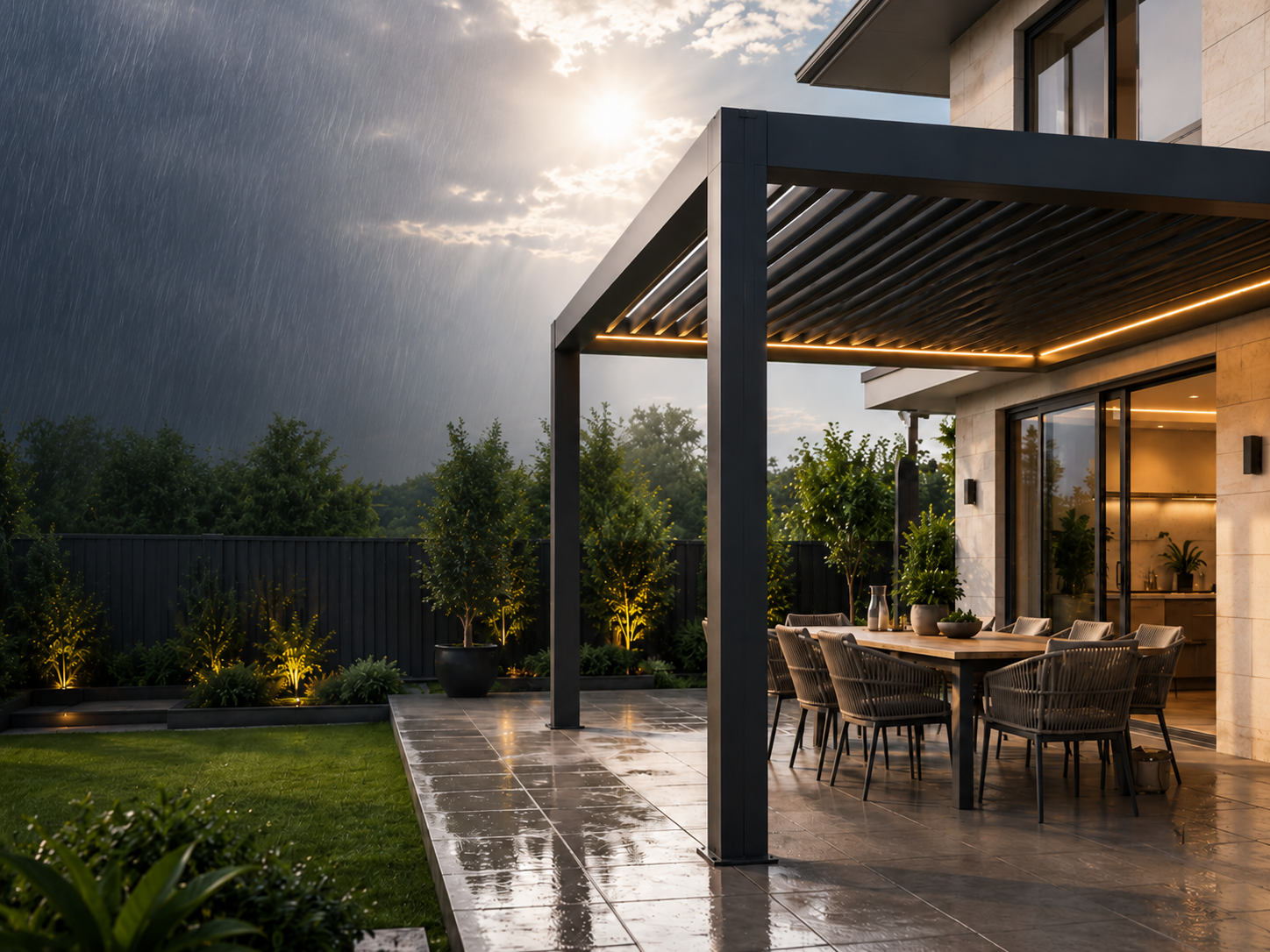
On a hot Australian afternoon, a bare patio can feel useful for about ten minutes. Then the table gets too bright, the chairs heat up, and the whole area sits empty until evening. A practical patio cover changes that. It turns a paved slab, deck, or poolside corner into a calmer outdoor living space that can handle sun, passing rain, and everyday use without feeling boxed in.
However, the best option is rarely just the prettiest one in a photo. A fixed roof, retractable awning, polycarbonate sheet, shade sail, or aluminium louvred pergola will all behave differently at 2 pm in summer and during a wet Saturday lunch. So, this guide keeps the focus on real use: shade, airflow, rain protection, maintenance, layout, furniture, and the way an Australian backyard actually works across the year.

What is a patio cover?
In plain terms, a patio cover is a structure that sits over an outdoor area to make it more comfortable. It may attach to the home, stand on its own, or sit beside a pool, garden path, or outdoor kitchen. The goal is simple: create patio shade, soften heat, reduce glare, and provide a sensible level of rain protection when the weather changes.
Still, not every cover does the same job. A solid roof blocks sun well, but it can make a small courtyard feel darker at 9 am. A fabric awning gives flexible shade, yet it may need careful use during wind and heavy rain. Meanwhile, a louvred roof sits in the practical middle. It can open for light and ventilation, then close when shade or light rain protection matters more.
For Australian homes, that flexibility matters because outdoor areas often work hard. A patio may hold breakfast on weekday mornings, homework at 4 pm, a barbecue on Friday night, and a quiet coffee before work. Therefore, the right structure needs to support several small routines, not just one perfect weekend scene.
Good shade also needs good placement. Cancer Council’s shade guidance explains that useful shade should protect the right space at the right time of day and year. That point matters in a backyard too, because summer sun, low winter light, and reflective paving can all change how comfortable a covered area feels. Read the Cancer Council shade guidance.
The real job is comfort, not decoration
A good outdoor cover should make people stay outside longer. That is the honest test. If the area still feels too hot, too dark, too windy, or too damp after installation, the design has missed something. For example, a west-facing patio in Perth may need late-afternoon glare control more than morning shade.
Because of that, the first question should be practical. How will the space be used at 8 am, 1 pm, and 7 pm? A lounge zone needs softer shade and airflow. An outdoor kitchen needs overhead cover that keeps cooking comfortable. A narrow side patio may need rain protection without blocking the kitchen window. In other words, the best design starts with daily habits.
Key things to check before choosing
Before comparing products, the site itself needs a quick read. Sun direction, drainage, paving slope, nearby trees, furniture size, and wind exposure all change the result. A cover over a 3 m dining table has different needs from a cover over two lounge chairs beside a pool.
- Check the strongest sun direction, especially west-facing afternoon glare.
- Leave enough height for airflow, door clearance, and pendant lighting if planned.
- Think about rainwater movement, not just the roof material.
- Measure furniture in place, including pulled-out dining chairs.
- Allow space for planters, barbecue clearance, and walking paths.
Also, the view from inside the house matters. A heavy cover can make an indoor living room feel darker, especially when the patio sits right outside sliding doors. A lighter or adjustable roof can keep the connection between inside and outside more balanced.
Common patio cover options
There are several common ways to cover a patio in Australia. However, the right choice depends on climate, budget, looks, maintenance, and how often the space needs to work in changeable weather. A pure inspiration list can look nice, but it usually skips the annoying details: heat build-up, noise in rain, glare, cleaning, and long-term upkeep.
So, the comparison below looks at the options as they behave in a real backyard. It does not treat one material as perfect for every home. Instead, it shows where each option makes sense and where it starts to feel limited.
| Option | Works well for | Watch carefully | Best fit |
|---|---|---|---|
| Fixed roof | Strong shade and more consistent overhead cover | Can reduce natural light and trap heat | Large alfresco dining zones |
| Retractable awning | Flexible shade for smaller patios and doors | Needs care in wind and heavy rain | Occasional shade beside the house |
| Polycarbonate roofing | Lightweight cover with filtered daylight | Heat, glare, and rain noise can vary | Side paths and simple utility areas |
| Shade sail | Open patio shade over lawns or pools | Limited rain protection and seasonal adjustment | Play areas and informal garden spaces |
| Aluminium louvred pergola | Adjustable sun, airflow, and light rain response | Needs correct sizing, drainage, and placement | Everyday outdoor living areas |
Fixed roofs: dependable, but not always flexible
A fixed roof is the most direct answer when constant shade is the priority. It suits a large tiled alfresco area where the dining table stays in one place all year. Also, it can make rainy-day meals easier because the overhead cover is always there.
However, fixed cover has a trade-off. In winter, the same roof that feels helpful in January can leave the room behind it darker. In smaller homes, that matters. A kitchen window that loses morning light can change how the whole rear room feels. For that reason, fixed roofing works best when the house orientation and indoor light have already been considered.
Awnings: neat for occasional shade
Retractable awnings are useful where the patio only needs shade at certain times. For example, a small breakfast table outside a sliding door may need cover from 10 am to 1 pm, then open sky later in the day. The look can be soft and relaxed, especially with lighter exterior colours.
Still, awnings ask for sensible use. When wind picks up, fabric systems usually need to retract. During heavy rain, water pooling can become a problem if pitch and drainage are poor. Therefore, an awning is better as a flexible shade layer than as the main rain protection plan for a high-use dining area.
Polycarbonate roofing: bright, but sometimes harsh
Polycarbonate sheets remain common because they are light, available, and simple to understand. They work well over side passages, laundry paths, and service areas where daylight still matters. In a narrow gap between a fence and a wall, that can be a practical choice.
However, the comfort result depends on the sheet type, colour, ventilation, and the angle of sun. Some spaces still feel hot underneath, especially when air cannot move. Also, rain noise may be noticeable during a heavy shower. So, polycarbonate makes sense for utility cover, but it is not always the most comfortable answer for long lunches or evening seating.
Shade sails: relaxed, but limited in wet weather
Shade sails suit open garden spaces because they feel light and informal. They can create patio shade above a pool edge, play zone, or casual seating corner without the visual weight of posts and beams everywhere. In a coastal-style backyard, that can look right.
However, sails have limits. They do not create the same outdoor room feeling as a framed roof. Rain protection is usually modest, and the shade pattern moves through the day. As a result, a sail is more about sun relief than a dependable all-season outdoor living structure.

Aluminium louvred pergolas: the stronger everyday choice
An aluminium louvred pergola is the option that makes the most sense when a patio needs to work often. The roof blades can open for airflow, tilt for controlled shade, or close when rain protection is needed for a short shower. That is the useful part. It does not force the space into one mode all day.
Meanwhile, aluminium brings a clean architectural look without the constant refinishing associated with some timber structures. It also pairs well with modern paving, brick homes, rendered walls, composite decking, and garden planting. For many Australian homes, that balance of function and neat appearance is why a louvred system feels less like a temporary add-on and more like part of the house.
Why louvred pergolas suit Australian weather
Australian weather asks a lot from an outdoor structure. One week can bring sharp sun, warm nights, gusty afternoons, and rain that arrives just as dinner is being served. Therefore, a fixed answer often feels too blunt. A louvred roof gives more control because it responds to the moment.
In summer, the louvres can angle to cut overhead glare while still letting hot air move out. During mild weather, they can open wider so the patio feels like an open garden room. Then, when rain starts, the blades can close to create a more sheltered area. This is exactly where the patio cover decision becomes less about looks and more about comfort.
Shade that still breathes
The problem with many shade solutions is heat build-up. A roof can block sun, but if hot air sits underneath it, the seating area still feels heavy by mid-afternoon. Because louvres can open, the space has a better chance of releasing trapped heat. That matters when the barbecue is running and four chairs are already full.
Also, adjustable patio shade helps with changing sun angles. Morning light may feel welcome in winter. Afternoon glare may feel brutal in summer. A louvred system handles that difference more gracefully than a roof that only has one position.
Rain protection without closing off the backyard
Rain protection should be described carefully. No outdoor structure should be treated as a sealed indoor room, and weather can still enter from open sides in wind. However, a well-positioned louvred roof can protect the main seating or dining zone during typical rain, especially when furniture sits away from exposed edges.
For example, an outdoor table placed 600 mm in from the front opening will usually feel more protected than a table pushed right to the edge. Similarly, adding a side screen on the most exposed face can make a noticeable difference. So, roof design and furniture placement should work together rather than being treated as separate decisions.
Aluminium suits long-term outdoor use
Aluminium is a sensible material for outdoor structures because it does not ask for the same routine as painted timber. It still needs cleaning, inspection, and basic care, especially near the coast or under trees. However, it keeps the maintenance rhythm more manageable for homes where weekends are already full.
The cleaner look is another benefit. A dark grey frame can sit beside brick, stone, or rendered walls without shouting for attention. A white frame can soften the look around lighter homes or coastal gardens. In both cases, the pergola becomes part of the outdoor living area rather than a decoration sitting on top of it.
Modular design keeps the planning realistic
A modular pergola system is helpful because it gives structure to the planning process. Instead of starting with a blank drawing and endless guesses, the space can be matched to standard layouts, freestanding or wall-mounted formats, and practical accessories. That makes the project easier to picture before decisions get expensive.
For instance, the Everpergo P180 aluminium pergola suits many outdoor living spaces where strength, style, and daily flexibility need to sit together. It is not about claiming one model fits every backyard. Rather, it gives a clear starting point for comparing size, layout, roof operation, and the amount of shelter needed.

Accessories can change the way the space feels
The roof is only one part of the outdoor comfort story. A windy side, low western sun, or cool evening can still affect the space. Therefore, accessories should be planned around real weak points, not added just because they look impressive on a product page.
A wind blind can make sense on the exposed side of a deck where a breeze cuts across the seating area at 5 pm. LED strip lighting can make an outdoor dining area feel usable after sunset without flooding the garden. An outdoor heater may suit covered seating during cooler months. However, each accessory should support one clear use case.
Planning around drainage and slope
Rain management deserves more attention than it usually gets. A roof may look tidy from above, but water still needs somewhere to go. Paving levels, garden beds, existing drains, and door thresholds all matter when planning a covered area. Because of that, drainage should be checked before the final size is chosen.
Also, leaf litter is easy to forget. A pergola below gum trees or large deciduous trees may need more frequent cleaning around roof channels and edges. That does not make the idea wrong. It simply means the maintenance plan should match the site instead of pretending the site is empty.
Best use cases
A louvred pergola is most useful when the space has a clear purpose. It should not be chosen only because it looks good in a square product image. The better question is simple: what should the patio support on a normal week? Once that is clear, the right size, position, and accessories become easier to choose.
Below are the outdoor settings where this style of cover tends to earn its place. Each one has a different rhythm, from morning coffee to late dinners. Also, each one benefits from adjustable shade and airflow in a slightly different way.
1. Outdoor dining beside the kitchen
A dining patio near the kitchen is often the most practical location. Food moves through the sliding door, plates land on the table, and the space can be used even on a weeknight. However, dining areas need comfort at exact moments. At 6 pm in summer, low sun can hit people straight in the eyes.
For this use case, an aluminium louvred pergola works well because it can control glare without making the whole area dark. Meanwhile, lighting can keep the table usable after sunset. A 6-seat setting needs enough roof coverage for pulled-out chairs, not just the tabletop, so the measuring tape should include movement space.
2. A lounge zone on a deck
A deck lounge needs a softer feeling than a dining zone. People sit lower, cushions stay outside longer, and the view to the garden matters. Therefore, the cover should protect the seating area while keeping the open-air feeling alive. Too much solid roofing can make the deck feel like a room with missing walls.
In this setting, opening the louvres in the morning can bring in fresh air and light. Later, closing or angling them can calm the space when the sun gets stronger. Add a side blind only where exposure is real. Otherwise, the deck can lose the relaxed feeling that made it appealing in the first place.
3. Poolside shade with a dry seating edge
Near a pool, shade needs to feel easy. Towels, drinks, books, and phones all need a place out of direct sun. However, the structure should not make the pool area feel closed or heavy. A freestanding pergola can create a defined seating edge while leaving the water and garden visually open.
For example, a pair of lounge chairs and a small table may only need a compact footprint. Still, the roof angle matters because pool reflections can make glare stronger. As a result, adjustable louvres give better control than a fixed shade layer during bright summer afternoons.
4. A courtyard that needs light control
Small courtyards are tricky. They need shade, but they also need daylight because walls and fences already reduce openness. A heavy fixed roof can make the area feel smaller by lunchtime. However, no cover at all may leave the paving too hot for daily use.
A louvred roof can suit this setting because it gives the courtyard more than one mood. Open louvres can bring in brightness after breakfast. Angled louvres can reduce heat during lunch. Closed louvres can help during light rain while plants, cushions, and flooring stay better protected.
5. An outdoor kitchen or barbecue area
Outdoor cooking needs shade, ventilation, and safe clearance. A roof that traps smoke or heat can make the area uncomfortable fast. Therefore, the cover plan should consider appliance position, heat source, manufacturer clearances, and the direction smoke usually travels on a breezy evening.
For many barbecue areas, adjustable louvres are useful because the roof can open for ventilation during cooking. Then, after the food is served, the louvres can close or angle for comfort. Also, lighting should sit where it helps with prep and serving, not only where it looks symmetrical.

6. A multi-use family backyard
Some backyards do not have one neat purpose. One corner holds a sofa, another has a dining table, and the lawn nearby becomes a play area by 4 pm. In that kind of Australian backyard, the cover should anchor the main activity zone without taking over the whole garden.
Because of that, placement matters more than maximum size. A pergola that covers the main paved area and leaves a clear path to the lawn often works better than a larger structure squeezed into every available centimetre. The result feels calmer, and the outdoor living area still connects to planting, grass, and open sky.
7. A semi-sheltered work or reading corner
A covered patio can also become a quiet place for reading, laptop work, or a morning call. However, glare control matters more here than broad coverage. A screen that is unreadable at 11 am will send the whole setup back inside. So, adjustable shade becomes useful in a very practical way.
Meanwhile, a small table, one comfortable chair, and a power-safe layout can do more than a huge furniture set. The space should feel simple. A little breeze, filtered light, and enough rain protection for a quick weather change are usually the things that make this kind of corner work.
Which patio cover suits which outdoor space?
The most useful buying decision starts with the problem, not the product. If the patio is only too bright for one hour a day, an awning or sail may be enough. If the space needs daily dining, evening use, airflow, and light rain protection, a louvred pergola becomes the stronger long-term direction.
For compact courtyards and smaller patios, the Everpergo P120 is a sensible place to start because it keeps the structure simple and avoids overwhelming the space. For larger dining zones, stronger outdoor rooms, and flexible layouts, P180 gives a more complete foundation. For exposed sides, Wind Blind can help with low sun, breeze, privacy, and light rain from one direction.
| Outdoor situation | Better direction | Useful next step |
|---|---|---|
| Small courtyard or narrow patio | Compact aluminium louvred pergola | Check P120 sizing and wall-mounted options |
| Main outdoor dining area | Stronger louvred pergola with lighting | Compare P180 sizes and furniture clearance |
| Deck with side wind or low sun | Pergola plus side blind on exposed face | Plan one protected side before adding more screens |
| Evening entertaining area | Louvred roof with integrated LED lighting | Place lighting around dining and walkway zones |
Related reading
Once the broad patio cover direction is clear, these guides help narrow the next decision. They connect the bigger shade question with real details like winter rain, drainage, roof height, airflow, and furniture movement.
CTA
The strongest choice for an Australian home is usually the one that handles more than one season. A fixed roof has a place. An awning has a place. A shade sail has a place. However, for everyday outdoor living, an aluminium louvred pergola gives the most useful mix of shade, airflow, rain response, and long-term visual order.
That is the main reason Everpergo’s modular pergola system fits this topic so well. It is not just a decorative frame over a slab. It gives a patio a working roof, a cleaner structure, and the option to add side comfort where the site needs it. For a practical starting point, explore Everpergo aluminium louvred pergolas and compare layouts before settling on size.
Ready to plan a more usable outdoor room?
Start with the patio size, the strongest sun direction, the main furniture layout, and the side most exposed to wind or rain. Then compare Everpergo pergola models and speak with the team about size and installation support.
Three practical suggestions before finalising
- Map the sun at breakfast, lunch, and late afternoon before deciding roof direction.
- Measure furniture with chairs pulled out, then add walking space around the setting.
- Plan drainage, side exposure, and lighting before treating accessories as optional extras.
In the end, the right patio cover should make a home’s outdoor area feel easier to use on ordinary days. Not perfect weather. Not a staged photo. Just a shaded lunch, a dry seat during passing rain, and a backyard that still feels open when the roof is doing its job.
FAQ
What is the best cover for a sunny Australian patio?
For strong sun, the best option is usually one that blocks glare while still allowing airflow. A solid roof can give deep shade, but it may also darken the indoor room beside it. Meanwhile, an aluminium louvred pergola offers adjustable patio shade, which helps when morning light feels welcome but afternoon sun feels too strong.
Do louvred pergolas help with rain protection?
Yes, louvred pergolas can help with rain protection when the blades are closed and the layout is planned well. However, they should not be treated like a sealed indoor room. Wind direction, open sides, furniture position, and drainage all affect how sheltered the patio feels during wet weather.
Is an aluminium louvred pergola better than a fixed roof?
It depends on the space, but a louvred pergola is often better for areas that need both shade and light control. A fixed roof is dependable for constant cover. However, a louvred roof can open for airflow, tilt for sun control, and close for light rain, so it suits patios used across different times of day.
What works best for a small Australian backyard?
For a small Australian backyard, the structure should avoid making the space feel boxed in. A compact aluminium louvred pergola, simple furniture, and one clear walking path often work better than a large fixed roof. Also, lighter finishes and open louvres can help preserve daylight in courtyards and narrow patios.
Can accessories make an outdoor living space more comfortable?
Yes, accessories can help when they solve a real site problem. A wind blind may reduce low sun, breeze, and privacy concerns on one exposed side. LED lighting can support evening meals. However, accessories work best when planned around the patio layout rather than added after the main structure is already decided.
Share:
Outdoor Pergola Lighting Ideas for Dining After Dark
Patio Covers for Outdoor Living: Fixed Roof, Awning or Louvre Pergola?