

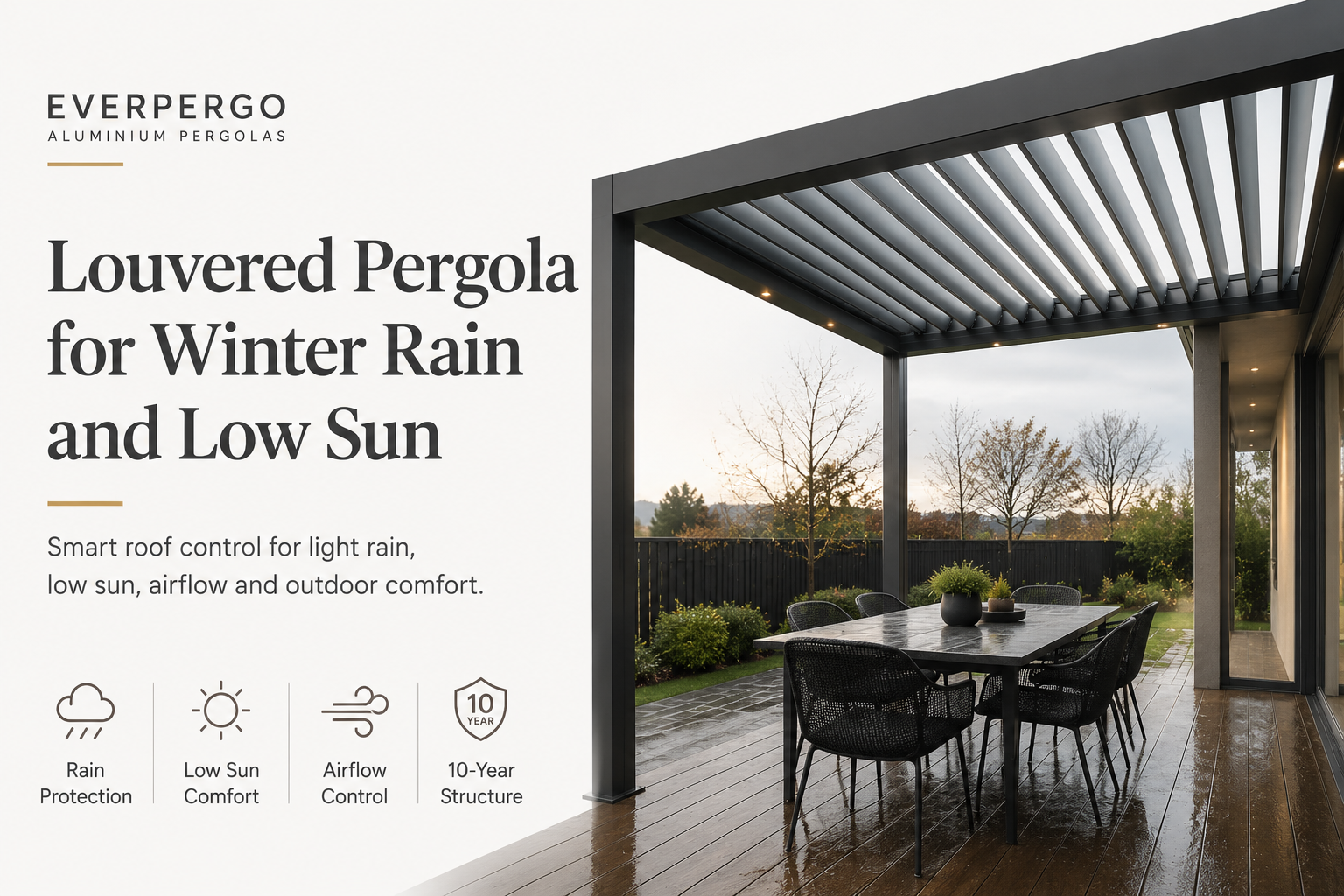
A louvered pergola is not only a summer shade idea. In winter, it can make a patio feel more usable when rain is light, the sun sits low, and the outdoor area needs airflow after a wet night. The real value is control: open the roof for drying air, tilt it for softer light, and close it when drizzle passes through.
Winter outdoor comfort is often decided by small moments. A table looks dry from the kitchen, but the seat still feels cold. The paving has a dull shine at 10 am. The afternoon sun looks gentle, then suddenly lands straight across a face, a glass door, or a phone screen.
That is why a fixed roof can feel limited in winter. It covers the patio, but it cannot decide when to let in useful sun or when to release trapped damp air. A fabric cover can soften light, but it may not give the same steady feel through wet weeks.
An adjustable louvre roof sits in the middle. It does not pretend the outdoor area is sealed like an indoor room. Instead, it makes the space easier to use between weather changes. That is usually where winter patios need the most help.
The strongest winter setup is not always the most enclosed one. It is the one that solves the real problem: low sun from one angle, light rain from above, a cold side breeze, or slow drying after wet weather.
 View P180 Louvered Pergola
Why Winter Changes Louvered Pergola Comfort
Winter changes the way an outdoor space behaves. In summer, shade is often the main issue. In winter, the problem becomes more mixed. A patio may need sun in the morning, softer light in the afternoon, cover during drizzle, and fresh air after rain.
Therefore, the old question of “covered or uncovered” is too simple. A fully open patio can feel fresh but too exposed. A fixed roof can feel protected but dark or damp. The more useful answer is a roof that can change through the day.
A louvered pergola works well in this middle space because the blades can move. On a cold morning, the louvres can open to let weak sun touch the floor. Later, when glare becomes sharp, the blades can tilt down without blocking the whole sky.
This gives the patio a more lived-in rhythm. It may be open after breakfast, half-tilted at lunch, closed during a light shower, and open again when the rain moves away. That small flexibility is often the difference between a space that looks nice and a space that gets used.
The least comfortable hour tells the truth
A patio should not be judged only at its best hour. Almost every outdoor space looks pleasant on a still, bright morning. The real test comes later, when the sun drops, the wind changes, or the floor still feels damp after rain.
For many Australian backyards, the difficult hour arrives around mid to late afternoon. The sun sits low enough to slide under a normal roof line. It reflects from pale paving or glass doors. One chair becomes uncomfortable while the rest of the table still looks fine.
Another honest test happens after rain. Look where water sits. Check which chairs dry first. Notice whether the path from the back door stays clean. These small details decide whether the patio feels ready again by lunchtime or stays unused until the weekend.
Morning
Open the louvres after rain. The goal is light, airflow, and faster drying across paving, decking, and furniture.
Afternoon
Tilt the louvres when low sun becomes sharp. The aim is softer light, not a dark or closed-in patio.
Evening
Close the roof for light rain. If the side breeze is the issue, side protection may help more than roof adjustment.
Low Sun and Louvre Angle: Small Adjustments Make a Big Difference
Low winter sun is awkward because it does not behave like summer heat. It comes from the side. It slips under roof edges. It bounces off windows, pale tiles, stainless steel barbecues, and even a wet table surface.
In that situation, more cover is not always the answer. A solid roof may block overhead light, but glare can still enter sideways. Meanwhile, closing off too much light can make the outdoor area feel dull before sunset.
An adjustable louvre roof gives more control because the blades can sit between fully open and fully closed. That middle range matters in winter. It can soften the brightest strip of sunlight while still letting the patio feel open and bright.
The best way to think about it is simple. The roof should edit the weather, not fight it. Let in the winter light that helps. Reduce the glare that annoys. Keep airflow available when the space needs to dry.
A dining table needs different roof control from a lounge
A dining table is sensitive to glare. One narrow beam of sun can land across plates or glasses and make one seat feel wrong. This is especially common when the table sits near a west-facing edge.
Therefore, dining zones often need precise louvre adjustment. The blades can tilt until the hard strip of light moves away from faces and tableware. The roof does not need to close completely, because a little daylight keeps the space warm and natural.
A lounge area behaves differently. Sofas usually need a calmer pocket of air. If the lounge sits near an open edge, a cold side breeze may matter more than overhead light. In that case, the roof helps, but the layout needs help too.
Moving a sofa 50 or 60 centimetres away from the exposed side can change the feeling quickly. A side table can sit deeper under the protected area. Cushions can stay in a storage box nearby instead of sitting outside through wet nights.
The best setting may change three times in one day
Winter weather often asks for small changes. At 8 am, the louvres may open for drying air. Around lunch, a half-angle setting may feel right. Later, the roof may close more tightly when rain returns.
After a few days, the pattern usually becomes obvious. Certain angles suit breakfast. Another angle suits the late afternoon. A closed position suits light rain. The roof becomes part of the daily rhythm rather than a feature that needs constant attention.
 View P180 Pro
Light Rain and Rain Cover Pergola Expectations
Rain is where expectations need to stay honest. A closed louvre roof can help manage light rain from above. However, an open-sided patio is still outdoors. Wind-driven rain can enter from the side, and wet ground can still affect comfort.
That does not make the roof less useful. It simply means the benefit should be described properly. A rain cover pergola can reduce direct rain over the main zone, help keep the table drier, and give the patio a better chance of feeling usable after the weather clears.
The after-rain part is often more important than the shower itself. A roof that only blocks rain but traps damp air can still leave the space feeling stale. With louvres, the roof can open again once rain stops, allowing air to move through the covered area.
Picture a wet Saturday morning. The rain has stopped, but the paving still shines. The table under the roof only needs a quick wipe. The louvres open slightly, cool air moves through, and the patio starts to feel ready again. It is not dramatic. It is practical.
Drainage thinking starts below the roof
Roof drainage matters, but the ground below matters too. If paving falls toward the house, the space may still feel damp. If leaves collect near a post or channel, water may sit longer than expected. If chairs sit too close to the open edge, side splash may still reach them.
Therefore, winter planning should include a ground-level check after rain. Look at the doorway. Check the corners. Notice where shoes leave marks. These details explain why one covered patio feels clean and another feels messy after the same weather.
Furniture placement also matters. Dining chairs should sit well inside the covered zone, not right on the roof line. A barbecue needs airflow and cover, but it should not sit in a cramped corner. Outdoor rugs should be chosen carefully because some hold moisture for too long.
Recovery after rain is part of winter comfort
A useful patio does not only perform during rain. It also recovers well after rain. This is where louvres feel different from a fixed roof. Once the shower has passed, opening the roof lets cool air move through and helps the space lose that closed, damp feeling.
A simple routine helps. Open the roof after rain, wipe the table before marks dry, and keep soft items in storage until the air feels fresh again. This small habit makes the patio feel ready instead of half-forgotten.
 Explore Wall-Mounted P180
Manual vs Motorised Control in Colder Months
Manual louvres can work very well on compact patios. If the roof only needs opening in the morning and closing during rain, a manual setup feels simple and direct. There is also something reassuring about a roof that is easy to understand.
However, colder months often create more stop-start use. The roof may open for drying air at 9 am, tilt against low sun after lunch, close during drizzle, then open again when the sky clears. In that pattern, motorised control becomes more than a convenience.
Motorised operation is especially useful when the pergola covers several daily-use zones. A dining table, lounge setting, barbecue corner, and walkway may all sit under the same structure. When the roof is easy to adjust, it is more likely to be used properly.
A practical winter comparison
Manual control may suit:
- A compact patio beside the home.
- A roof position that changes once or twice a day.
- A simple dining or barbecue area.
- A layout with limited exposure to wind and low sun.
Motorised control may suit:
- A larger patio or alfresco area.
- A roof that needs frequent winter adjustment.
- Dining, lounging, and walkway zones under one roof.
- A stronger evening-use plan with lighting or side protection.
The choice should follow the routine. If the roof will move often, easy control matters. If the space is small and mostly used on weekends, manual operation may feel completely fine. The right decision is the one that matches daily use, not the one that sounds better in a feature list.
When Side Protection Helps More Than a Bigger Roof
A roof handles overhead exposure. It does not automatically solve side weather. In winter, that difference is important. A patio can have good roof cover and still feel uncomfortable if a cold breeze moves through one open edge.
Therefore, side protection should be chosen after the real discomfort is clear. If wind enters from one side, protect that side first. If privacy is the issue, treat the view line. If the space feels dull after dark, lighting may matter more than another panel.
A calm outdoor room does not need every side closed. In many layouts, one protected edge is enough. This keeps the garden connection alive while making the dining or seating area feel less raw in cooler weather.
Wind blinds suit the one bad side
Wind blinds are useful when one open edge causes most of the discomfort. The roof may already be doing its job, but a side breeze can still make ankles cold around a dining table or make a lounge chair feel too exposed after 5 pm.
In that case, changing the roof angle will not solve the whole problem. A side solution can soften the edge while keeping the space open enough for fresh air after rain. It is a targeted fix, not a heavy-handed enclosure.
Glass doors create a more finished outdoor-room feel
Glass doors suit spaces that need a clearer boundary from wind and drifting rain while keeping light and views. They can make a covered patio feel more settled, especially when the pergola sits beside a living room, pool zone, or garden lounge.
However, glass should be chosen for a real reason. It adds a stronger room-like edge. That can be excellent for a patio that needs more protection. It can be too much for a casual barbecue corner that only needs one sheltered side.
 View Frameless Glass Door
Winter Layout Ideas That Make the Patio Easier to Use
A good winter layout starts with movement. The path from the back door to the table should stay clear and easy. Chairs should pull out without hitting posts. A barbecue should sit under enough cover, but it still needs open air around it.
For a wall-mounted layout, the covered area often becomes an extension of the kitchen or living room. That can feel natural in winter because the trip outdoors is short. A cup, plate, or jacket can move from inside to outside without crossing a wet lawn.
However, wall-mounted layouts need careful height and drainage thinking. Gutters, downpipes, eaves, sliding doors, and window clearances all affect how the structure belongs to the home. A neat connection can make the pergola feel integrated. A rushed connection can make the whole area feel awkward.
Freestanding layouts work differently. They create a destination in the garden, beside a pool, or on a separate paved area. In winter, they often need more attention to side wind because the house wall is not helping as much.
Use the furniture test before choosing the final size
Furniture reveals sizing mistakes early. A dining chair needs space behind it. A lounge needs room for side tables. A barbecue needs a working zone, not just a rectangle on a plan. If the area feels tight before the pergola arrives, posts will not make it feel more generous.
A practical test takes 15 minutes. Place the table, chairs, or cardboard markers on the ground. Then walk the normal route from the door to the seat, from the seat to the barbecue, and from the table to the garden. The awkward spot will show itself quickly.
This test also helps with winter cover. A table that sits too close to the roof edge may get side rain. A sofa that faces the wrong direction may catch low sun. A narrow walkway may become slippery after rain. These details decide whether the covered area feels natural or only looks good in photos.
Keep soft items easy to store
Cushions, throws, and outdoor table linen make winter patios feel more inviting. Still, they should not live outside through repeated wet weather. A storage box near the covered area makes the patio easier to reset after rain.
The same idea applies to rugs. Some outdoor rugs look beautiful but hold moisture longer than expected. In a shaded winter corner, that can make the whole area smell damp. A lighter rug, raised furniture legs, or a rug-free layout may be more practical.
Choosing Between P180 and P180 Pro for Winter Use
The better comparison is not simply “which model is best?” A narrow patio beside a back door, a poolside lounge, and a wide alfresco dining area all need different levels of roof control and structure.
The P180 Louvered Pergola is a practical starting point for many patios. It suits spaces where shade, airflow, light rain cover, and clean aluminium styling are the main priorities.
The P180 Pro becomes more relevant when the outdoor area is larger, more exposed, or expected to feel like a complete living zone. Motorised control and stronger structure may matter more in that setting.
A grounded way to compare
P180 may suit:
- Everyday patios beside the home.
- Dining spaces that need shade and light rain control.
- Layouts where manual or motorised control may both make sense.
- Outdoor areas that need a balanced aluminium frame.
P180 Pro may suit:
- Larger patios, alfresco areas, and garden lounges.
- Spaces where motorised roof control will be used often.
- More exposed layouts that need stronger structure.
- Outdoor zones that combine dining, lounging, and evening use.
Installation planning should stay clear
Installation should be discussed early, especially for wall-mounted layouts, motorised systems, and larger structures. Everpergo does not directly provide installation services, but can recommend experienced installers and provide installation guides and technical support.
That detail matters because product choice and installation responsibility should not blur together. The frame, roof operation, electrical planning, fixing points, ground condition, and site access all need attention before work begins.
A good winter pergola project begins before the frame arrives. Check the site at the uncomfortable hour. Confirm where rain drains. Decide where furniture will sit. Then choose the roof control and structure around those facts.
Practical Winter Use Tips for a Louvered Pergola
A louvered pergola feels better when the roof is used actively. Leaving the louvres in one position for the whole season misses the point. The roof should respond to rain, light, airflow, and the way the space feels underfoot.
After rain, open the roof when the weather clears. Let air move through before cushions return to the chairs. If the patio has a rug, lift one corner and check whether moisture sits underneath.
During low-sun hours, test the louvre angle from the actual seat, not from the doorway. A setting that looks fine from inside may still put glare across the table. The real answer appears from the place where people sit.
For evening use, keep lighting warm and restrained. Bright, cold lighting can make an outdoor area feel exposed. A softer glow usually works better with a closed roof and cooler air.
The winter rule is simple
Open the roof to dry the space. Tilt the roof to soften low sun. Close the roof for light rain. Add side protection only when the side weather, not the roof, is the real problem.
Extended Reading
These pages can help narrow the next decision after the winter comfort problem is clear.
FAQ
Is a louvered pergola useful in winter?
Yes. It can help manage changing winter conditions because the roof can open, tilt, or close. Open louvres help with airflow after rain, angled louvres can soften low sun, and closed louvres can help with light rain from above.
However, the area remains outdoors. Side wind, drainage, furniture placement, and open edges still affect comfort.
Can a louvred roof fully stop rain?
A closed louvred roof can help protect the covered area from light rain above. Still, an open-sided patio should not be treated like a sealed indoor room.
Wind-driven rain can enter from the sides. For stronger side protection, glass doors or other accessories may help when one exposed edge causes most of the discomfort.
Is manual or motorised better for winter use?
Manual control can suit smaller patios where the roof changes once or twice a day. Motorised control is more practical when the roof needs frequent adjustment because of rain, low sun, airflow, or evening use.
Larger outdoor zones often benefit from easier roof movement because the space may be used in several different ways across the day.
When does side protection make sense?
Side protection makes sense when one open edge causes wind, privacy issues, drifting rain, or low-angle glare. In many patios, one well-positioned side solution is better than closing every side.
Glass doors can suit a more finished outdoor-room feel, while an open side may still be useful for airflow after rain.
Does Everpergo provide installation services?
Everpergo does not directly provide installation services, but can recommend experienced installers and provide installation guides and technical support.
For larger structures, motorised systems, and wall-mounted layouts, installation planning should be discussed carefully before the final configuration is confirmed.
Compare P180 and P180 Pro Before Planning a Winter Patio
A better winter patio starts with the right kind of roof control. For a balanced everyday patio, P180 is the sensible model to review first. For larger outdoor zones where motorised movement, stronger structure, and broader coverage matter more, P180 Pro deserves a closer look.
Before deciding, check the patio at its least comfortable hour: after rain, during late-afternoon low sun, or when wind comes through the open side. Then compare the roof size, operation style, structure strength, and accessory options around that real condition.
Share:
Pergola Planning Checklist Before You Choose a Model
Garden Pergola for Narrow Yards: Layout Tips That Work