

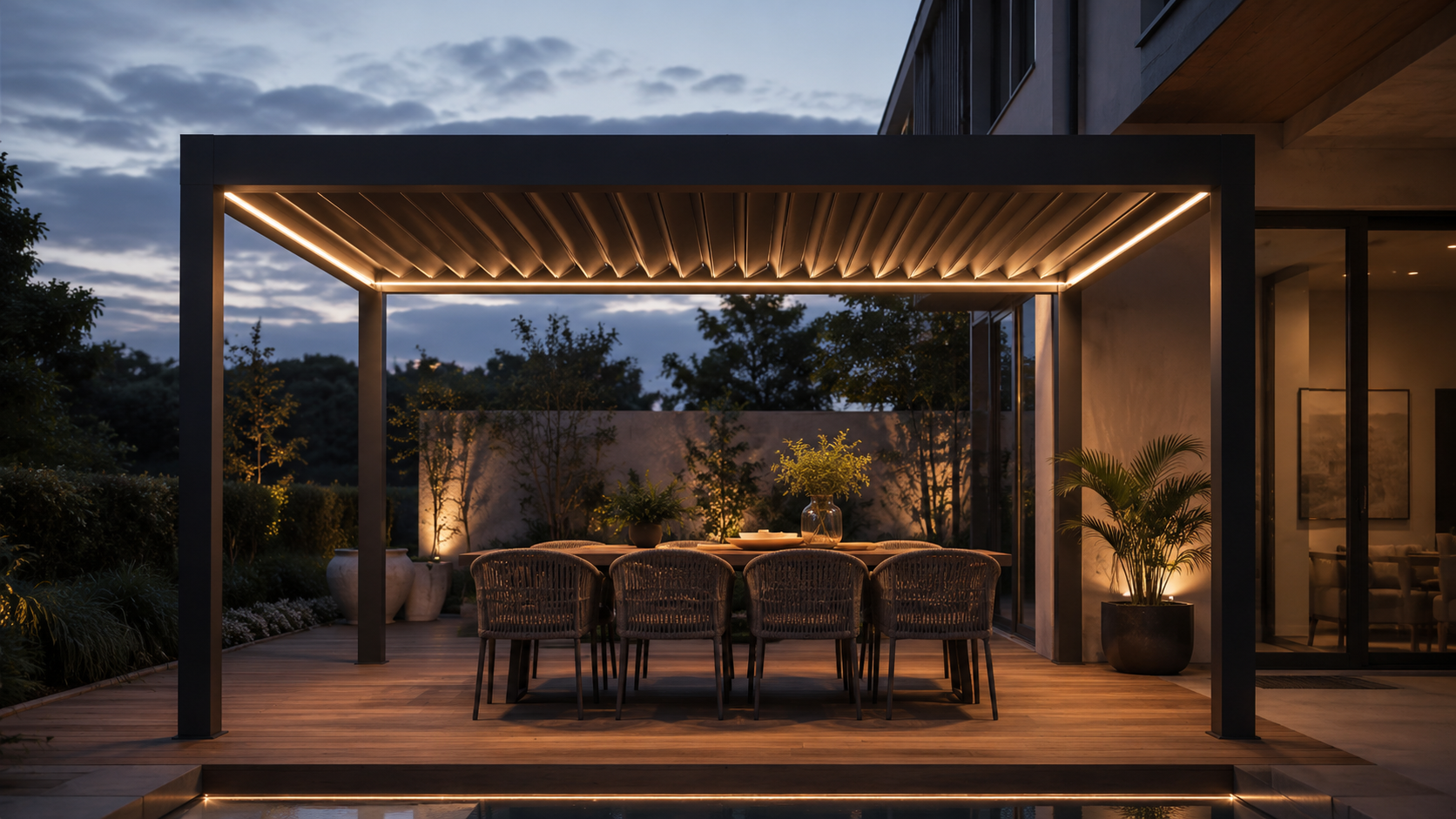
An outdoor pergola often looks finished during the day, but the real test begins after sunset. Around 7 pm, the table still needs light for plates, drinks and safe movement, yet the space should not feel like a bright kitchen. Good lighting works quietly. It softens the roof line, keeps faces comfortable, and helps the dining area stay useful without making the evening feel over-lit.
Why evening dining feels different under an outdoor pergola
During the afternoon, shade does most of the work. The roof blocks harsh sun, the table feels cooler, and a louvred structure gives the patio a clear shape. However, after sunset, the same area can suddenly feel unfinished if the lighting is only an afterthought.
The reason is simple. Daytime comfort is about controlling heat and brightness. Evening comfort is about controlling contrast. A table can look fine at 6 pm, then feel strangely flat by 7:45 pm because the plates are visible but the corners, chair legs and serving path are not.
This is why a covered dining area needs a different plan from a general backyard light. The glow should help people eat, talk, stand up, move around the table and carry dishes back inside. It should not shout for attention.
A useful test is not simply “Is it bright enough?” The better test is “Can the table, chairs and walking path be seen without glare?” That small change leads to a much better lighting plan.

View LED Strip Lighting
The simple principle: light the activity, not the whole backyard
Many outdoor lighting mistakes come from trying to light everything. The garden, fence, table, roof and walking path all receive the same strong beam. At first glance, that feels practical. After 20 minutes at the table, it often feels tiring.
A better method is more selective. The meal needs soft visibility. The walkway needs clear edges. The roof needs a gentle outline. The far garden can stay quieter, because a little darkness gives the dining area depth.
For broader outdoor lighting principles, DarkSky’s responsible lighting guide recommends using light only where needed, keeping brightness low, controlling when lights operate, and choosing warmer colour light where possible.
In this type of setup, outdoor pergola lighting should behave more like a soft frame than a spotlight. It should sit close to the beams, spread across the louvres, and create enough glow for a plate, a glass and the person across the table.
This is also why integrated LED strips make sense for dining. They do not hang down into the view. They follow the structure. More importantly, they help avoid the hard downward glare that often comes from a single ceiling-style fitting.
Soft light feels better because eyes adjust slowly
At night, eyes keep adjusting between bright and dark areas. When a table is lit too strongly, the surrounding patio feels darker. Then every movement away from the table feels less comfortable. This is the common reason a bright light can make an outdoor area feel smaller.
Soft, even light solves that problem. It keeps contrast lower. It also allows candles, table lamps or garden shadows to stay part of the atmosphere without making the main dining zone unsafe or awkward.
Plan the dining zone before choosing the lighting position
A dining zone is larger than the table. A four-seat table may take up one rectangle, but the real footprint includes chairs pulled back, a person standing with a tray, and the path to the kitchen or BBQ. In many patios, that adds 60 to 90 cm around the table.
So, the lighting plan should start from movement. Where does the first chair pull out? Where is the door? Where does a serving plate land before it reaches the table? These small details decide whether evening dining feels natural or slightly annoying.
For a rectangular table, light running parallel with the long side usually feels calm. For a round table, a more even perimeter can work better because people face different directions. For a narrow patio, one house-side light and one outer-edge light may be enough.
The aim is not to make the table look dramatic. The aim is to make the meal easy. Plates should be visible, glasses should not flash, and chair legs should not disappear into shadow.
A quick dining-zone check
- Mark the table position first, not the centre of the pergola.
- Allow space for chairs to move back without entering a dark corner.
- Check the path from the kitchen, BBQ or side gate.
- Stand at the main seat and look up; no light should hit the eyes directly.

Explore LED Strip Lighting
Glare control matters more than brightness
Brightness is easy to notice. Glare is easier to ignore until dinner starts. Then a glass door reflects a sharp line, a white plate becomes too bright, or someone shifts a chair because the light sits directly in the line of sight.
This is the point where many lighting plans fail. A space can be bright and still feel uncomfortable. The better standard is softer visibility, especially around faces and reflective surfaces.
A louvred roof helps because the underside can soften the light. When LED strips sit near the beams, the glow can wash across the louvres rather than dropping straight down. That makes the dining area feel more relaxed and less commercial.
However, nearby surfaces still matter. A dark glossy table may reflect thin lines of light. A large window can behave like a mirror after sunset. A polished tile floor can bounce more light upward than expected.
The 3-metre test
Stand about 3 metres from the table and imagine carrying a hot plate. The walking path should feel visible but not harsh. Then sit at the main chair and look across the table. If the light line pulls attention away from the meal, the position is too direct.
This small test works because it follows real movement. It catches problems that a flat plan often misses, especially in wall-mounted patios where glass doors and brick walls reflect light from several angles.
Combine louvres with LED strips for a cleaner night setup
Louvres already control how the pergola feels during the day. They manage sun, shade, airflow and rain cover. At night, they also become part of the lighting surface. That is easy to overlook, but it changes the whole mood.
With the louvres closed, warm LED light can reflect softly across the underside. With the louvres slightly open, the roof feels less solid and the glow becomes lighter. In both cases, the light stays integrated with the structure instead of becoming a separate object.
This is why a clean frame matters. A pergola with exposed cords, random clip-on lamps and mixed fittings can look busy after dark. A quieter line of LED lighting keeps attention on the table, the roof shape and the outdoor setting.
For modern outdoor dining, that clean look is usually the better choice. The lighting should support a meal at 7 pm, a quiet drink at 9 pm, and a relaxed weekend gathering without needing the space to be restyled each time.

View Integrated LED Detail
Scene Planning: Which lighting layout suits your dining area?
A lighting plan should match the way the space is used. The same LED strip can feel very different in a compact courtyard, a wide deck, a BBQ corner or a poolside dining area. So the right layout starts with the scene, not the accessory.
Small patio with a four-seat table
A small patio does not need light everywhere. Too much glow can make the area feel boxed in. In this situation, one soft line near the house and one line near the outer beam often feels enough for dinner.
The key is chair clearance. If the back chairs fall into shadow, the table will feel cramped at night even when the daytime layout works. Therefore, light should extend slightly beyond the table edge.
Wall-mounted dining area near a kitchen door
A wall-mounted pergola often supports the most practical evening routine. Food comes from inside, plates return to the kitchen, and the table sits close to the house. However, glass doors and windows can reflect light at night.
For this scene, the light should help the serving path without shining straight into the glass. A softer beam-line glow is usually better than a strong fitting near the door. It keeps the movement clear while reducing mirror-like reflections.
Freestanding dining area away from the house
A freestanding structure needs a stronger sense of edge. After sunset, the pergola should still read as a clear outdoor room. If only the table is lit, the surrounding paving can feel too dark.
In this case, perimeter lighting works well. It outlines the structure, helps people understand where the covered zone begins and ends, and makes the area feel intentional from a distance.
BBQ and dining combination
A BBQ area needs task visibility, while a dining table needs comfort. These are not the same thing. A strong light near the cooking area may be useful, but it should not spill harshly across the table.
For this layout, separate the two jobs. Let LED pergola lights create the dining mood, then use more focused lighting where cooking and serving happen. That keeps the meal relaxed without making the BBQ path unsafe.
Experience tips that make evening use feel easier
The best pergola lighting decisions are often small. They are not dramatic design moves. They are practical choices that make the space feel smoother at 7:30 pm, when plates are out and everyone is already seated.
Keep the table centre visually clean
A clear roof line keeps the space calm. It also avoids the feeling of a lamp hanging too low over food.
Light the chair zone
The real dining area includes pulled-back chairs. If that space is dark, the table feels smaller after sunset.
Watch reflective surfaces
Windows, glossy tables and pale paving can bounce light. Softer placement keeps reflections more comfortable.
Use darkness on purpose
Not every garden corner needs light. A quieter background makes the dining zone feel warmer and more settled.

View P180 Pergola
Product path: when LED Strip Lighting and P180 make sense together
A dining-first pergola needs two things to work well after sunset. The structure should create a stable outdoor room, and the lighting should extend the space into the evening without adding visual clutter.
For broader planning, a well-matched outdoor pergola should be considered as part of the dining routine, not only as shade cover. The table position, louvre direction, wall connection and walking path all affect how evening use feels.
For the lighting layer, LED Strip Lighting is the cleaner route when the goal is soft dining light. It follows the pergola frame, creates a warmer perimeter glow, and avoids the heavy look of a central lamp.
For the structure layer, the P180 suits many medium dining patios because it offers a strong aluminium louvred frame with manual or motorised options, plus freestanding or wall-mounted layouts. In a dining-focused outdoor pergola setup, that flexibility matters more than one single specification.
The natural combination is clear. P180 defines the room. LED strips make the room usable after dark. Together, they support weekday dinners, small gatherings, quiet evening drinks and safer movement around chairs and serving areas.
Installation should also be planned properly. Everpergo does not directly provide installation services, but can recommend experienced installers and provide installation guides and technical support. Electrical work should follow local requirements, especially where lighting, power and outdoor exposure are involved.
How to judge the right lighting choice before adding it
A useful decision does not start with the accessory list. It starts with a normal evening. Imagine dinner beginning at 6:45 pm, plates staying on the table for an hour, and someone walking back to the kitchen twice. That is the scene the lighting has to support.
If the main problem is the table feeling dark, perimeter LED lighting usually helps. If the problem is food preparation beside the BBQ, a separate task light may be needed. If the problem is a black garden edge, a low landscape light may do more than extra brightness under the roof.
This judgement prevents over-lighting. It also keeps the pergola looking refined. A covered dining area should not need several competing fixtures when one integrated layer can do the quiet work.
Simple choice rule
Choose LED strips when the goal is calm evening dining, cleaner roof lines and softer movement around the table. Choose stronger task lighting only where cooking, cleaning or detailed work happens.
Related Everpergo resources
These product pages help connect the lighting idea with the pergola structure, accessory choice and next-step planning.
FAQ: outdoor pergola lighting for dining after dark
What type of light works best for pergola dining lighting?
Soft warm light usually works best. A single bright centre light can create glare on plates and glassware. Integrated LED strips along the pergola frame spread light more gently and keep the roof line cleaner.
Are LED pergola lights enough for dinner outside?
For many dining patios, yes. LED pergola lights can provide the main ambient layer for the table and chair zone. A BBQ bench, side path or garden edge may still need separate lighting if those areas are used often after dark.
Should lighting be planned before choosing a pergola size?
It helps to plan both together. Table size, chair movement, door position and wall reflections all affect LED placement. A smaller 3×3 m dining corner may need a simpler layout than a longer entertaining area.
Does Everpergo install pergolas or lighting?
Everpergo does not directly provide installation services, but can recommend experienced installers and provide installation guides and technical support. For lighting and electrical work, local requirements should always be followed.
A better evening starts with softer planning
A good outdoor pergola should not stop being useful when the sun drops. For dining after dark, the best lighting plan is usually calm, warm and integrated. It lights the table, supports movement, and leaves enough shadow for the evening to feel relaxed.
The most practical route is not to add random brightness later. It is to plan the frame, the table and the LED layer together. That is where the P180 and LED Strip Lighting pairing feels natural: the structure creates the outdoor room, and the warm integrated light makes that room easier to use after dinner begins.
- Start with the table, chair clearance and walking path before choosing light placement.
- Use soft perimeter lighting instead of one harsh centre point.
- Pair LED lighting with the pergola layout early, especially for wall-mounted and motorised plans.
Make the pergola work after sunset
For a dining space that feels calm in the evening, start with the P180 Pergola and add warm LED Strip Lighting around the frame. It keeps the structure clean, improves visibility, and turns the covered area into a more usable night-time setting.
View LED Strip Lighting View P180 Pergola
Share:
Roofed Pergola vs Shade Sail: Which Works Better Long Term?
Patio Cover Ideas for Australian Homes: What Works Best for Sun and Rain?