

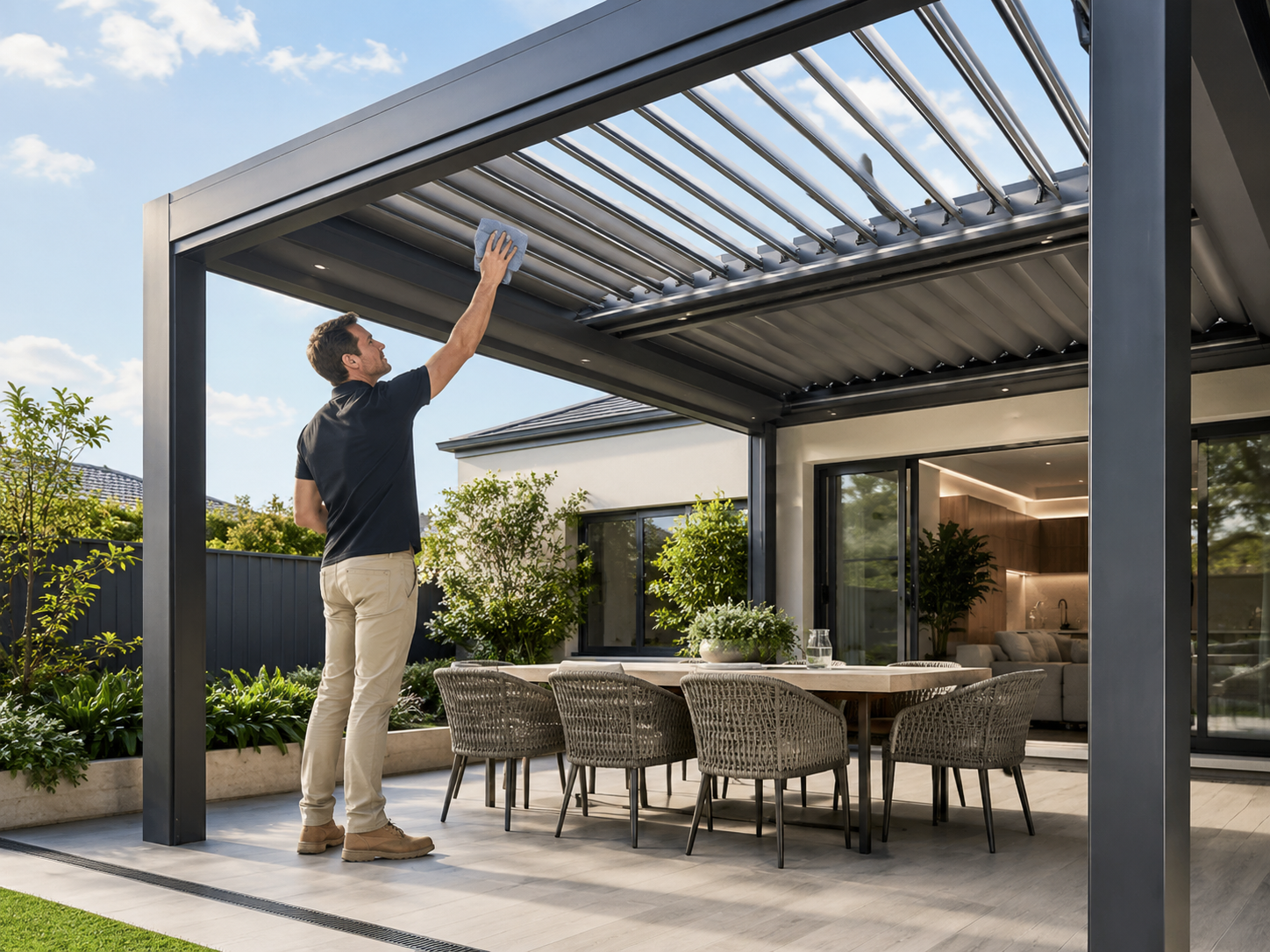
Good motorised pergola maintenance should make the roof feel predictable to use. The louvres move smoothly, water follows its normal drainage path, the motor area stays clear, and small changes are noticed before they develop into more disruptive problems.
Stop operating the roof if movement changes suddenly
Do not keep restarting the system if the louvres move unevenly, stop at the same position, produce grinding or sharp clicking sounds, or appear to be obstructed. Check only visible and safely accessible areas, then contact support if the problem continues.
After a dusty week, a windy afternoon or a sudden shower, an outdoor louvred roof usually gives a few small clues about its condition. The louvres may sound slightly different. A leaf may sit along a blade edge. A drainage channel may dry more slowly than usual. These signs do not necessarily mean something has failed, but they should not be ignored.
This guide is built around practical after-care. It does not explain how to dismantle motors, reset wiring or repair internal drive parts. Instead, it explains what owners can check safely, what should be left alone and when photos plus a support message are the more appropriate next step.
The routine is straightforward: keep moving areas clear, protect the drainage route, inspect the roof after rough weather and follow the operating instructions supplied with the selected configuration. For broader aluminium and coating care, Everpergo also provides a dedicated Maintenance page.

Motorised Pergola Maintenance Around the Motor Area
During normal use, the motor should respond clearly, move the louvres without harsh noise and complete an open-close cycle without repeatedly stopping. A sudden change in sound, speed or stopping position is more useful to notice than trying to diagnose the internal cause.
Outdoor settings are naturally exposed to dust and organic debris. Cobwebs settle near beams, fine dirt collects around visible housing areas, and leaves can gather along roof edges after a windy night. A soft dry cloth can be used around accessible surfaces, while direct pressure into motor housings, wiring paths or control points should be avoided.
The practical rule is to clean around the motor area, not inside it. If the roof hesitates, makes a scraping sound or stops in the same place more than once, forcing another cycle may place additional load on the system. A few photos, a short video and a clear note usually help the support team identify the appropriate next step faster.
Safe checks around the motor area
- Run one controlled open-close cycle and listen for steady movement.
- Remove loose leaves, dust, cobwebs and visible debris near accessible housing areas.
- Keep high-pressure water away from control points and electrical areas.
- Stop operation if the louvres jam, drag or move unevenly.
- Take both wide and close photos if movement or sound changes.
Internal motor components, electrical connections and drive parts should remain within the appropriate technical support process. Routine owner care should stay focused on clean surroundings, visible obstructions and early observation.
Louvre Movement and Early Warning Signs
Louvres are the part that makes the roof flexible. They open for airflow, tilt for afternoon shade and close when weather protection is needed. Because the blades move as a connected system, one obstructed edge can affect the movement of the wider roof.
A brief movement check is useful during regular use and after windy weather. Open the louvres fully, pause, then close them while watching both ends of the roof. Movement should look even, and the blade line should not appear to rub against a side channel or stop at one repeated angle.
For a motorised pergola, the most useful maintenance habit is noticing resistance before the motor is repeatedly asked to work against it. Thin branches, seed pods, dry leaves and dirt near blade edges are common visible obstructions. If no obstruction is visible and the behaviour continues, operation should stop.
Also observe the angle used most often. A dining patio may regularly use a half-open position in late afternoon, while a poolside space may use a different tilt during morning glare. Small obstructions and scrape marks can become noticeable first at these everyday positions.

Cleaning the Louvre Roof and Visible Components
Cleaning should protect the system rather than place additional stress on it. Remove loose debris first, then wash accessible aluminium surfaces with clean water, mild detergent and a soft cloth, sponge or soft-bristled brush. Rinse gently and allow the surfaces to dry naturally.
The upper side of the louvres deserves attention because it collects material that may not be visible from below. Pollen, bird marks, dust and leaves can sit along the blade edges. After rain, this build-up may become more difficult to remove and can collect close to moving joins.
For a motorised pergola, cleaning also means slowing down around motors, controllers, lighting connections and optional sensor areas. A soft cloth is safer than an abrasive pad, and a gentle rinse is more appropriate than directing pressurised water into joins or electrical locations.
A practical cleaning rhythm
- After windy weather: remove leaves and small branches from visible louvre edges and channels.
- During warm or dusty months: wipe accessible aluminium surfaces when visible build-up appears.
- At the recommended maintenance interval: wash with mild detergent and clean water.
- Near coastal or dusty areas: follow a more frequent cleaning schedule because salt and fine grit settle faster.
- After storms: inspect the roof line and remove debris before the next operating cycle.
Cleaning is also an opportunity to notice changes. A recurring dirt line at one corner, a new scrape mark near a blade edge or a wet patch below the same post may show where movement or drainage requires closer attention.
Drainage Checks After Rain
When the louvres close, rainwater needs a clear route through the roof edges, channels and designated exit points. If leaves, mud or seed pods restrict that route, water may drain more slowly or appear in a different location.
The floor often gives the first useful clue after rain. A new drip line beside a post, a slow-drying patch near a chair or repeated water marks close to a doorway can show where cleaning or support may be needed. A single wet area during wind-driven rain does not automatically mean that the roof drainage has failed.
Compare the result with earlier rain. If water is leaving from a new location or taking noticeably longer to clear, inspect the visible channels, blade edges and outlet areas before operating the roof again.
Furniture placement also affects maintenance access. A large planter, storage box or outdoor kitchen unit positioned against a drainage outlet can make cleaning difficult. Even in a compact courtyard, leaving a small service gap can make seasonal upkeep easier.
Wind and Storm Checks
Outdoor structures remain exposed to changing weather, and Australian conditions can shift quickly. Preparation before strong wind arrives and a visual inspection after the weather passes are more useful than relying on the roof alone to manage every surrounding hazard.
Before rough weather, move or secure loose objects around the patio. Cushions, lightweight chairs, umbrellas, toys and garden tools can strike the frame or enter the moving area. Nearby branches should also be kept clear of the louvres and roof edges.
If a rain or wind sensor is fitted, keep the visible sensor area clean and unobstructed. Dust, spider webs, leaves or nearby objects may affect the surrounding conditions it reads. Sensor availability and behaviour depend on the selected configuration, so owners should follow the instructions supplied with their system.
For broader weather awareness, the Australian Bureau of Meteorology publishes warnings and alerts for significant events. Checking current conditions is useful before leaving outdoor furniture, retractable blinds or accessories exposed.

Warranty Records and Support Information
Product documents, order details, installation information and support messages should be kept together. These records make it easier to identify the model and configuration when a question arises months or years after installation.
When a motorised component behaves differently, record the date, recent weather and whether the roof was opening or closing. Add one wide photo showing the full structure, one or two close photos of the affected area and, when safe, a short video showing the movement or sound once.
Warranty terms should always be checked against the current documents supplied for the product and official support advice. For general product and service questions, the Everpergo FAQs page is a useful next reference.
Details that make support easier
- A wide photo showing the full pergola and surrounding area.
- Close photos of the blade edge, channel, outlet or component of concern.
- A short description of the sound, movement or drainage change.
- The date of the issue and recent weather conditions.
- Whether the problem occurred while opening, closing or remaining stationary.
- Any recent cleaning, accessory changes or storm exposure.
Do not turn a support issue into an unplanned home repair. A careful visual check, clear evidence and early contact are safer than forcing the roof through repeated resistance or opening internal components.
Best-Fit Outdoor Spaces and Product Paths
A motorised pergola is most useful when the outdoor area is used frequently and needs quick adjustment as sunlight, airflow or weather changes. Dining patios, alfresco lounges, poolside seating areas and garden-facing decks can all benefit from adjustable louvres when the model and configuration match the setting.
The product path depends on the dimensions, exposure and intended use. P180 is suitable for a range of everyday patio and outdoor-living layouts. P180 Pro is intended for larger outdoor spaces where broader coverage and structural planning require closer consideration. Wind Blind supports side protection and privacy, while LED Strip Lighting can extend evening use.
P180
A practical option for everyday patios, dining areas and garden-facing outdoor spaces.
P180 Pro
A product direction for larger decks, wider outdoor rooms and more substantial layouts.
Wind Blind
Useful where side wind, low-angle sun or nearby sightlines reduce comfort.
LED Strip Lighting
Suitable for outdoor dining, evening lounge use and areas that need integrated light after dark.
Practical Selection and Maintenance-Access Advice
A suitable pergola starts with the actual outdoor setting rather than automatically choosing the largest model. Measure the patio, check door swing and access routes, note where water currently falls after rain and observe the usual wind direction.
For a compact dining area, clear walking space and drainage access may be the main priorities. For a wide deck, roof span, post position and side exposure may carry more weight. In a windy location, side protection may contribute more to comfort than simply increasing the roof size.
Maintenance access should also be planned before installation. Avoid permanently blocking post outlets, blind tracks or service areas with outdoor kitchens, fixed storage units or large planters. A small access gap can make cleaning and inspection easier over the life of the structure.
A useful enquiry includes rough dimensions, two or three photos, the preferred freestanding or wall-mounted layout and notes about sun, wind, rain and furniture placement. This gives the product discussion a practical starting point.

Get Support or Plan the Right Pergola Configuration
For an existing motorised pergola, send the model or order details, a wide photo, close photos of the affected area and a short description of the movement, sound or drainage change.
For a new project, send patio dimensions, layout photos and notes about sun, wind, drainage and furniture placement. This gives the Everpergo team enough context to discuss product options, access requirements and installation support.
Share:
Power Planning for a Motorised Pergola: What to Check Before Installation
Bioclimatic Pergola Explained: What It Means for Outdoor Comfort