

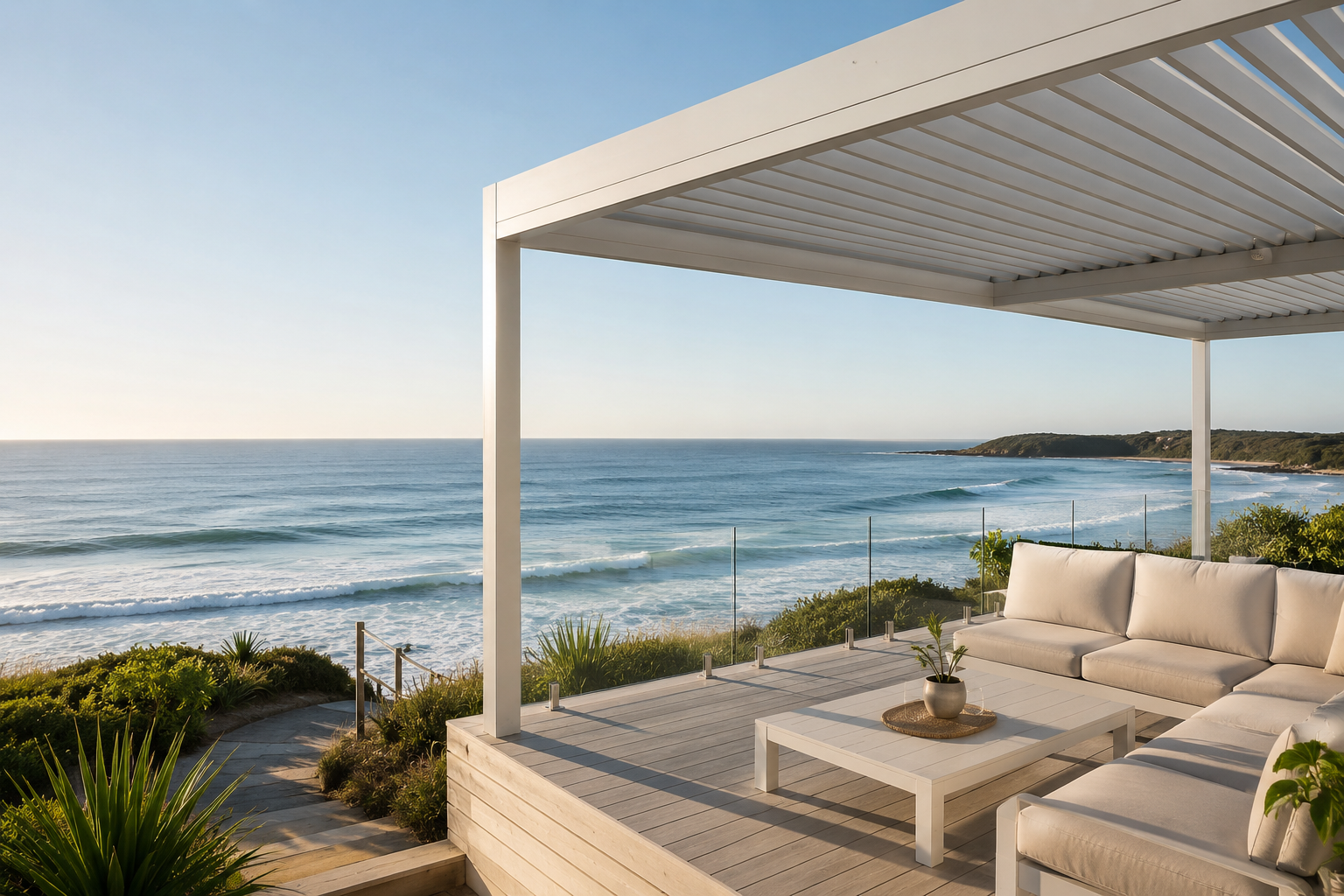
An aluminium pergola near the coast has a harder job than one sitting in a quiet inland backyard. Salt settles before it is visible. Wind changes direction between lunch and dinner. Morning moisture can sit on louvres even when the day looks clear. However, with the right material, layout, finish care, and cleaning rhythm, a coastal outdoor area can stay calm, usable, and easy to live with.
Why Coastal Homes Are Harder on Outdoor Materials
Near the water, outdoor materials rarely get a clean rest day. In the morning, a light film can sit on the table, louvres, posts, and glass doors. By afternoon, the sun bakes that film into the surface. Then, by evening, damp air brings the whole cycle back again.
That is why coastal wear often feels unfair. Nothing dramatic happens in one week. However, after three months of wind, salt, sun, and occasional rain, the difference between a well-chosen structure and a high-maintenance one starts to show.
Timber can look warm near a beach-style home, yet it usually asks for sanding, sealing, repainting, and closer moisture checks. Steel can feel strong, although scratched edges and exposed areas need attention in salt air. Meanwhile, aluminium gives a cleaner starting point for a structure that should stay outdoors every day.
The point is not to pretend any outdoor material is maintenance-free. It is better to be honest. A coastal structure still needs rinsing, soft cleaning, and drainage checks. The real win is choosing a system where those small jobs feel simple rather than exhausting.
The Simple Rule: Coastal Care Starts Before the First Clean
A pergola beside the coast should be judged before it is judged by size. Look at where salt lands, where wind enters, where rain runs, and where people actually sit at 5 p.m. Those four small checks usually say more than a long specification table.
In practice, a good coastal setup does three things. It gives shade without trapping heat. It lets water move away cleanly. Also, it leaves enough access around posts and louvres for a quick rinse after windy weather.
 View P180 Pro
Salt Air Pergola Principle: What Actually Happens on the Surface
A salt air pergola deals with a thin layer of salty moisture more often than obvious splashes. On a breezy day, tiny particles travel through the air and settle on horizontal surfaces first. Louvres, beam tops, furniture arms, and ledges usually collect that layer before vertical posts do.
At first, the surface may only feel slightly tacky. Later, dust sticks to the salt film, and the marks become easier to see. After several hot days, that mix can become harder to wipe away because sunlight has dried it into corners and edges.
This is the reason regular rinsing works so well. Fresh water removes the film before it turns into a stubborn layer. It is not glamorous. Still, a 10-minute rinse after a week of onshore wind is often more useful than a deep clean once a year.
The same idea applies to drainage. If leaves sit inside a channel after a windy afternoon, rain cannot move as cleanly through the system. Therefore, salt care and drainage care should be treated as one routine, not two separate chores.
Why waiting until the frame looks dirty is too late
A white frame shows grime earlier, so the reminder is visible. A grey frame can hide dust for longer, especially from three metres away. However, salt can still be there even when the finish looks clean after breakfast.
For that reason, coastal care should follow weather, not appearance. After several dry, windy days, a rinse makes sense. After rain with strong wind, a quick check along the louvre edges also helps, because leaves and small debris often collect where water should move.
Why an Aluminium Pergola Works Better for Coastal Outdoor Living
A coastal aluminium pergola makes sense because it keeps the care routine practical. Aluminium does not need the same sealing cycle as timber. Also, a powder-coated finish gives the frame a clean surface that can be washed with mild soap and fresh water.
This matters on ordinary weeks. A bayside patio is not only used on perfect summer days. It handles school bags near the sliding door, a BBQ on Sunday, wet feet around the pool, and a late coffee after the sea breeze cools the air.
In that kind of use, low-fuss care is not a small benefit. It changes how often the outdoor area feels ready. When a frame wipes clean easily, the table can stay outside longer, cushions can move back under cover faster, and the space feels less like a project.
A corrosion resistant pergola is not only about resisting damage. It is about keeping outdoor life simple. The material, finish, louvre control, drainage path, and cleaning access all need to work together.
What “corrosion resistant” should mean in real life
In real life, corrosion resistance should not sound like a lab phrase. It should mean fewer nervous checks after salty wind. It should mean no panic when damp air sits around the patio for three mornings in a row. It should also mean a clear cleaning method that does not need harsh chemicals.
Therefore, the better question is not “Will this survive the coast?” The better question is “Can this be cared for calmly, again and again, without turning the weekend into maintenance time?”
 View P180 Pergola
Wind Exposure: How to Judge a Coastal Aluminium Pergola Site
Wind is the part people often underestimate. A patio can feel peaceful at 9 a.m. and restless at 4 p.m. Near the coast, the uncomfortable wind is not always the strongest wind. Often, it is the regular one that arrives at the same time every day.
The best way to judge the site is simple. Stand in the proposed seating area during breakfast, mid-afternoon, and early evening. Notice which side the breeze enters from, where napkins move, and where doors or fences create a wind tunnel.
A louvred roof helps because it can shift between shade, ventilation, and cover. When the louvres are partly open, hot air can escape. When they are closed, the roof feels more settled during light rain or glare.
However, a roof alone cannot fix every side breeze. That is why layout matters. Sometimes the dining table should sit closer to the house, while the lounge belongs at the calmer end. In other spaces, a side blind or planting strip can soften the one edge that causes most of the discomfort.
A quick wind test before choosing the layout
Place a light chair, a cushion, and a glass of water where the main table may sit. Then check that spot later in the day. If the cushion moves, the chair feels exposed, or the glass catches dust, the layout needs more thought.
This small test sounds too simple, but it works. It turns wind from a vague worry into something visible. From there, post placement, roof direction, and side protection become much easier to decide.
Coastal Site Check: Three Questions Before Choosing
Where does salt land?
Check ledges, glass doors, railings, and outdoor tables after one windy day.
Where does wind enter?
Stand in the seating area during late afternoon, not only on a calm morning.
Where will water go?
Look at paving fall, gutters, garden beds, and door thresholds before fixing the layout.
Salt, Cleaning Frequency, and Powder Coating Care
Cleaning near the coast should feel boring. That is a good thing. A simple rhythm keeps the work light, while long gaps turn small marks into stubborn patches.
For many coastal homes, a fresh-water rinse every two to four weeks is a sensible starting point. After strong wind, storm spray, or a long dry period, a quicker rinse helps more than waiting for the next deep clean.
Mild soap and a soft cloth are enough for normal dirt. Start with the top edges, then move down the posts and touch points. After that, rinse the surface so soap does not dry on the finish.
Avoid metal brushes, abrasive pads, and harsh solvents. They can dull or mark the powder-coated surface. A coastal frame needs regular gentleness, not aggressive scrubbing.
The same care applies around base plates. Keep leaves, wet soil, and fertiliser splash away from post feet where possible. Also, leave enough space around each post so a cloth or hose can reach the area without awkward bending.
A practical monthly routine
Pick one easy moment each month. For example, after washing outdoor cushions or hosing the deck, rinse the frame and louvre edges too. It adds a few minutes, but it keeps salt care tied to an existing outdoor habit.
During summer, check more often. Sunscreen, BBQ smoke, dust, and salt can all land in the same week. A short rinse after a busy weekend keeps the pergola feeling ready for the next meal outside.
Coastal Use Scenarios: Dining, Poolside, BBQ, and Evening Comfort
A coastal pergola should be planned around real use, not only around the edge of the paving. A dining area needs chair clearance and a calm path from the kitchen. A poolside area needs glare control. A BBQ zone needs airflow and a surface that can be cleaned after smoke and salt mix in the air.
For dining, the best position is often close enough to the house to feel convenient, but not so tight that chairs hit posts. Leave room for a person carrying plates to pass behind seated people. That one detail can decide whether the area feels easy or annoying.
Around a pool, the issue is often glare rather than shade alone. Water reflects light upward, especially in the middle of the day. A louvred roof gives more control because the angle can change as the sun moves.
For BBQ layouts, avoid trapping heat in the deepest corner. Keep cooking close to an open side where smoke can leave. Then let the table or lounge sit in the calmer area under the roof.
Evening use needs softer light, not more light
Coastal evenings can be the best time to use the patio. The heat drops, the breeze softens, and dinner stretches a little longer. However, harsh lighting can ruin that feeling fast.
Soft integrated LED lighting works better because it sits within the structure and spreads light evenly. It helps with plates, steps, and conversation without making the outdoor room feel like a work zone.
 View LED Strip Lighting
Colour and Finish: White, Grey, and Coastal Maintenance
Colour is not only a style choice near the coast. It also changes what maintenance looks like day to day. White frames show leaf marks, dust, and salty streaks earlier. Grey frames hide light dust better, but salt film can still sit there.
White often suits pale paving, beach-style furniture, rendered walls, and bright garden spaces. It can make a patio feel lighter in the morning. However, it rewards regular wipe-downs because marks are easier to see.
Grey works well with charcoal windows, timber decking, concrete pavers, brick walls, and native planting. It feels steady in mixed outdoor settings. Still, it should not be treated as maintenance-free just because dust is less obvious.
The better choice depends on the house and the cleaning habit. If the frame will be rinsed on a routine, either finish can work visually. If the patio collects heavy leaf fall or spray, the finish should be chosen with that reality in mind.
Model Path for Exposed Sites: When P180 Pro Makes Sense
Not every coastal home needs the largest pergola. A sheltered courtyard may only need a clean shade structure and a simple care routine. However, open patios, larger decks, and poolside areas often need a more serious model path.
P180 suits many medium to larger patios where shade, strength, and everyday outdoor use need balance. It can work for dining zones, general entertaining, and narrow layouts where flexibility matters.
P180 Pro makes more sense when the site is wider, more exposed, or expected to carry the main outdoor living area. A large coastal dining and lounge zone has more furniture, more movement, and often more wind pressure across the roofline.
This is where product choice becomes a judgement call rather than a spec race. If the pergola only covers a small breakfast corner, a simpler model may feel right. If it needs to define the main outdoor room beside water, garden, or pool, P180 Pro is easier to justify.
For model comparison, the Aluminium Pergola Range gives a clearer starting point before deciding between size, colour, operation, and accessories.
 Compare P180 Pro
Installation Planning: What to Prepare Before Ordering
Coastal installation planning should start with clear photos and measurements. Take one photo from each corner of the patio. Then add close-up photos of doors, eaves, walls, paving edges, drainage points, and any nearby pool or garden bed.
Measurements should include width, depth, wall height, door clearance, paving fall, and the distance from posts to walking paths. These details help avoid awkward surprises, such as a post sitting where a chair needs to slide back.
Everpergo does not directly provide installation services, but can recommend experienced installers and provide installation guides and technical support. This matters for coastal sites because wind exposure, fixing surfaces, and drainage paths need careful checking before the structure goes in.
For wall-mounted layouts, the connection to the house deserves extra attention. For freestanding layouts, post positions matter more. In both cases, the best plan leaves space to clean, rinse, walk, sit, and move furniture without fighting the frame.
Common Mistakes with a Coastal Pergola
The first mistake is choosing by roof size alone. A big roof can still feel wrong if the wind enters from the dining side every afternoon. Layout should follow the site, not only the paving outline.
The second mistake is cleaning only when the frame looks dirty. Salt does not always announce itself. A regular fresh-water rinse is easier than waiting until marks need a stronger clean.
Another mistake is over-closing the space. A coastal patio still needs airflow, especially after rain or humid nights. Protect the problem side, but avoid turning every edge into a wall.
The last mistake is forgetting the small daily movements. Chair clearance, hose access, planter position, BBQ smoke, and evening light all affect whether the pergola gets used often. These details sound small, yet they decide the real comfort of the space.
Quick Decision Guide
- Choose a compact pergola path when the patio is sheltered, narrow, and mainly used for shade.
- Consider P180 when the space needs a flexible balance of dining, lounging, and regular outdoor use.
- Look at P180 Pro when the site is wider, more exposed, or used as the main outdoor living zone.
- Add LED lighting when dinner, reading, or late evening use matters more than midday shade alone.
- Plan extra side protection only where wind is repeated and noticeable, not around every side.
FAQ
Is an aluminium pergola suitable for a coastal home?
Yes, it is a practical choice for many coastal homes because aluminium suits outdoor exposure and can be powder coated for easier surface care. However, salt air still needs regular rinsing and mild cleaning.
How often should a salt air pergola be cleaned?
A fresh-water rinse every two to four weeks suits many coastal settings. After strong wind, storms, or long dry periods, a quicker rinse is better. Mild soap and a soft cloth are enough for normal grime.
Does a louvred pergola help with wind?
A louvred roof can help manage airflow, shade, and cover, but it does not remove every side breeze. For exposed patios, layout, post position, furniture placement, and side protection should be considered together.
When is P180 Pro a better choice?
P180 Pro is worth considering for larger, wider, or more exposed outdoor areas where the pergola becomes the main dining and lounge structure. For smaller sheltered patios, a simpler model may be enough.
A Better Coastal Pergola Starts with the Site
A good coastal pergola is not only about looking modern in a photo. It has to deal with salt film, changing wind, bright glare, damp mornings, and the small mess of normal outdoor living. That is why material, finish, drainage, and cleaning access all matter.
The smarter path is simple. Notice the site first. Understand why salt and wind behave the way they do. Then choose the model, colour, accessories, and care routine that match the space. This is how an aluminium pergola becomes useful for more than one perfect weekend.
For exposed coastal and bayside patios, P180 Pro is a natural place to look because it suits larger outdoor living areas where shade, structure, and long-term comfort need to work together. The choice still starts with the site, not the product page.
- Check salt build-up after one windy day, especially on louvres, beams, and outdoor tables.
- Test wind direction at dinner time before deciding where the table and lounge should sit.
- Choose the model and accessories around real use: dining, poolside shade, BBQ airflow, or evening comfort.
Planning a pergola near the coast?
Start with the exposed side, the cleaning routine, and the time of day the outdoor area gets used most. Then compare P180 Pro and the wider Everpergo range with those details in mind.
View P180 Pro Explore Aluminium Pergola Range
Share:
Freestanding Pergola by the Pool: Shade and Safety Checks
Custom Pergola for Irregular Patios: When Standard Sizes Fail