

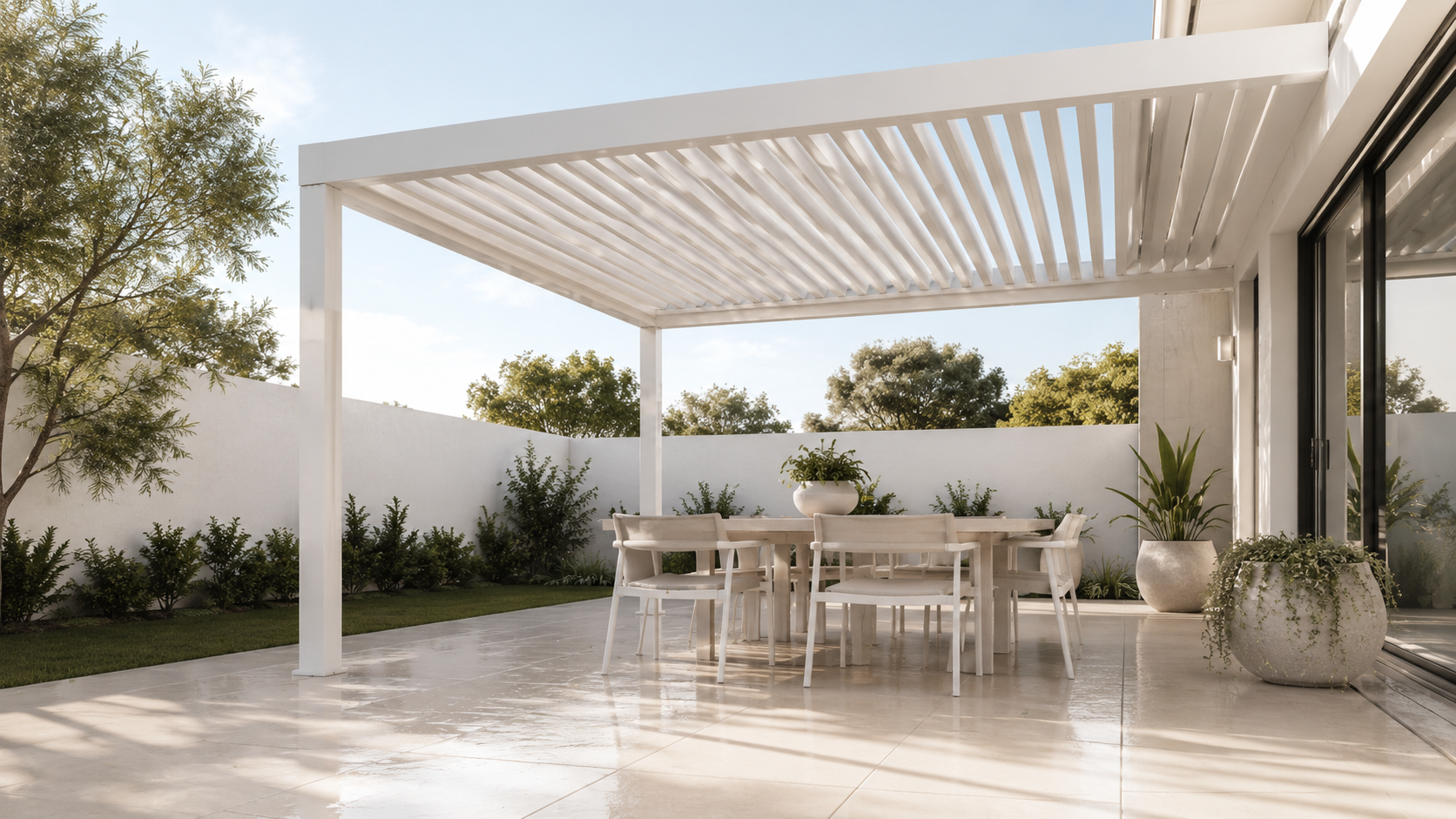
An aluminium pergola should make an outdoor area feel easier, not more demanding. Still, Australian weather leaves small reminders everywhere: dust after a dry week, leaves along the roof edge after wind, pollen in spring, and a faint salt film near the coast. Good maintenance is not about turning every weekend into a cleaning job. It is about noticing small signs early, then handling them before they become annoying.
Best habit
Clean lightly before dirt becomes stubborn. A soft rinse after wind is easier than a hard scrub later.
Main risk
Leaves, dust, seed pods, salt film, and grease residue usually create the real maintenance work.
Care style
Use clean water, mild detergent, soft tools, and regular checks. Avoid rough cleaning methods.
1. Why Material Changes Aluminium Pergola Maintenance
Maintenance does not start with a sponge. It starts with the material sitting outside every day. A patio roof has to face dry heat, sudden rain, wind, dust, insects, wet leaves, and long hours of direct sun.
Timber can look warm, but it asks for a different kind of attention. It may need sealing, repainting, sanding, or close checking as the years pass. By contrast, an aluminium pergola keeps the routine calmer because most of the work is simple: rinse the frame, clear debris, check movement, and keep drainage paths open.
This difference matters in real outdoor spaces. A patio is rarely empty. There may be a dining table under the roof, cushions in one corner, a barbecue nearby, pot plants close to the posts, and a dog bowl that moves around without much thought.
Therefore, the structure should not feel too precious. It should sit comfortably in daily life. It should make shade easier at lunch, airflow easier during cooking, and light rain less disruptive when the outdoor table is already set.
Everpergo focuses on all-aluminium louvred pergolas, including P120, P180 and P180 Pro, with manual or motorised options and freestanding or wall-mounted layouts. That makes the range easier to understand for long-term care: fewer precious surfaces, more practical outdoor use, and a routine built around cleaning, drainage and movement checks.
Still, low maintenance does not mean no maintenance. Leaves can sit inside channels. Dust can dry onto louvres. Coastal air can leave residue. The point is that the work stays manageable when the right habits are built into the way the outdoor area is used.
Practical view
The goal is not to keep the pergola spotless. The goal is to keep it easy to live with.
A roof that sits above real outdoor life will not look perfect every day. Dust lands. Pollen settles. A few leaves blow in after dinner. That is normal.
The better question is whether the routine stays simple. If a five-minute rinse and a quick channel check keep the space feeling calm, the structure is doing its job.
 View P120 Pergola
2. What Daily Outdoor Use Really Does to a Pergola
A pergola does not live in a showroom. It sits above chairs, cushions, planters, outdoor rugs, toys, serving trays, wet towels, and half-finished cups of coffee. Because of that, maintenance should be planned around real use, not an empty patio photo.
After a windy evening, the roof edge is often the first place to check. A few leaves near the louvre ends may not look serious. However, wet leaves can slow water flow after the next shower.
After a dry fortnight, the problem looks different. Dust may sit on the louvres and upper frame. A gentle hose rinse before a hot afternoon can stop that dust from baking onto the surface.
After a long barbecue lunch, the cooking side deserves attention. Smoke and light grease can leave a film that feels slightly sticky. Warm water and mild detergent can remove it before outdoor dust settles into it.
In spring, pollen can be more annoying than it looks. It starts as a thin yellow-green layer, then becomes tacky when mixed with dew. If the area is used for outdoor dining, that layer can move from the louvres to the table, chairs and glass doors.
This is why the best routine is simple: look, rinse, clear, wipe and listen. Look at the roof edges. Rinse dust before it sets. Clear leaves before rain. Wipe visible marks before they become part of the scene. Listen when louvres move.
Quick judgement
If the same spot gets dirty every month, the layout is telling a story.
One corner may collect leaves because a hedge sits too close. One post may show water marks because a pot splashes soil after rain. One side may feel sticky because it faces the barbecue.
Therefore, maintenance is not only about cleaning. It is also about reading the outdoor area and changing small habits around it.
Three signs to fix early
- One drainage side keeps dripping after rain.
- A louvre sounds different when opening or closing.
- A post base stays damp because plants or furniture sit too close.
3. Monthly Visual Checks That Prevent Bigger Problems
Generally, a monthly check is enough for many suburban patios. It should feel like a slow walk around the outdoor area, not a technical inspection. A few minutes can reveal whether the space is staying clean, draining properly and moving as expected.
Start at the base. Look around the lower posts, base plates, paving, decking or tiles. If the same corner stays damp after rain, the surrounding area may need attention. Sometimes the issue is not the pergola itself, but soil, mulch, leaves or furniture trapping moisture near the post.
Then look up. Roof edges are more important than they seem. The middle of the roof may look tidy, while fine leaves and seed pods collect along the drainage path. This is especially common near hedges, gum trees and garden beds.
Next, check the louvre line from below. The blades should look even. If one section appears slightly different, avoid forcing the system. A small twig or trapped leaf can create resistance before anything is actually damaged.
A 10-minute monthly check
- Look for leaves, dust, seed pods, cobwebs or bird droppings along the louvre ends.
- Check whether rain leaves dirt trails in the same corner each time.
- Look around post bases for damp mulch, soil splash or furniture rubbing marks.
- Open and close the louvres gently, then stop if movement feels uneven.
- Keep plants, storage boxes and outdoor decor slightly away from posts and channels.
Meanwhile, small noises deserve attention. A faint rattle during wind, a scraping sound during movement, or a drip that continues from the same side after rain can all point to a small maintenance issue. These signs are easier to handle early.
Also, layout changes the inspection. A freestanding pergola faces weather from every side. A wall-mounted pergola may collect more dirt where the structure meets the home. So the check should follow the actual site, not a generic checklist.
4. Pergola Cleaning Without Damaging the Finish
Pergola cleaning should be gentle. That sounds too simple, but it is the detail that prevents most avoidable damage. A louvred roof is not a driveway. It has coated surfaces, channels, edges, moving parts and sometimes motorised components.
Start with loose dirt. A garden hose or clean bucket of water removes the top layer of dust. After that, use warm water with a small amount of mild detergent. Then wipe with a soft sponge or a soft-bristled brush.
However, avoid harsh chemical cleaners. They may look efficient for a few minutes, but they can be too aggressive for powder-coated aluminium. A mild clean done regularly is safer than one heavy clean after a year of neglect.
Also, avoid high pressure close to louvre ends, seals, side channels or motor areas. A hard blast of water can push moisture into places where it should not sit. Normal water flow and patient wiping are usually the better choice.
A safe cleaning order
First, rinse the roof and frame from the top down. Next, remove leaves and visible debris from the roof edge and louvre channels. Then wash visible surfaces with mild detergent and a soft sponge.
After that, rinse everything with clean water until soap residue has gone. Finally, wipe the posts and visible edges with a microfibre cloth if water spots remain. This last step makes a big difference near dining and lounge areas.
In summer, early morning or late afternoon works best. The frame is cooler, water dries more evenly, and the job feels less rushed. In winter, choose a dry part of the day so lower posts and channels can dry before evening moisture returns.
For the full care reference, the official Pergola Maintenance Guide is the most useful internal page to keep nearby. It keeps the advice practical: clean regularly, inspect gently, clear debris and adjust the routine for coastal or leafy conditions.
 View P180 Pergola
5. Cleaning Louvres, Gutters and Drainage Channels After Rain
After rain, drainage tells the truth. If water moves away cleanly, the structure feels calm and reliable. If one corner keeps dripping long after the rain has stopped, there may be debris slowing the flow.
In many homes, the problem starts small. A few narrow leaves sit near a channel. Dust sticks to them. The next shower turns the mix into a damp layer. Then more debris catches in the same place.
Therefore, the roof edge deserves more attention than the broad middle surface. The centre may look clean from below, while the working parts of the drainage path quietly hold most of the material.
Also, adjustable louvres need a clear path. If twigs or leaves sit near the blade ends, movement may sound different. The right response is not to keep pressing the control or turning the handle. The better response is to stop, check, and clear visible debris.
Rain check: what to look for
Slow drips
A repeated drip from one side may point to debris or poor water movement in that area.
Dirt trails
Brown or grey water marks show where rain is carrying dust, leaves or soil splash.
Wet base areas
Damp mulch, soil or trapped leaves near post bases can make lower cleaning harder.
Before winter, a deeper drainage check is worth doing. Choose a dry afternoon. Clear the louvre channels, rinse the drainage line, and look at the outlet area. It is much easier to remove dry leaves before several wet days arrive.
In narrow courtyards, this matters even more. Walls, fences, garden beds and outdoor furniture can trap leaves in repeat spots. Once those repeat spots are known, maintenance becomes much easier because the same areas can be checked first.
6. Coastal Air, Leafy Streets and Cleaning Frequency
Not every outdoor space needs the same care rhythm. A sheltered courtyard in Melbourne does not collect grime the same way as a coastal deck. A pergola beside a gum tree behaves differently from one in an open paved backyard.
Near the coast, salt can settle as a fine film. It may not look dramatic from a distance. Yet a hand wiped along the frame can pick up a slightly sticky residue after windy weather. That is the right time for a fresh-water rinse.
In coastal air, frequent light rinsing is better than waiting for a heavy clean. The aim is to remove salt before it sits too long. A mild detergent wash a few times a year can then handle the film that water alone does not fully remove.
In leafy streets, the issue is different. Leaves, flowers, seed pods, pollen and bird droppings can collect near louvre ends. Autumn and spring often need closer attention because the roof may gather material faster than expected.
Also, planting should stay slightly away from posts and side channels. Greenery softens an outdoor room, but constant contact can trap moisture and leave marks. A small gap keeps the space looking natural while making cleaning easier.
 View Wall-Mounted Pergola
7. Motorised System Care: Listen Before Forcing Anything
A motorised louvred roof changes the way an outdoor area feels. Shade can be adjusted from the table. Airflow can be opened during cooking. Rain cover can be created quickly when the sky changes.
However, motorised comfort still depends on clean movement. The most important habit is simple: if the system sounds strained, stop. A sudden change in sound, uneven movement or hesitation should not be ignored.
Often, the cause may be simple. A leaf, twig or small piece of debris can sit where movement should stay clear. Check visible louvre ends and side channels first. Avoid opening motor housings or handling electrical parts.
Manual systems need the same calm response. If the handle feels stiff, pushing harder is not the answer. Clear visible debris, check the roof edge, and only operate the system again when movement feels smooth.
Accessories need their own small habits
Accessories can make the space more comfortable, but they also add surfaces to maintain. LED lighting needs the surrounding frame kept clean. Wind blinds need clear side areas and sensible use during changing weather. Glass doors need clean tracks and regular wiping.
This does not make the system difficult. It only means accessories should be part of the same routine. After the main frame is cleaned, check the tracks, side rails, light areas and any visible surfaces that collect dust.
For installation planning, Everpergo does not directly provide installation services, but can recommend experienced installers and provide installation guides and technical support. That matters because long-term care is easier when the structure is placed, fixed and accessed properly from the start.
 View LED Strip Lighting
8. Maintenance by Outdoor Scene: Patio, BBQ, Pool and Garden
Maintenance becomes easier when the outdoor scene is understood honestly. A small patio, a poolside area, a barbecue corner and a leafy garden lounge do not create the same cleaning pattern. Each space leaves different marks.
Small patio or townhouse courtyard
In a small patio, the main mistake is overcrowding. A chair too close to a post makes wiping awkward. A tall plant under the roof drops leaves into the same corner. A storage box against a wall traps damp air after rain.
Therefore, leave breathing room around posts and edges. Even a narrow gap can make cleaning easier. It also keeps the structure visually lighter, which matters in compact spaces.
BBQ and outdoor kitchen area
In a BBQ area, smoke direction matters. Adjustable louvres help because they can open for airflow during cooking and close when shade or rain cover is needed. Still, the frame nearest the grill may need more frequent wiping.
After a long weekend cook-up, check the cooking side. If the frame feels slightly sticky, clean it with mild detergent and warm water before dust settles into the film. This keeps the area fresher for the next meal.
Poolside shade
Near a pool, splashes and mineral marks are the things to watch. Lower posts may collect water spots after a busy afternoon. Paving can also reflect heat, so cleaning early or late in the day feels more practical.
Meanwhile, soft furnishings need a realistic routine. Cushions, towels and outdoor rugs should not stay damp against posts, tracks or glass. A quick tidy after swimming keeps the shaded area from feeling heavy and wet.
Garden lounge or leafy corner
In a garden lounge, the scene can be beautiful and slightly messy at the same time. Leaves move in, insects gather around lighting, and pollen settles on flat surfaces. None of this is dramatic, but it rewards regular light cleaning.
Also, watch the planting height. A tree that looks far enough away in winter may reach the roof line by summer. Trimming early protects the finish, reduces debris and keeps the louvres moving freely.
9. Choosing a Low Maintenance Pergola: What to Judge Before Purchase
A low maintenance pergola is not only about the frame material. It is also about layout, size, colour, surrounding plants, cooking habits, furniture clearance, roof access and drainage. A good choice feels easy six months later, not only on delivery day.
Start with the messiest part of the outdoor area. If the pergola will sit near a BBQ, airflow and cleaning access matter. If it will sit under trees, louvre channels and roof edges deserve priority. If it will sit beside a pool, splash zones and lower posts need practical access.
Next, think about furniture movement. A large dining setting needs more clearance than a small coffee table. Chairs need room to slide back. A walkway from the door to the table should not be interrupted by a post.
Then, consider colour. Grey can sit quietly with modern paving, brick and darker window frames. White can brighten a small courtyard and create a lighter outdoor feel. Both can work well, but each shows dust and water marks differently.
Freestanding layouts create a defined outdoor room. They can work well over garden lounges, poolside seating and open patios. However, all sides face the weather, so every post and roof edge should remain reachable.
Wall-mounted layouts feel more connected to the home. They suit spaces outside sliding doors, kitchens and alfresco dining zones. However, the building side needs careful thought because water movement, wall clearance and access all affect long-term care.
For larger everyday outdoor areas, the P180 Pergola is a useful model to review. It gives a practical reference point for outdoor dining zones, regular shade control and spaces where the structure needs to feel strong without making maintenance complicated.
Practical selection test
Stand in the outdoor area at the worst time of day
A useful decision starts with one uncomfortable moment. It might be 3 pm glare across the table, wind hitting one side of the deck, rain reaching the doorway, or a seating area that feels too exposed after dinner.
Once that moment is clear, the pergola choice becomes more grounded. Roof control matters when heat and glare are the issue. Side protection matters when wind is the issue. Lighting matters when the space disappears after sunset.
This test also helps avoid overbuying. Not every outdoor area needs every accessory at once. A calm layout that solves the main discomfort usually feels better than a crowded setup filled with features that are rarely used.
 View Frameless Glass Door
Seasonal Maintenance Plan for Australian Weather
Australian weather does not follow one neat pattern. Summer brings dry dust and heat. Autumn brings leaves and wind. Winter tests drainage. Spring adds pollen, insects and fresh garden growth.
Therefore, seasonal care works better than one large annual clean. Each season has one main job. This keeps the routine simple and makes the pergola easier to enjoy across the year.
Summer: dust, heat and outdoor meals
Rinse dust before it bakes onto the surface. After BBQ-heavy weekends, wipe the cooking side with mild detergent.
Autumn: leaves, seed pods and roof edges
Focus on roof edges and drainage paths. Wet leaves can slow water movement if they sit too long.
Winter: rain flow and damp storage
After heavy rain, look for slow drips, water trails and dirt lines that show where drainage needs attention.
Spring: pollen, insects and a fresh reset
Pollen can become sticky when mixed with dew, so a proper rinse and mild wash can reset the space.
Common Mistakes That Make Maintenance Harder
Most difficult maintenance starts with a small repeated mistake. A pot sits too close. A roof edge is ignored for two months. A strong cleaner is used because the job feels overdue. None of these choices looks serious in the moment.
However, the fix is usually simple. Give the structure space, clean before dirt becomes stubborn, and avoid anything too harsh. These three habits solve more problems than complicated care routines.
Planting too close
Leaves and stems can trap moisture against posts and side channels. A small gap keeps the look soft without making cleaning awkward.
Only cleaning the visible middle
The broad roof surface may look fine while the edges collect debris. Channels need separate attention after wind and rain.
Forcing movement
If louvres hesitate, stop. Clear visible debris first, then test gently. Forcing movement can make a small issue worse.
Another common mistake is forgetting accessories during cleaning. Glass tracks, wind blind side areas and lighting zones can collect dust even when the main frame looks clean. These details sit close to daily living areas, so small marks show quickly.
Extended Reading
Useful Next Pages Before Choosing a Pergola
These pages create a natural next step after maintenance questions are clear. They help connect material choice, product selection and long-term care without pushing the decision too hard.
Maintenance routine
A practical reference for cleaning, inspection, drainage care and environment-based routines.
Read the Pergola Maintenance GuideMaterial comparison
A helpful follow-up when comparing aluminium with timber for Australian outdoor areas.
Read Aluminium Pergola vs TimberModel reference
A balanced model page to review layout, shade control and everyday outdoor use.
View the P180 PergolaFAQ: Aluminium Pergola Maintenance
How often should an aluminium pergola be cleaned?
In many suburban outdoor areas, a monthly visual check and a proper clean every few months works well. However, coastal locations, leafy streets, poolside spaces and BBQ zones usually need more frequent rinsing because salt, leaves, pollen, splash marks and grease film collect faster.
What is the safest way to clean a louvred pergola roof?
Start with a gentle rinse, then wash with warm water, mild detergent and a soft sponge or soft-bristled brush. After that, rinse thoroughly with clean water. Harsh chemicals, abrasive pads and strong pressure near louvre ends or motor areas should be avoided.
Does a motorised pergola need different maintenance?
Yes, but the routine remains simple. Louvre channels and motor surroundings should stay clear of dust, leaves and twigs. If movement sounds strained or uneven, stop using the system, check visible areas, and seek technical support if the issue remains.
Is a low maintenance pergola suitable near the coast?
Yes, a low maintenance pergola can suit coastal outdoor spaces, but salt air changes the cleaning rhythm. Regular fresh-water rinsing helps remove salt film before it sits too long. A mild detergent wash several times a year can help keep visible surfaces cleaner.
Can installation affect long-term maintenance?
Yes. Placement, drainage, fixing points, wall clearance, furniture layout and cleaning access all affect long-term care. Everpergo does not directly provide installation services, but can recommend experienced installers and provide installation guides and technical support.
What should be checked after strong wind or rain?
Check louvre ends, roof edges, drainage channels, lower posts and the area around base plates. Remove leaves, twigs and dirt before they collect moisture or block water movement. If louvre movement feels different afterward, inspect visible areas before operating again.
A calmer next step
The right pergola should make outdoor care feel lighter.
A well-kept aluminium pergola should stay quietly useful in the background of daily life. It should shade lunch, open for airflow, help with light rain and still look tidy after a simple rinse. The maintenance routine should support the space, not take over the space.
The strongest habit is early attention. Clear leaves before they sit wet in a channel. Rinse dust before summer heat bakes it in. Wipe the cooking side before smoke film turns sticky. Stop louvre movement when something sounds wrong.
Before choosing a model, look at the real setting: coastal air, nearby trees, BBQ smoke, pool splashes, furniture clearance and whether the structure should be freestanding or wall-mounted. With that picture clear, aluminium pergola maintenance becomes part of a good outdoor layout rather than an extra worry.
Share:
Outdoor Pergola for BBQ Areas: Shade, Smoke and Flow
Freestanding Pergola by the Pool: Shade and Safety Checks