

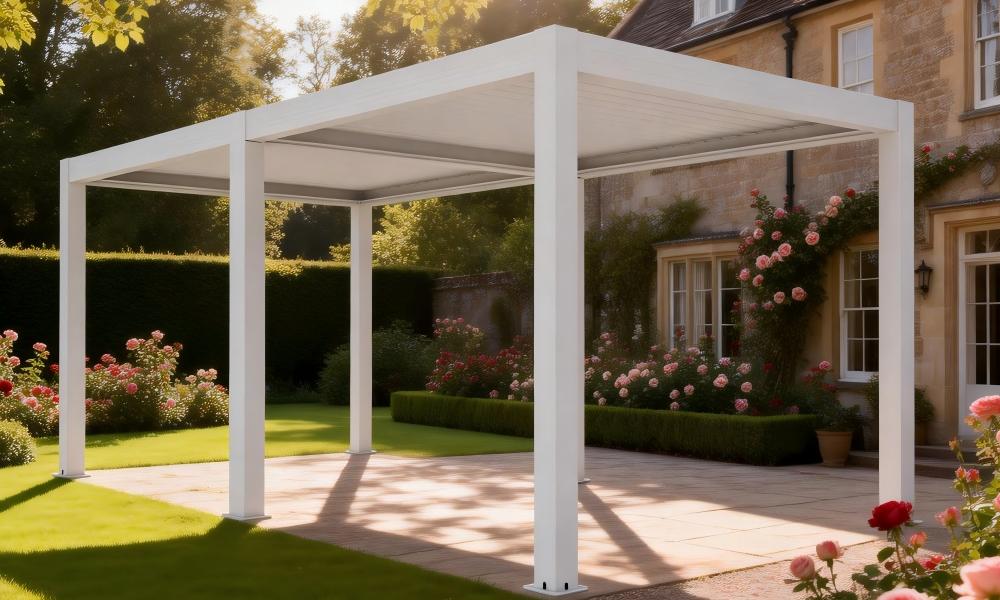
A white pergola can make an outdoor space feel lighter, calmer and more architectural without trying too hard. In the right setting, it softens the structure overhead, brightens the overall mood and helps the patio feel more connected to the house.
That is why white often works so well in bright courtyards, coastal-style homes and modern outdoor spaces with pale walls, softer paving and a cleaner material palette. Still, it is not automatically the right choice. A white pergola can feel effortless in one backyard and too sharp in another. The difference usually comes down to light, contrast, surrounding materials and how much presence the structure should have in the space.
This is what makes the finish decision more interesting than a simple colour preference. It affects visual weight, how open the patio feels, how the roofline reads against the sky, and whether the pergola feels like a natural extension of the house or a separate feature added afterward.
Contents
- Quick perspective
- Why white works so well in some outdoor spaces
- The design basics that make the choice easier
- Where a white pergola usually looks best
- When white is not the best answer
- White vs grey: the difference is bigger than colour
- How to judge if white is right for the space
- How to style a white pergola well
- How it feels in daily use
- Maintenance and cleaning
- Choosing the right pergola path
- FAQ
- Final thoughts
Quick perspective
A white pergola usually works best when the structure should feel lighter than the house, not stronger than it.
Why white works so well in some outdoor spaces
The first thing white changes is visual weight. Because a pergola sits overhead, the eye reads it almost like an outdoor ceiling line. A darker finish makes that line more noticeable and more defined. In some homes that feels grounded and architectural. In others it feels heavier than the space needs. A white pergola usually softens that effect. The structure still frames the patio, but it does not press down on it visually.
That is especially useful in courtyards and patios where the footprint is not particularly large. When walls, fencing and paving are already close to view, a heavier overhead frame can make the space feel more enclosed. White often helps preserve openness. It keeps the pergola present, but quieter.
It also tends to sit naturally beside light concrete, pale stone, cream render, washed timber and soft outdoor fabrics. In those settings, white often feels less like a decorative choice and more like part of the architecture itself.

In a compact courtyard, a lighter pergola finish can reduce the sense of overhead bulk and keep the space feeling open.
The design basics that make the choice easier
A lot of finish decisions feel harder than they should because the discussion stays too abstract. In practice, the choice becomes clearer when you reduce it to four basic ideas: visual weight, reflectance, temperature and scale.
Visual weight is the most immediate. Dark finishes look heavier. Light finishes look lighter. Because a pergola sits overhead, that difference matters more than people expect. It affects whether the structure feels calm and airy or firm and dominant.
Reflectance matters too. White reflects more light, which can make an outdoor area feel brighter and cleaner. That is often a strength. But in very pale spaces with glossy paving or strong poolside glare, too much brightness can flatten the scene. In those cases, warmth and texture elsewhere become even more important.
Temperature in appearance is what keeps white from looking stark. White often reads cooler. Timber, stone, greenery and natural fabrics help balance that coolness and make the space feel more settled.
Scale is the last piece. A small pergola in white is easy to place. A larger pergola in white can still look excellent, but proportion matters more. The bigger the structure, the more carefully it has to relate to the house line.
A useful way to think about it
White is not only a colour choice. It is a decision about how much visual presence the pergola should have.
Where a white pergola usually looks best
Bright courtyards
Bright courtyards are one of the strongest settings for a white pergola. These spaces already bounce light off walls and paving, so a darker frame can make the upper edge feel lower and more enclosed. White often keeps the courtyard feeling visually open.
Coastal-style homes
Coastal homes naturally suit lighter finishes because the surrounding palette is already doing most of the work. Sandy tones, soft planting, pale decking and white trims create a setting where white feels relaxed rather than stark.
Modern outdoor spaces
Modern homes often suit white for a different reason. The pergola does not need to dominate. It needs to extend the architecture. Where the house already uses pale materials and clean lines, a white finish can help the pergola sit quietly within that language.
Poolside entertaining areas
Pool surrounds already tend to feel bright because of water, sky and pale paving. In those settings, a white pergola can define the entertaining zone without breaking the backyard into darker, heavier sections.

A white pergola usually feels most natural in pale outdoor settings where the structure should stay light and visually calm.
When white is not the best answer
White is not right for every home. If the house is built around red brick, darker cladding, earthy stone or a warmer, heavier landscape palette, a white pergola can feel disconnected. Instead of blending into the setting, it starts to read as a separate object.
It can also be the wrong choice in spaces that are already extremely bright. If the backyard is full of pale walls, glossy paving and strong reflected light, another bright surface overhead may remove the contrast the space actually needs. This is often where grey becomes more useful, because it adds outline and grounding.
White vs grey: the difference is bigger than colour
White and grey do different jobs in a space. One usually lightens and softens. The other usually grounds and defines.
White usually works better when the space feels:
- Bright and already fairly light in tone
- Coastal, modern or visually calm
- Better with a softer roofline overhead
- More comfortable with the pergola blending into the house
Grey usually works better when the space feels:
- Darker, warmer or more earthy
- Built around brick or stronger contrast
- Too pale already
- In need of a clearer structural outline
Shortcut
If the pergola should feel lighter than the house, white usually makes more sense. If it should steady the space and define it more clearly, grey often wins.
How to judge if white is right for the space
A useful way to decide is to stop looking at product images for a moment and study the outdoor area itself. White should make the space feel more settled, not simply brighter.
- Check the site in afternoon light. This is usually when brightness, glare and shadow are easiest to judge.
- Look from inside the house. If the pergola is visible from the kitchen, dining or living area, decide whether the structure should fade back or frame the view more strongly.
- Look at the largest surfaces first. Walls, paving, fencing and major furniture pieces matter more than small details.
- Check for warmth nearby. Timber, greenery, stone and natural textures help white feel grounded and less clinical.
How to style a white pergola well
This is where many white outdoor spaces succeed or fail. A white pergola rarely looks best when everything around it is equally pale and smooth. It usually needs some warmth underneath it. Timber dining furniture, textured stone, softer fabrics and layered planting all help bring back depth.
Greenery makes a particularly big difference. A white pergola with no softness around it can feel exposed. The same structure with shrubs, pots or climbing planting nearby usually feels more settled almost immediately.
- White frame + pale stone + timber furniture
- White frame + light concrete + linen seating + olive planters
- White frame + washed decking + muted coastal textiles
- White frame + cream render + restrained black accents + soft planting

A larger pergola in white usually feels strongest when the surrounding materials bring back warmth, texture and visual depth.
How it feels in daily use
A pergola has to work on ordinary days, not only in inspiration images. Some patios are used for long lunches and weekend gatherings. Others carry daily life: breakfast coffee, school bags near the back door, pot plants being moved around, damp towels after the pool and late afternoon shade across the table. A white pergola can be very good at making those scenes feel cleaner and calmer without becoming the loudest thing in the yard.
That is one of its quieter strengths. The structure often steps back just enough to let light, planting, furniture and shadows do more of the talking.
Maintenance and cleaning
White usually shows dust, pollen and leaf residue sooner than grey. That part is true. But it does not automatically make the finish difficult to live with. In most cases, it simply rewards lighter and more regular cleaning.
- Rinse loose dust before it settles too long
- Check corners, beam lines and post edges
- Clean after heavy pollen or leaf fall
- Trim overhead branches where possible
- Reduce splash and debris with sensible surrounding planting
Choosing the right pergola path
The finish becomes easier to judge once the pergola type is clearer. Smaller courtyards and more straightforward patios often suit a simpler solution. Larger entertaining areas or longer house lines may benefit from a broader or more tailored layout. A white finish looks most effortless when the proportions do as well.
For compact outdoor areas, P120 is a sensible place to start. For broader patios and larger entertaining zones, P180 usually gives a stronger reference point. Where the site needs a closer fit, the custom pathway becomes the natural next step.
View P120 View P180 Customise a Pergola

Longer patios and more exacting house lines often benefit from a more tailored pergola approach.
FAQ
Is a white pergola harder to maintain than grey?
It usually shows dust and residue sooner, but that does not mean it is difficult to keep looking fresh. In many cases, light regular cleaning is enough.
Does white suit a modern pergola?
Yes. A white finish often suits a modern pergola very well when the house already uses pale materials, clean lines and a restrained palette.
Can a garden pergola be white without looking too stark?
Yes, but it usually needs softness around it. Planting, timber, stone and natural textures all help keep the frame from feeling too bare.
When is grey the better finish?
Grey is often the stronger choice in darker, warmer or more contrast-heavy settings where the pergola needs to add definition rather than softness.
Final thoughts
A white pergola is at its best when the outdoor space already wants lightness. Bright courtyards, coastal-inspired patios, pale modern homes and open entertaining areas often fall into that category. In those settings, white can make the structure feel calmer, less bulky and more naturally connected to the house.
In darker or more grounded spaces, grey may still be the better answer. The goal is not to follow a trend. It is to choose the finish that makes the whole backyard feel more resolved.
Compare All Pergolas Explore Custom Pergola Options View Larger Pergola Styles
Share:
Modern Pergola Design Ideas for Clean Outdoor Spaces
Pergola Sydney Buyers Guide: Heat, Wind and Outdoor Comfort