

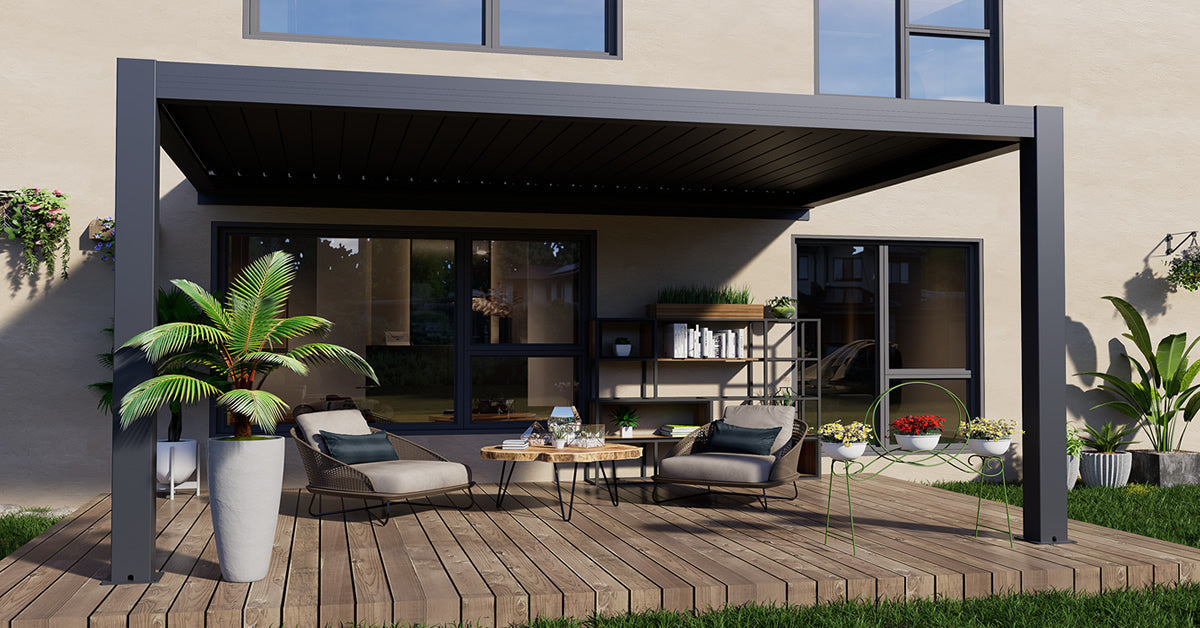
A garden pergola should make outdoor living easier, cooler, and more inviting. What it should not do is make the whole backyard feel darker, tighter, or more crowded than before. That is where many outdoor projects quietly go wrong. The shade is there, but the lightness disappears. The garden loses its openness, the view from inside feels heavier, and what was meant to improve the space ends up taking too much of it.
Done well, a pergola creates comfort without visual pressure. It gives you a place to sit, eat, read, or gather with family, while still letting the garden breathe around it. That balance matters more than most people expect. In a real home, the pergola is not only experienced from underneath. It is seen through the kitchen window, from the dining table, from the side path, and during all the ordinary moments when no one is “using” the space at all. So the right pergola should feel calm in every direction, not just practical from one angle.
This is why the best pergola decisions are rarely about choosing the biggest option or the most dramatic look. They are usually about proportion, colour, layout, and how the structure fits naturally beside paving, planting, furniture, and the way people actually move through the yard. A more refined result often comes from doing just enough: enough shade, enough structure, enough presence, but never so much that the garden starts to feel overbuilt.
What makes this kind of pergola decision easier
When the range already offers clean aluminium louvred pergolas, flexible layouts, custom sizing, and restrained finishes, it becomes easier to choose for feel as well as function. That is why homeowners often compare P120, P180, and P180 Pro together: not only for strength or size, but for how each model might sit visually in a real garden setting.
- Why visual lightness matters
- How a pergola should feel in a real garden
- How to choose white, grey, or mixed tones
- How pergolas and plants can work together
- Freestanding, wall-mounted, and small pergola ideas
- Who this style suits best
- How to choose the right model
- How to style the space naturally
- Installation and maintenance notes
- Mistakes that make pergolas feel heavy
- Final advice and next steps
- FAQ
Why visual lightness matters more than people expect
There is a big difference between a shaded garden and a shut-in garden. On paper, that difference can seem small. In real life, it is immediate. The moment a pergola feels too broad, too dark, or too heavy for the site, the whole backyard changes. Paving can start to look harsher. Planting can feel compressed. Even the simplest seating area can suddenly read as more crowded than comfortable.
That is why visual lightness matters so much. It is not about making the pergola disappear. It is about letting the structure do its job without flattening everything around it. A lighter-looking pergola allows the eye to move through the space. The sky still plays a role. Foliage still feels important. The outdoor area remains part of the garden, not a separate built room dropped awkwardly into it.
For Australian homes, this balance can be especially important. Outdoor areas need genuine sun protection, yet they also need airflow and openness if they are going to stay comfortable through warmer months. A pergola that blocks the worst of the heat while still letting light move through the day nearly always feels better than something that creates full visual heaviness overhead from morning to evening.
That is one reason the best garden pergola setups rarely cover every available square metre. A more focused footprint often works better. Shade the dining area. Shade the main lounge corner. Shade the part of the patio that catches the harshest afternoon sun. Then let the rest of the garden remain open. That contrast creates rhythm, and rhythm is what makes a backyard feel natural rather than forced.
 Shop P180 Now
P180 for balanced structure and everyday comfort
This kind of pergola works well when the goal is to create a strong outdoor zone without making the whole backyard feel closed in. It has presence, but still leaves room for the garden to breathe around it.
How a pergola should feel in a real garden
Good outdoor design is not only about what looks nice in a product gallery. It is about how the space feels on an ordinary day. A child walks out barefoot onto the patio. Someone carries lunch outside. A chair gets turned slightly toward the sun. A breeze moves through the planting at the edge of the paving. These are the moments a pergola should support, not interrupt.
That is why the most comfortable pergolas tend to feel settled rather than staged. They do not need too much styling to soften them. They do not need endless accessories to hide their bulk. They simply sit well in the space. The proportion feels right. The colour feels right. The coverage feels right. Even when the furniture is not perfectly arranged, the area still feels calm.
A pergola should also hold up from different viewpoints. From inside the home, it should look composed rather than dominant. From the lawn or path, it should feel like part of the garden rather than a hard interruption to it. From underneath, it should provide shade and comfort without feeling oppressive. When all three of those views work together, the pergola usually feels successful.
One of the clearest signs a pergola is right for the space is that it makes the backyard easier to imagine using. You can picture morning coffee there. A quiet lunch. Friends gathering in the late afternoon. The structure does not ask too much of the garden. It simply improves the way the garden already wants to be used.
A modern pergola often works especially well here because cleaner lines and simpler detailing leave more room for natural texture. Plants, paving, outdoor furniture, and shifting daylight can do more of the visual work. The pergola sets the tone, but it does not need to carry the whole scene on its own.
Quick signs the pergola will feel right
- The shaded zone matches how the space is actually used.
- The structure still looks good when the area is not heavily styled.
- At least one side of the garden still feels visually open.
- The pergola looks comfortable from inside the house as well as outside.
How to choose white, grey, or mixed tones
Colour is one of the most important decisions because it changes how much visual weight the pergola brings into the yard. White usually feels the most open. It reflects light, keeps the roofline airy, and tends to work especially well with pale paving, rendered walls, silver-toned foliage, or a softer coastal palette. In smaller courtyards, white can also help the structure feel less intrusive.
Grey does something different. It gives the frame more outline and more architectural presence. That can look excellent beside brick, darker joinery, stronger landscaping lines, or more contemporary finishes. The key is balance. If the pergola is dark and everything else is dark too, the overhead plane can start to feel too dense. In that case, the garden may need lighter furniture, softer planting, or a roofline that does not absorb too much visual weight.
That is where grey with white louvres often becomes a smart middle ground. The frame still feels modern and grounded, but the top reads brighter and more breathable. It can be a very effective choice for gardens that want contrast without tipping into heaviness. Visually, it often feels more resolved than trying to make everything either fully dark or fully light.
Choose white when…
The yard is bright, soft, coastal, pale, or compact. White keeps the structure fresh and visually easy to live with.
Choose grey when…
The home has stronger lines, darker trim, or materials that want a more grounded frame rather than a fully light finish.
Choose mixed tones when…
You want the frame to feel defined but the louvred roof to stay lighter and more comfortable overhead.
The simplest rule is to let the garden mood guide the pergola colour, not the other way around. If the backyard already feels soft and airy, a very heavy frame can fight that. If the yard already feels grounded and architectural, a brighter finish may need more support from the rest of the palette. The best colour choice is usually the one that looks natural as soon as you picture it in place.
 Shop P120 Now
P120 for lighter, more compact outdoor spaces
When the patio or courtyard is smaller, a cleaner and visually lighter pergola can often make the space feel more usable without making it feel crowded.
How pergolas and plants can work together without fighting each other
This is one of the most important parts of getting the final result right. A pergola may be the main structure, but the garden is still the setting. If the structure is planned in isolation and the planting is treated as something to “soften later,” the space often ends up feeling disjointed. At first the pergola looks too stark. Then the greenery gets added in a rush and everything becomes too dense.
A better approach is to think about the planting and the pergola together from the beginning. Usually the nicest results come from softening the edges rather than covering the whole structure. A planted strip along one side. A few larger pots near a post. One stronger green focal point where the paving needs relief. Those kinds of moves create warmth and life without making the pergola feel buried.
It is also worth remembering that plants change how the pergola feels through the day. In the morning, they soften sharper edges. In the afternoon, they help the whole outdoor zone feel cooler and less exposed. In the evening, they make the structure feel more settled in the garden. This is why the planting plan is not a decorative extra. It is part of the emotional quality of the space.
At the same time, too much greenery pushed too hard against every side can stop the pergola from doing one of its best jobs, which is keeping the area open and breathable. A little space between leaf and frame goes a long way. That breathing room helps with airflow, maintenance, and the overall sense of calm.
Three planting moves that usually work best
- Leave one side more open: this keeps the pergola visually lighter and lets the eye travel through the space.
- Use fewer, larger planters: stronger shapes feel calmer than lots of small pots scattered everywhere.
- Soften the perimeter, not the roof: edge planting usually ages better than trying to turn the whole pergola into a green canopy.
A garden pergola nearly always feels more convincing when the planting looks intentional. The structure seems less imposed. The hard surfaces feel calmer. The outdoor area reads as a complete garden rather than a pergola that was simply installed and then decorated afterward.
 Shop P180 Now
A balanced finish for contemporary planted gardens
Where the garden needs a little architectural definition but still wants softness overhead, this kind of colour balance can feel modern, grounded, and comfortable at the same time.
Freestanding, wall-mounted, and small pergola ideas
Layout is where many of the most important decisions get made. Even a beautiful pergola can feel wrong if it lands in the wrong position or covers too much of the yard. That is why it helps to start with one very practical question: which part of the outdoor space actually needs shade, and which part is better left open?
Freestanding layouts
A freestanding pergola often works best in gardens that have enough space to let the structure sit with some air around it. This might be a lawn with a dedicated entertaining area, a poolside sitting zone, or a backyard where the pergola needs to feel like a separate destination rather than an attachment to the house. In those settings, freestanding layouts can feel generous and elegant because the garden still flows around them.
Wall-mounted layouts
Wall-mounted pergolas are often the smarter choice for tighter patios and smaller rear gardens. Because the house carries part of the visual load, fewer posts show, and the space usually feels less crowded. They are also practical because the covered zone begins exactly where people need it most: near the back door, beside the kitchen, or directly over the outdoor dining area.
Small pergola ideas
A small pergola can often be the best-looking option in a compact space. Rather than trying to cover the whole patio, it focuses on the one zone that matters most. That might be a dining table, a reading chair, or the central outdoor seating area. Once the important use is shaded, the rest of the garden can stay visually open, which almost always helps the whole yard feel larger and lighter.
Custom sizing matters here more than people realise. A few hundred millimetres trimmed from one side can preserve a better path, make room for a planting strip, or stop the pergola from crowding a step or doorway. That is why a tailored layout often looks more expensive and more natural than forcing a standard footprint into a garden that does not quite want it.
 Shop P180 Pro Now
P180 Pro for larger zones and stronger visual demand
Where the outdoor area is broader or the pergola needs to anchor a larger entertaining setup, P180 Pro can offer the extra presence the space requires without losing a clean look.
Who this pergola style suits best
This lighter, more restrained pergola style suits homeowners who want shade without making the backyard feel too enclosed. It works especially well in gardens that already have one strong quality worth protecting. Maybe that is a soft planting scheme. Maybe it is a clear line of lawn. Maybe it is the sense of openness seen from the kitchen or living area. In those spaces, a heavy structure can quickly undo what was already working.
It also suits people who care about how the backyard feels every day, not only when it is being styled for guests. A pergola should make ordinary life outside more comfortable. It should feel right on a weekday lunch, on a warm evening, or on a quiet morning when the space is only being looked at from inside. That kind of long-term comfort usually comes from moderation rather than from excess.
An outdoor pergola designed with this kind of restraint can also work across many home styles. Contemporary exteriors, brick homes, compact courtyards, and softer family gardens can all benefit from a pergola that provides structure without overcommitting visually. That flexibility is one of the reasons this direction tends to age so well.
How to choose the right model without overbuying
One of the most common buying mistakes is assuming the strongest or largest-looking model must automatically be the best one. In reality, the best pergola is the one that suits the scale and visual weight of the garden. A smaller courtyard can look better with a cleaner, lighter model. A larger entertaining zone may need more structural presence. The right answer depends on fit, not just features.
The easiest way to think about it is in three layers. First, the size of the outdoor zone. Second, the mood of the home and garden. Third, how much visual presence the space can comfortably carry. Once those are clear, the choice between P120, P180, and P180 Pro tends to become much easier.
P120
Ideal for more compact patios, lighter garden schemes, and projects where a clean, simple pergola is the best visual fit.
Shop P120 NowP180
A strong middle-ground option for many homes, offering balanced presence, flexibility, and an easy fit across a wide range of outdoor spaces.
Shop P180 NowP180 Pro
Best suited to broader layouts, larger entertaining zones, or settings that need a little more structural confidence and scale.
Shop P180 Pro NowIf you are still comparing, it usually helps to browse the full range first, then compare the models directly, and only after that move into custom layout planning. That way the buying journey stays clear: understand the style direction, narrow the product, then fine-tune the exact fit. It feels more confident and much less overwhelming.
How to style the space so it feels natural, not staged
A beautifully chosen pergola can still fall flat if the space underneath it feels too arranged or too empty. The nicest outdoor spaces usually look ready to be used. Chairs are placed comfortably, not rigidly. Pots soften where they need to, not everywhere at once. The setting feels lived in, but still clean. That balance makes people want to stay in the space rather than simply admire it.
It helps to start with one main use. Dining area. Morning coffee corner. Family seating zone. Quiet place to read in the afternoon. Once that purpose is clear, the furniture layout usually becomes much easier. The pergola stops feeling like a general shelter and starts feeling like a place with meaning. That shift matters because it makes the whole area feel more personal and more complete.
Louvred pergolas also have an advantage here because they can shape the mood through the day. More light in the morning. More shade when the sun becomes stronger. Better airflow later on. That flexibility makes the space feel adaptable instead of fixed. In practice, that can be one of the biggest everyday benefits of a carefully chosen garden pergola.
Styling should stay simple. A clean dining setting, one side table, a few generous pots, outdoor cushions with a restrained palette, and maybe one lantern or tray. That is usually enough. The best outdoor areas do not rely on endless decorative layers. They rely on a good structure, good proportion, and just enough softness to make the space feel comfortable.
Three styling directions that work beautifully
Soft coastal: white frame, pale paving, soft greenery, light dining chairs, quiet textures, and a bright open feeling.
Contemporary garden: grey or mixed-tone frame, warmer furniture, stronger planting shapes, and a clean but comfortable look.
Compact courtyard: smaller wall-mounted pergola, larger pots instead of many small ones, and clear floor area that keeps the space open.
A useful styling rule
If the pergola already has visual presence, keep the furniture softer and quieter. If the pergola is more minimal, the furniture can do a little more without making the whole area feel busy.
Installation and maintenance notes that actually matter
Installation decisions shape the final look more than many people realise. A pergola that technically fits can still feel awkward if it narrows the main path, lands too close to planting, or crowds a door or step. That is why a little extra planning before choosing the final footprint is always worth it. Think about chair movement, access, circulation, and how the space will be used on a normal day, not just when it is empty.
Maintenance should also be thought of as part of the design, not something separate from it. Pergolas stay elegant when the details stay tidy. Leaves, debris, crowded planting, or neglected corners can quickly make even a beautiful setup feel heavier than it should. A cleaner pergola will almost always look more premium simply because the structure can keep reading clearly.
That is another argument for a slightly lighter design approach. When there is enough space around the frame, enough room to inspect and clean, and enough restraint in how the planting is added, the pergola tends to remain attractive for much longer. The goal is not only to install something that looks good initially. It is to choose something that will still feel right after seasons of actual use.
Mistakes that make pergolas feel heavier than they need to
- Oversizing the footprint. Covering too much of the yard is one of the fastest ways to make the garden feel visually smaller and more enclosed.
- Choosing colour in isolation. The pergola should be selected with paving, walls, furniture, and planting in mind, not as a separate object.
- Over-accessorising to fix a structural problem. Too many styling elements usually mean the pergola itself may already be too heavy or too dominant.
- Ignoring the indoor view. A pergola is seen from inside every day. If it feels bulky through the windows, that sensation usually stays.
- Forgetting that airflow matters as much as shade. A covered area that feels trapped and still is rarely as comfortable as one that feels open and breezy.
The good news is that these are avoidable mistakes. Better proportion, a calmer finish, more thoughtful layout, and a stronger sense of how the outdoor area is really used can solve most of them before the project ever reaches installation.
Final advice and a stronger next step
The right pergola should make the backyard feel better, not busier. It should create shade where it is genuinely needed, bring structure where the space wants definition, and still leave room for the garden to feel open, comfortable, and lived in. That is what makes a pergola worth choosing carefully. Not just the look on the day it is installed, but the way it supports everyday life afterwards.
If you are choosing between different models, colours, or layouts, it helps to remember that a more refined result rarely comes from adding the most. It usually comes from choosing the pergola that fits the garden most honestly. That is the option that will look more natural, feel more comfortable, and continue to make sense long after the first impression has passed.
For homeowners who want a garden pergola that feels light, modern, and easy to live with, the clearest next step is to narrow the range by real use. Start with the overall look you want. Then compare the models that fit that feeling. Then customise the size and layout around your actual site. That process leads to a far stronger result than jumping straight into specifications without a clear design direction.
Ready to choose the pergola that actually suits your garden?
Browse the full range first if you are still deciding on style. Compare P120, P180, and P180 Pro if you want a clearer sense of scale and fit. Then move into custom layout planning to shape the pergola around your outdoor space, not the other way around.
This is usually the fastest path to a pergola that feels both beautiful and right: visually lighter, more comfortable to live with, and much better aligned to the way the backyard is genuinely used.
FAQ
Does a garden pergola always need to be white to feel light?
No. White is often the easiest way to create a bright and airy look, but grey can also feel light when the footprint is right and the surrounding garden still has softness. A mixed finish can be a very balanced option too.
When is a small pergola the better choice?
A small pergola is often the better choice when the outdoor space only needs focused shade over one main activity zone, such as a dining area or a reading corner. In compact gardens, precision usually looks better than trying to cover everything.
How can planting soften the pergola without making it feel crowded?
The best approach is usually to soften the edges rather than cover the whole structure. A few larger pots, one planting strip, or one stronger green focal point can create warmth without taking away the pergola’s visual lightness.
What is the easiest way to choose between P120, P180, and P180 Pro?
Start with the size and mood of the garden. P120 often suits smaller and lighter spaces, P180 is a balanced option for many homes, and P180 Pro is better when the outdoor zone is larger or needs more structural presence.
Share:
Backyard Pergola Layout Ideas for Shade, Dining and Entertaining
Modern Pergola Design Ideas for Clean Outdoor Spaces