

Everpergo Journal
Dining outside. A BBQ that still feels comfortable at dusk. A poolside corner with real shade. A smaller backyard that feels calmer, not more crowded. That is where a well-placed pergola starts to earn its place.
A good outdoor pergola usually solves a very normal backyard problem. It softens the hard afternoon sun over the table. It gives the BBQ zone a bit more shelter without making the patio feel boxed in. It creates one comfortable place to sit beside the pool instead of leaving every chair to chase shade all day. In a smaller yard, it can do something even more important. It can make the whole space feel more usable without swallowing it.
That is why the best pergola ideas are rarely the loudest ones. They are the ones that match how the backyard is actually used. A dining setup needs proper cover over the chairs, not just the centre of the table. A BBQ area needs movement and breathing room. A poolside layout needs relief from glare, but it still has to feel open. A compact yard needs discipline more than drama.
Everpergo’s public range works well within that kind of thinking. The line-up is built around all-aluminium louvred pergolas, with manual or motorised options, freestanding or wall-mounted layouts, and custom sizing when a standard footprint is close but not quite right. That makes it easier to move from mood-board inspiration into a backyard plan that feels grounded and believable.
Dining first
Start with the table footprint, chair movement, and the way the sun hits at lunch, not just the slab edge.
BBQ comfort
Protect the working zone and keep circulation open. A cooking area should feel easy before it feels styled.
Poolside calm
Shade one good retreat zone. That usually feels better than trying to cover too much of the pool edge.
Small-yard balance
A compact backyard needs proportion. The right pergola creates comfort without making the space feel tight.
Dining pergola ideas that feel natural, not forced
Outdoor dining is where pergola planning gets honest very quickly. If one side of the table sits in hard light while the other side stays cool, everyone notices. If the roof line covers the tabletop but not the chairs once they pull back, the space starts to feel awkward on the first long lunch. Small misses show up fast around a dining setup.
That is why the dining area should lead the layout, not follow it. The real footprint is wider than the table itself. It includes the chair pull-back zone, the person carrying a platter around the corner, the extra seat that gets added when lunch runs long, and the little bit of room the space always seems to need once people settle in. A pergola that understands those details will feel right for years. One that ignores them will feel slightly off every weekend.
For many modern Australian homes, a wall-mounted pergola works beautifully over a dining space because it extends the house instead of competing with it. The walk from kitchen to table stays clean. The backyard beyond still feels open. On the other hand, a freestanding layout can be a better move when the dining zone sits deeper in the garden and deserves to feel like its own destination.
Louvred cover earns its keep here because dining is rarely a one-condition activity. Morning coffee wants light. A hot 1 pm lunch wants shade. A brief shower wants cover. Then a mild evening often wants more air again. That kind of flexibility is where a modern pergola starts to feel less like a decorative feature and more like part of daily living.

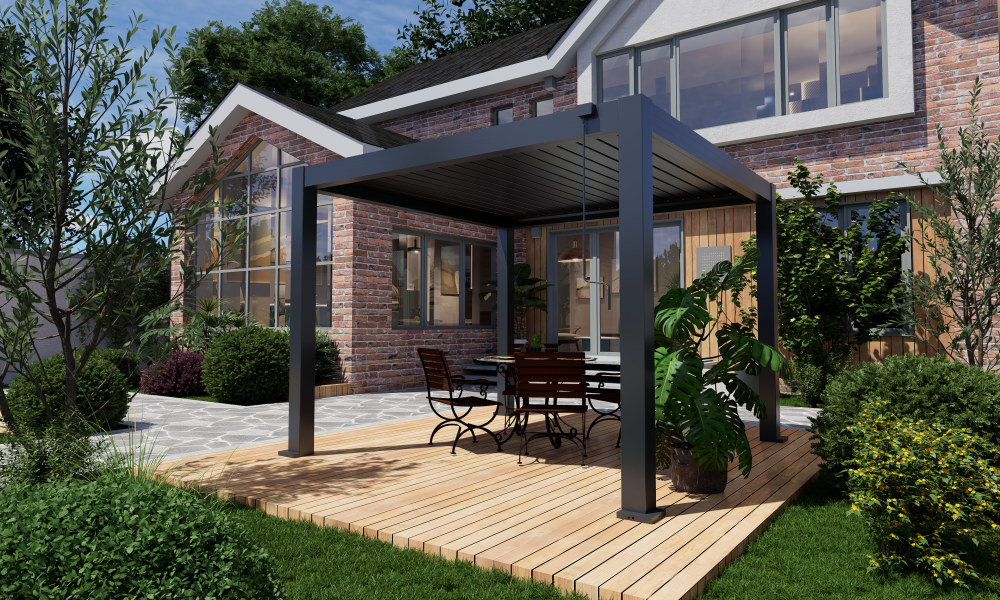
A dining layout usually works best when the shaded footprint fully holds the table and chairs.
This kind of setup feels comfortable because the pergola does not just sit above the centre of the table. It supports the whole dining moment, including movement, airflow, and the slower part of the afternoon.
Visually, dining areas usually look better when the frame stays calm. The table, chairs, paving, and planting already bring enough interest. The structure should give the space shape, not overwhelm it. That often means cleaner lines, a restrained colour choice, and a footprint that feels measured rather than oversized.
If the patio is slightly awkward, this is also where custom sizing becomes valuable. A pergola that is just a little too shallow or a little off the rear door line can keep feeling unresolved. That is exactly the sort of situation where the custom pergola options page starts to matter.
BBQ pergola ideas with better flow, better comfort, and less clutter
A BBQ area asks for a different kind of thinking. Dining is about staying put. BBQ use is about movement. There is prep, turning, carrying, standing, passing plates over, then drifting into a slower hour once the cooking is done. So the pergola has to protect the working zone without making the whole patio feel heavy.
This is where broad, generic cover often falls short. The roof may look generous, but the grill still ends up near the edge of the shaded zone, or the path between the house and the bench gets pinched. The smarter move is usually to weight the pergola toward the part of the backyard that actually does the work. That might be the cooking line. It might be the prep bench. It might be the spot where people gather while food is still on the grill.
A wall-mounted layout often makes strong sense here when the cooking area sits close to the rear doors. It keeps the movement line simpler and lets the pergola feel like part of one larger outdoor room. A freestanding option can be better when the BBQ zone sits out on its own paved pad or beside a garden entertaining area. Either way, the best version is the one that protects the practical part of the scene first.

Good BBQ layouts leave room for prep, movement, and the quieter time after the food is done.
This kind of patio works because the covered area feels open, but still substantial enough to support outdoor cooking, serving, and relaxed evening use.
Weather matters here in a practical way too. A BBQ area does not usually need full enclosure. In fact, too much enclosure can make it feel overbuilt. But selective support helps. One exposed side might catch wind late in the day. The western edge may throw glare across the bench. Evening use may feel flat without better lighting. Those are the moments when accessories start to make sense.
The key is restraint. It is better to solve one real friction point well than add features just because they exist. If the site needs side protection, address that edge. If the patio needs softer evening use, lighting matters more. If the issue is poor footprint, no accessory will rescue it.
Poolside pergola ideas that add shade without making the yard feel closed in
Poolside planning needs a lighter touch. Water already carries visual weight. The paving is bright, the reflections are active, and the space naturally feels open. A pergola beside a pool should support that atmosphere, not compete with it. In most backyards, the right answer is not to cover too much. It is to shade one calm retreat zone well.
That usually means two loungers, a pair of chairs, or one small sitting area where the hardest glare can be escaped. It does not need to become a fully enclosed room. In fact, once the structure grows too heavy beside the pool edge, the whole area can start to lose the easy openness that made it appealing in the first place.
Freestanding layouts often work beautifully here because they allow the pergola to read as its own destination. It can sit slightly away from the house. It can create a quiet poolside pause rather than trying to turn the entire rear yard into one continuous covered zone. That tends to feel more elegant, and in practice it is often more useful too.

A poolside pergola should offer relief from glare while keeping the wider backyard open and easy.
This kind of freestanding structure gives the pool edge one dependable shaded destination. It feels calm, useful, and visually lighter than trying to cover too much of the paving.
Louvred control feels especially relevant in this setting because the poolside mood changes through the day. Morning sun can be welcome. Mid-afternoon glare can become harsh. Later on, once the paving cools, more openness can feel better again. A pergola that can shift with that rhythm starts to feel naturally suited to the space.
Side accessories should stay selective. One exposed edge may genuinely benefit from a blind or added weather moderation. But full enclosure is rarely the point here. The nicest poolside pergola ideas tend to be the ones that know when to stop.
Small backyard pergola ideas that protect the feeling of space
Smaller backyards are where proportion matters most. In a large yard, a slightly oversized footprint can hide inside the extra space. In a compact courtyard or narrow rear patio, every centimetre gets noticed. A post in the wrong place, a pergola that pushes too deep into the slab, or a bulky seating set underneath can make the entire outdoor area feel tighter than it needs to be.
That is why a small-yard pergola should not try to imitate a large entertaining setup. It should do something smarter. It should define one comfortable zone clearly and leave enough breathing room around it that the backyard still feels open. Usually that means a disciplined footprint, lighter furniture, and a layout that protects the walk line instead of interrupting it.
Wall-mounted formats often work well in compact sites because they borrow order from the house. The pergola reads with the rear facade, which can make the whole patio feel longer and calmer. Freestanding structures can still work, but they need more care. In a small backyard, one awkward post quickly becomes something people have to walk around every day.

In a smaller backyard, the pergola should create comfort without taking over the whole patio.
This kind of compact setup works because it gives the seating area definition, but still leaves visible space around the edges. That balance is what keeps a smaller yard feeling settled instead of crowded.
Compact spaces are also where custom sizing can quietly make the whole project feel better. A pergola that is almost the right depth or almost aligned with the doors can keep looking unresolved from inside the house. When the site is tight, “close enough” often is not enough.
There is another reason smaller yards gain so much from a good outdoor pergola. They have less margin for discomfort. In a large backyard, one patch of harsh sun can be avoided by moving elsewhere. In a smaller one, that patch may be the whole seating area. So a well-placed pergola can have a bigger effect than the footprint alone suggests.
How to choose the right pergola without overcomplicating it
Once the scene is clear, the shortlist usually becomes much easier. A useful order is simple: choose the main use first, choose the layout second, then compare the model that best matches the scale of the backyard.
P120
Simpler, more compact starting pointBest suited to smaller patios, courtyards, and straightforward outdoor living zones where a clean, efficient structure is the main priority.
See P120P180
Balanced everyday optionA strong fit for dining zones, alfresco patios, and backyard layouts that want a more substantial feel without stepping too far into large-format territory.
See P180P180 Pro
Larger-space directionWell suited to bigger entertaining areas or poolside layouts where extra scale and stronger visual presence make more sense.
See P180 ProIf the patio is slightly awkward, that is where the custom pergola options page becomes more valuable. If the main question is which model sits where, the compare page is the quickest way to get clearer.
- Choose wall-mounted when the aim is to extend the house and keep the rear patio feeling connected.
- Choose freestanding when the pergola should become its own destination in the yard.
- Choose manual when the roof will be adjusted occasionally and the setup is more straightforward.
- Choose motorised when the pergola sits at the centre of daily use and flexibility matters more often.
FAQ
Which backyard scene usually benefits most from a pergola?
Dining areas and smaller patios often feel the biggest change first, because they usually have the least margin for glare or weather discomfort. That said, poolside and BBQ zones can benefit just as much when the pergola is placed around the real use pattern rather than the empty slab.
Is custom sizing worth considering for a modern backyard?
Yes, especially when the site is almost right but not quite. A narrow patio, an off-centre rear door, or a fixed outdoor bench can all make a standard size feel slightly unresolved. A better fit usually looks calmer and works better.
Does Everpergo directly provide installation?
Everpergo states that it does not directly provide installation services. It can recommend experienced installers and provide installation guides plus technical support, which is often the clearer and more practical setup for site-specific projects.
What should be checked before choosing a pergola model?
Mark the footprint on the ground first. Then check where the light lands, where the furniture actually sits, and whether the pergola needs to extend the house or create a separate outdoor zone. That usually reveals the right direction much faster than comparing features in the abstract.
The nicest pergola ideas for modern Australian backyards usually feel quiet and well judged. They do not try too hard. They simply put shade where it helps, keep the outdoor area comfortable longer, and make the backyard feel more complete. That is enough. In fact, that is usually exactly what people remember after living with the space for a while.
From inspiration to a real shortlist
A simple next step keeps the process much clearer:
- Mark the real footprint before choosing a size.
- Start with the main scene: dining, BBQ, poolside, or small backyard use.
- Browse the outdoor pergola range, then move to custom sizing only when the site genuinely needs it.
Share:
Custom Pergola Sizes: How to Plan the Right Fit for Your Home
Backyard Pergola Layout Ideas for Shade, Dining and Entertaining