

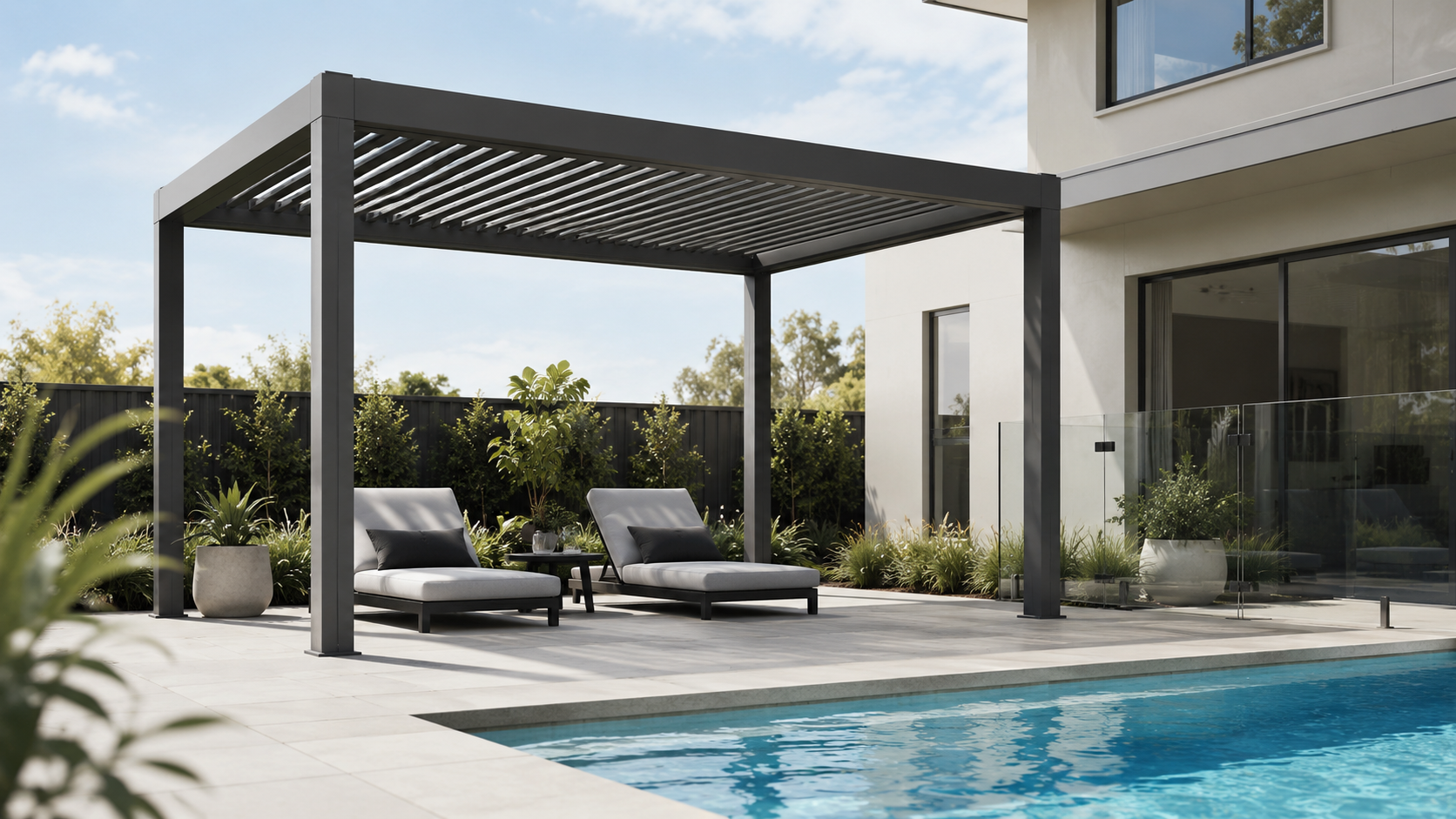
A freestanding pergola beside a pool should feel calm from the first step out of the water. Not crowded. Not like an extra frame squeezed onto spare paving. The good version feels simple: shade lands where the chair actually sits, towels are close but not soaked, the post line stays out of the walking route, and late afternoon glare does not turn the water into a bright mirror.
This guide focuses on real poolside use: shade timing, splash zones, furniture clearance, wind exposure, evening comfort and choosing between P180 and P180 Pro without getting lost in unnecessary technical language.
Quick Positioning
The Best Poolside Pergola Is Planned Around Movement, Not Just Shade
Shade where people sit
The roof should cover the real chair position, not only the empty paving beside it.
Clear wet-foot route
The path from pool step to towel point should feel obvious, even with chairs pulled out.
Scale that suits the pool
Large pools and open paving often need stronger visual presence than a compact patio.
Why Poolside Pergola Planning Feels Different
A pool changes the way an outdoor area behaves. On a normal patio, a chair can move a little and the layout still works. Beside water, that same chair may block the pool step, push towels into the splash zone, or make people step around a post with wet feet.
Because of that, poolside shade needs a different kind of thinking. It is not only about covering a rectangle. It is about the first few seconds after swimming: stepping out, reaching for a towel, finding a dry seat, and moving back toward the house without a strange detour.
A good poolside layout often looks quiet. There is enough shaded space for a seat. There is a dry surface for a phone and sunglasses. There is a towel point that does not force wet feet through the whole lounge setting. Most importantly, the pool still feels open.
A poolside freestanding pergola is useful in this setting because it does not need to attach to the home. It can sit beside the pool, across a paved zone, near a lawn edge, or in a separate outdoor room. That freedom is valuable in larger backyards where shade is needed away from the wall.
Still, freedom also creates risk. If the structure is placed only because the paving looks empty, the finished space may feel awkward. If it is placed only for a nice product photo, the shade may miss the seat at the time people actually use the pool.
The smarter starting point is daily use. Notice the least comfortable hour. In many pool areas, that is not noon. It is often late afternoon, when the sun is lower, the water reflects light sideways, and the paved surface still holds heat.
Better question before choosing the pergola
Do not start with “where can the pergola fit?” Start with “where does the pool area need a calm pause point?” The answer is usually one or two steps back from the wet edge, close to towels, with shade over the real sitting position and a clear route around the furniture.
Shade Path and Glare: The Real Test for a Pergola by Pool
Pool glare can be more tiring than direct sun. The light does not only come from above. It bounces from the water, skims across pale paving, catches a glass fence, and reaches eye level while the chair still appears to be under cover.
That is why a pergola by pool should be tested at the actual use time. A quick look at midday can be misleading. The useful check happens late morning, early afternoon and again before dinner. Those three moments show where the body wants shade and where the eyes need relief.
Place a chair where the main seating area is planned. Sit there for three minutes. Look across the water, toward the fence, back to the house and toward the garden. If the eyes naturally squint, the shade plan still needs work.
Adjustable louvres help because the roof can respond to the day. Closed louvres can make the space calmer during harsh sun. Partly open louvres can release warm air when the afternoon feels still. Near water, that balance matters because shade without airflow can feel heavy.
However, louvres cannot fix a poor position. If the roof sits too far from the chair line, the best shade may land on empty paving. If it sits too close to the pool edge, the furniture may stay damp and the walking route may feel tight.
A pool shade pergola should shade the person, not only the ground. This is the detail that separates a good poolside plan from a neat rectangle that looks correct but feels wrong at 4 pm.

Where a Poolside Freestanding Pergola Should Sit
The best position is rarely right on the pool edge. It is usually slightly back, where the wettest strip can stay clear and the seating zone can stay dry. This small setback keeps cushions calmer, protects small items, and gives the whole pool area a more relaxed feeling.
Along the long side of a pool, the pergola can frame the water without blocking the view from the house. This layout works well when the paving is wide enough for a walking route, a lounge setting and a towel point.
At the far end of a pool, the pergola can feel like a small retreat. This position suits a garden outlook or a quieter seating corner. Still, the route from the house needs to feel simple. A shaded corner may be ignored if the walk across hot paving feels too exposed.
Between the house and pool, the pergola can create a useful transition space. It can hold lunch, towels, drinks and after-swim seating. Yet this position needs the most care because it can crowd the main route between indoor living and the pool step.
In a side-yard pool, the mistake is usually length. A long structure in a narrow space can create a tunnel feeling. A shorter shaded pocket with one open side often feels better, especially when the fence line already guides wind and movement.
Long-side layout
Best when the pool has wide paving and the seating should face the water without blocking the house view.
End-of-pool retreat
Useful when the far end has a calmer garden view and the walk from the house still feels natural.
Side-yard shade
Works when the pergola creates a compact shaded pause without closing in a narrow pool area.
Splash Zones, Towels and the Dry Seat Problem
Every pool has a messy edge. It may look calm in the morning, but by lunch there are wet footprints, sandals near the step, a towel over one chair and sunscreen sitting too close to the coping. The pergola layout has to allow for that normal use.
The wettest strip should stay simple. This is not the best place for deep cushions, small planters or storage boxes that need constant moving. It works better as a clear landing area where people can step out, dry off and move into shade.
The covered zone can begin just behind that strip. This small separation keeps the seating area drier and more relaxed. It also makes the pergola feel intentional because the shade supports the pause after swimming instead of fighting the water.
Towel placement matters more than it sounds. If towels sit behind the deepest chair, wet feet will cross the furniture zone again and again. If towels sit near the pool exit, movement becomes easier and the seating stays calmer.
A small dry table also helps. Phones, sunglasses, drinks and goggles need somewhere safe. When that surface is missing, small items end up on the ground, on a wet ledge or balanced on a chair arm.
The simple splash-zone rule
Keep the first strip beside the pool clean and easy. Put the shaded seating slightly back. Then place towels and small storage where they support the natural exit from the water, not where they force wet feet through the main furniture zone.
Posts, Paving and Safer Circulation Around the Pool
Posts are not only structural elements. Around a pool, they become part of the walking experience. A post that looks harmless in a drawing may feel awkward when someone turns with a towel, carries a tray or steps around a pulled-out chair.
For a freestanding pergola, every post should sit outside the natural movement line. The pool step, towel point, seating edge and route back to the house should all remain readable.
Paving needs the same attention. Smooth surfaces can look clean, but wet feet change how they feel. Surface texture, drainage fall and where water gathers after a splash all influence whether the shaded area feels safe and easy.
A useful test takes five minutes. Mark the planned post corners with tape. Place the largest chair or table inside that outline. Pull the chair back as if someone has just stood up. Then walk behind it while holding a towel.
If the movement feels tight before installation, posts will not improve it later. A better layout may need fewer furniture pieces, a slightly different angle or a wider shaded footprint.
Installation planning belongs in the same conversation. Poolside sites can involve concrete slabs, pavers, drainage, services, electrical planning and local requirements. Everpergo does not directly provide installation services, but can recommend experienced installers and provide installation guides and technical support.
This clarity matters. Product choice, site conditions and installation responsibility should be understood before the project moves forward. Around water, planning discipline is part of comfort.

Wind and Water Exposure in Open Backyards
Open pool areas often look peaceful in photos. In real weather, wind can behave strangely. A fence line, side passage, garage wall or roof edge can push air across one exact seat while the rest of the backyard feels still.
That breeze may feel pleasant at 2 pm. After sunset, with wet hair and a damp towel, it can feel sharp. This is why wind should be checked from the planned sitting position, not only from the back door.
Watch plants near the pool. If leaves move on one side more than the other, that side may need more thought. The answer is not always to close the pergola. Often, the better answer is to soften the most exposed side while keeping the rest open.
A wind blind can help where one direction causes repeated discomfort. It can reduce direct gusts, soften low-angle light and add privacy without turning the whole pergola into a sealed room. Around a pool, that balance matters because fresh air keeps the space relaxed.
Water exposure is constant too. Rain drift, pool splash, damp towels, cleaning spray and nearby planting all add moisture to the setting. Aluminium is a practical material choice for this kind of outdoor space because it suits modern open-air use and avoids the heavy upkeep feeling of many timber-style covers.
Still, a poolside pergola should not be ignored after installation. After wind, storms or a leafy week, a quick check around roof channels, post bases and accessory tracks helps keep the space feeling clean.

P180 vs P180 Pro: A More Practical Way to Choose
The most useful comparison is not a long list of specifications. The better question is how large the poolside zone feels once furniture is placed. A compact patio with two chairs does not need the same visual weight as a broad backyard with a pool, sofa, table and open entertaining space.
P180 often makes sense for medium outdoor areas. It suits a simpler seating plan, a dining zone or a poolside corner where the pergola needs to provide shade without dominating the paving. When the area is neat and contained, this balance can feel right.
P180 Pro deserves attention when the space is wider, more exposed or more architectural. A large pool can make a small shade frame look under-scaled. In that setting, the pergola needs enough presence to feel like it belongs to the whole outdoor area.
The choice should follow the furniture plan. A sofa, two lounge chairs, a dining table, towel storage and a walking route need more depth than two chairs and a side table. If the shaded area already feels tight during planning, the final structure will not feel relaxed.
| Poolside decision | P180 often fits | P180 Pro often fits |
|---|---|---|
| Outdoor scale | Medium patio or contained poolside seating zone | Large backyard, wider paving or stronger visual setting |
| Furniture plan | Two to four seats, small table, relaxed dining | Lounge seating, dining area, towel storage and circulation |
| Poolside feeling | Balanced, practical and not visually heavy | More settled beside a large pool or open outdoor room |
| Best starting point | Simple shade with clear movement | Generous shade where scale and presence matter |
A quick choice rule
If the pergola only needs to shade one compact sitting zone, P180 may be enough. If the poolside area needs to hold several activities at once — lounging, eating, walking, drying off and evening sitting — P180 Pro is the stronger comparison.
How the Pergola Feels Across a Normal Pool Day
Morning use is usually gentle. The pool surface is cooler, the paving has not stored much heat, and open louvres can let light and air through. In that moment, the pergola works like a light outdoor room rather than a shield.
By lunch, the mood changes. Chairs heat up, the table surface becomes bright, and people start moving toward shade. More closed louvres can make the covered area feel usable without forcing everyone indoors.
Late afternoon is the hardest test. The sun drops lower, glare comes sideways, and the water can feel brighter than the sky. Sometimes the best fix is not a larger roof. It is turning the seating angle slightly so the eyes are not facing the reflection.
After swimming, the first movement should be simple. Step out, reach for a towel, move into shade, sit down. If that sequence needs three detours around furniture, the layout is not working yet.
Evening comfort brings another layer. Soft lighting can define the covered space without making the pool area feel over-lit. A harsh single light may bounce off the water and flatten the whole scene. A warmer, more even glow feels calmer.
This is where accessories should be chosen with restraint. Lighting, side protection and heating should answer a real use problem. If the space is mostly used after dinner, lighting matters. If one side catches wind, side protection matters. If the pergola is mainly a lunch shade zone, the first priority may simply be roof control and circulation.

Furniture, Colour and Planting That Keep the Pool Area Open
Poolside design can become heavy very quickly. Dark frame, dark paving, deep cushions and tall furniture may look sharp in one photo. Under strong sun, the same combination can feel hot and crowded.
Low outdoor furniture usually works better near water. It keeps the pool visible from the house and lets the pergola frame the space without blocking the view. A deep sofa can still work, but it needs enough room behind and beside it.
Dining furniture needs a full movement test. Pull every chair back as if the table is in use. Then walk behind the chairs. If the route feels tight on dry paving, it will feel worse after swimming.
Planting should soften the frame, not crowd it. One larger planter near an outside corner can look calm. Four small pots around four posts often feel busy and steal walking space. Near a pool, fewer objects usually make the area feel more refined.
Colour should follow the surroundings. Grey can sit well with concrete, charcoal fencing and modern pavers. White can feel lighter near pale surfaces, coastal planting or rendered walls. The right finish is the one that keeps the pool area visually open.
Storage also deserves a place in the plan. Towels, sandals, sunscreen and goggles need somewhere to go. If storage is missing, the pergola may look clean before use, but the space can look messy by the second swim.
Common Mistakes That Make Poolside Shade Feel Awkward
The first mistake is placing the pergola too close to the water. On a clean plan, the tight connection looks tidy. In real life, it often creates wet furniture, narrow turning space and a post line that people keep stepping around.
The second mistake is ignoring late sun. A pool area may feel fine at 11 am and uncomfortable at 4 pm. If the space is mainly used after school, after work or before dinner, late glare matters more than the midday shadow.
The third mistake is choosing furniture before checking movement. Large pieces can make an outdoor area look complete, but they also swallow paving. A smaller setting with better clearance often feels calmer than a bigger setting that needs constant rearranging.
Another common issue is adding accessories too early. Lighting, screens and heating should solve a clear comfort problem. If the west side has glare, solve the west side. If the evening path feels dark, light the path. If wind cuts through one corner, soften that corner.
The last mistake is forgetting the view from inside the home. A pergola should frame the pool, not hide it. Before choosing the final position, stand at the main window or back door and look out. If the structure blocks the best view of the water, the position needs another look.
Before finalising the layout, check these five things
- Where the shade falls at the main swim time.
- Whether glare comes from the water, fence or house windows.
- Whether the pool exit stays clear after furniture is placed.
- Whether each post sits outside the natural walking route.
- Whether the pergola still looks balanced from inside the home.
Simple Care Habits for a Poolside Aluminium Pergola
Poolside areas collect more than sunshine. Leaves land on the roof, water marks appear after rain, and fine dust settles on the frame during dry weeks. A light routine keeps the pergola looking settled without turning care into a weekend job.
After windy weather, check the louvre area and any drainage paths for small debris. Around trees, this matters more. A few leaves may not seem important, but they can make a clean outdoor room feel neglected when left for weeks.
Post bases also need a glance. Pool splash, grass clippings, damp towels and soil can all leave marks around the lower frame. Keeping that area clear helps the whole structure feel sharper.
For motorised options, do not force movement if something appears blocked. Check for visible debris, follow the relevant product guidance and ask for technical support when the issue is not obvious.
The point is not perfection. A poolside pergola should feel easy to live with. Small regular checks usually work better than a big clean after the outdoor area has already become annoying.
Extended Reading
Still Deciding Between Freestanding and Attached?
Poolside layouts often lean freestanding because the shade needs to sit where the water, paving and furniture actually meet. Still, some patios work better when the pergola connects to the home. Comparing both layouts first can prevent a rushed decision.
Read: Freestanding Pergola or Attached Pergola: Which Should You Choose
FAQ
Is a freestanding pergola suitable beside a pool?
Yes, a freestanding pergola can suit a poolside area when the post position, shade path, splash zone and walking route are planned together. It works especially well in open backyards where shade needs to sit away from the house wall.
How far should a pergola sit from the pool edge?
The right distance depends on paving depth, pool exit position, furniture size, drainage and local requirements. In most layouts, the wettest splash strip should stay clear, while the shaded seating sits slightly back from the water.
Is P180 or P180 Pro better for a poolside setting?
P180 often suits medium patios and simpler shaded seating plans. P180 Pro is usually worth comparing first for larger poolside zones, exposed backyards and layouts that need stronger presence beside a wide pool or open entertaining area.
What accessories are useful around a pool shade pergola?
LED strip lighting can help evening movement feel calmer. Wind blinds can soften an exposed side when wind or low-angle glare repeats from the same direction. Heating may support cooler evenings when placement, airflow and product guidance are considered carefully.
Does Everpergo directly provide installation services?
Everpergo does not directly provide installation services, but can recommend experienced installers and provide installation guides and technical support. Poolside projects should still review fixing surfaces, drainage, electrical planning, wind exposure and local requirements before work begins.
Final Decision Check
A Better Poolside Pergola Starts With Real Use
A poolside pergola should make the backyard easier to enjoy, not harder to move through. The best layouts begin with simple moments: stepping out of the pool, reaching for a towel, sitting in shade, moving a chair, walking back to the house and staying outside after the sun drops.
A freestanding pergola works well when it respects those moments. It can create a shaded room beside the water, protect furniture from harsh sun, soften glare and give a large backyard a calmer structure. Yet it only feels right when the post line, furniture and walking route are planned together.
- Mark the post corners and test the walk from the pool step to the shaded seat.
- Check glare at the real use time, especially late afternoon.
- Compare the pergola size after furniture, towels and circulation are already planned.
Share:
Aluminium Pergola Maintenance for Australian Weather
Aluminium Pergola Near the Coast: Salt, Wind and Care