

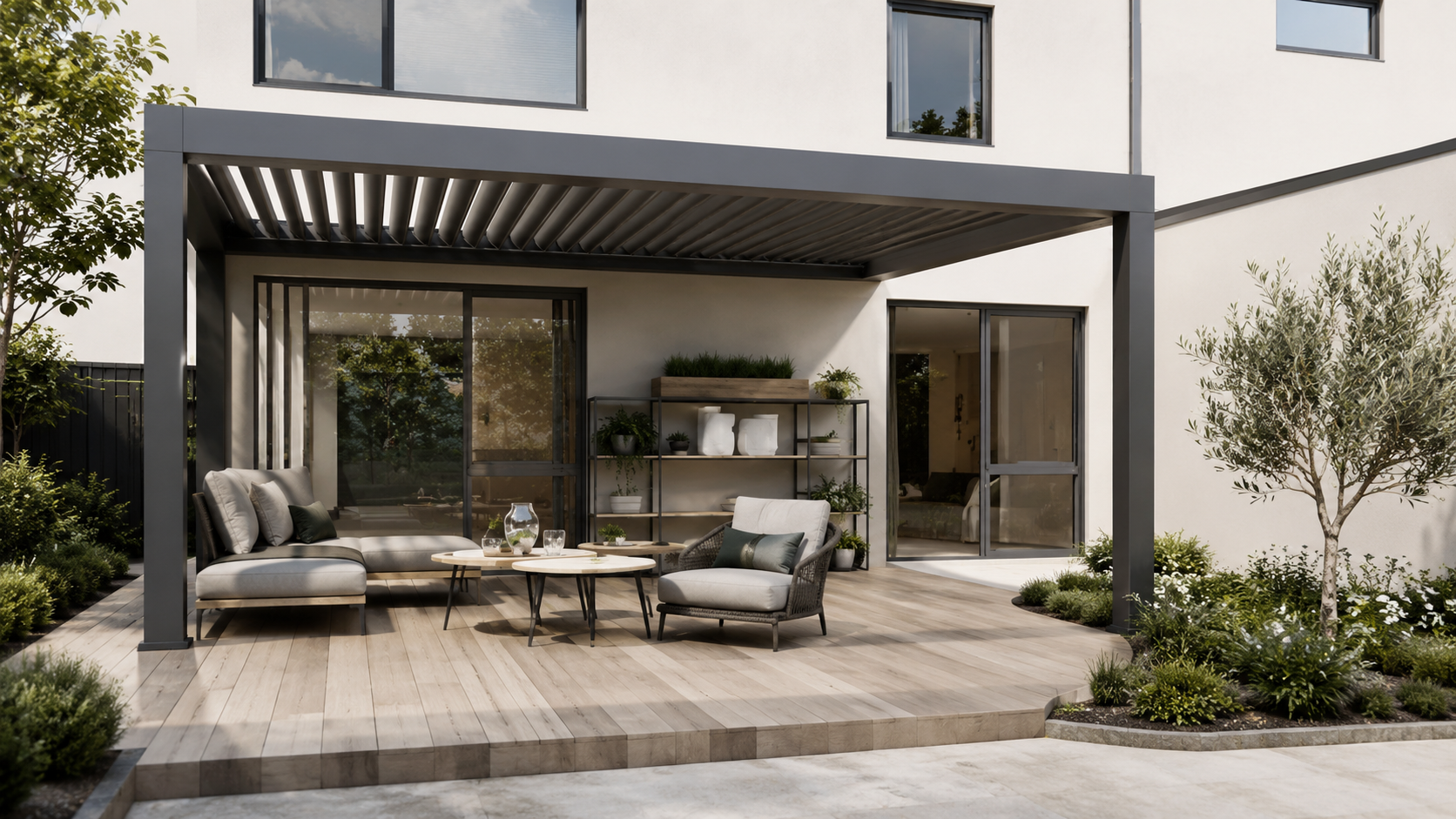
A custom pergola makes sense when a patio looks fine on paper but feels awkward in real life. One post may block a chair. The roof may miss the sunny strip near the door. A standard size may fit the paving, but still fail the way the space is used every day.
Irregular patios are easy to underestimate. A back patio may look neat when empty, yet feel difficult once the table, chairs, barbecue, side path, garden bed and door swing are all in play. The issue is not always the total size. More often, it is where the posts land and which part of the patio actually gets covered.
This guide focuses on four practical decisions: why a custom size helps, what patio shapes suit it, how to judge whether it is needed, and which mistakes make awkward patios worse. The aim is simple: choose a pergola that feels natural after the furniture is in place, not just one that looks correct in a product chart.
Why Choose a Custom Pergola for an Irregular Patio?
Standard sizes work well when the patio is square, open and easy to access. However, many outdoor areas are not that clean. One side may taper. A garden bed may cut into a corner. A downpipe may block the best post position. A sliding door may sit off-centre from the paving.
In these spaces, a standard pergola can create small daily problems. The roof may cover the table but not the chair pull-back area. One post may sit too close to the doorway. The frame may look slightly off from inside the kitchen. None of these problems is huge alone, but together they make the patio feel less comfortable.
A custom made pergola is useful because it can follow the real living zone instead of the old paving line. The goal is not to make the pergola complicated. The goal is to keep the important parts simple: clear entry, usable shade, comfortable furniture flow and clean alignment with the home.

Best Scenarios for a Custom Pergola
A custom pergola is most useful when the patio has one or more fixed obstacles. These may include a narrow side path, a pool fence, a step, a drain, a garden bed, an outdoor tap or a wall light. The more fixed items in the space, the less reliable a standard rectangle becomes.
It also suits patios where furniture needs to stay in a specific position. For example, a dining table may need to sit close to the kitchen. A lounge may need to face the garden view. A barbecue may need side access and lid clearance. If a standard pergola forces these zones to move, the space may look covered but still feel wrong.
This is especially true for a custom pergola for irregular patio layouts where the main issue is not size, but flow. The right pergola should protect the part of the patio that is actually used, even if that means leaving a small strip of paving uncovered.
Good-fit scenarios
Off-centre doors
The roof should follow the door and main walking route, not only the centre of the slab.
Awkward posts
If standard posts block chairs, gates or side access, custom sizing may solve the real issue.
Uneven patio edges
A cleaner pergola line can feel better than forcing the roof to chase every irregular edge.
How to Judge Whether Standard Size Is Enough
The easiest way to judge is to mark the pergola footprint before choosing. Use masking tape, pots, boxes or chairs to show the possible post positions. Then walk the patio as if it is already being used.
Start at the kitchen door. Walk to the table. Pull out one chair. Open the barbecue lid. Step toward the side path or garden gate. If the body turns sideways near a marked post, the standard layout is already creating friction.
Next, check shade at the time the patio is used most. A roof that looks generous at midday may still miss the main chair at 4 pm. If the same seat, step or door strip gets strong glare every afternoon, that area should guide the pergola size.
Finally, look from inside the home. If the beam line cuts across a window or the post sits in front of the main glass panel, the pergola may feel heavier than expected. A good layout should look calm from the kitchen as well as comfortable outside.

Quick decision checklist
- Can the main door open and feel clear?
- Can chairs slide back without hitting a post line?
- Does the roof cover the area used most often?
- Do posts avoid drains, steps, taps, gates and garden edges?
- Does the frame look natural from inside the house?
- Have local approval, setback or building requirements been checked before ordering?
Common Mistakes That Make an Awkward Patio Worse
The first mistake is choosing the largest roof that fits. Bigger coverage can help, but it can also push posts into the wrong places. On a tight patio, one badly placed post can ruin more comfort than extra shade creates.
The second mistake is measuring only the slab. A slab shows the construction area, not the living area. The living area includes chair movement, door clearance, barbecue space, side access and the view from inside.
The third mistake is ignoring late sun. A patio may feel shaded at midday but harsh at 4 pm. If that late sun hits the main chair or doorway, the layout should respond to that problem rather than only covering the centre of the paving.
The fourth mistake is adding accessories too early. Lighting, blinds and glass doors can improve comfort, but every added element changes how open the patio feels. On an irregular patio, accessories should solve a clear problem instead of filling every possible option.
What to Prepare Before Asking for a Quote
A clear quote request does not need to be complicated. It should show the patio shape, the important obstacles and the way the space is used. Six to eight photos are usually enough to start a better layout discussion.
Take one photo facing the house from the garden. Take one from each side corner. Then stand inside the doorway and take one photo looking out. Add close-ups of downpipes, drains, steps, taps, wall lights, side gates and paving edges.
Measurements should include patio width, patio depth on both sides, door position, window position, eave height, furniture size and likely post locations. A simple hand sketch is fine. The point is to show relationships, not to create a perfect drawing.
Planning approval note for Australian homes
Before confirming a pergola layout, check whether your project needs planning approval, building approval or a local council review. Requirements can vary by state, council area, property type, boundary distance, structure height and whether the pergola is roofed, attached or freestanding.
As an official reference example, the NSW Planning Portal guidance for balconies, decks, patios, pergolas, terraces and verandahs explains that some projects may be exempt from planning approval only when they meet specific requirements. Use it as a planning reminder, then confirm the rules that apply to your own local council area before ordering.
Ask these before confirming the layout
- Which line is the pergola following: wall, door, paving edge or furniture zone?
- Where will each post sit in relation to doors, chairs, drains and steps?
- Would wall-mounted or freestanding feel more natural for this patio?
- Would manual or motorised louvres suit the way the area is used?
- Have local approval rules, setbacks and site restrictions been checked early?
For installation, Everpergo does not directly provide installation services, but can recommend experienced installers and provide installation guides and technical support. This is worth discussing early, especially for wall-mounted layouts, larger frames or uneven paving.
Extended Reading
More Help Before Finalising the Pergola Size
These pages help narrow the decision after the main layout questions are clear.
FAQ
When is a standard pergola size not suitable?
A standard size is not suitable when posts block the main walking route, the roof misses the useful shade zone, or furniture only works when pushed tightly against a wall. A simple test is to mark likely post positions, then walk from the door to the table, barbecue and garden path.
What should be measured before asking about a custom pergola?
Useful measurements include patio width, patio depth on both sides, door and window positions, eave height, gutter position, downpipes, drains, steps, garden edges, table size, chair pull-back space and side access.
Is wall-mounted or freestanding better for an irregular patio?
The better layout depends on the wall, door position, paving edge, post locations and how the patio is used. A wall-mounted layout can feel cleaner beside the house, while a freestanding layout may work better when the wall has too many interruptions.
Do adjustable louvres help with an odd shaped patio cover?
Adjustable louvres help with sunlight, airflow and rain cover, but they do not replace good sizing. The pergola still needs to sit over the right part of the patio. Once the footprint is right, the louvres make the outdoor area easier to adapt through the day.
Should council or building approval be checked before ordering?
Yes. Approval rules can vary by state, council, height, size, setbacks, attachment method and roof type. Check the relevant local council or planning authority early, especially for wall-mounted pergolas, larger frames, enclosed sides or homes with special planning conditions.
Does Everpergo provide installation services?
Everpergo does not directly provide installation services, but can recommend experienced installers and provide installation guides and technical support. Installation planning should be discussed early for wall-mounted layouts, uneven paving, large frames or tight access.
Next Step
A Better Pergola Layout Starts With Better Site Details
A custom pergola is worth discussing when a standard frame would make the patio harder to use. If the door opens cleanly, chairs move easily, posts avoid the main route and shade lands where time is actually spent, the layout is on the right path.
If those checks feel forced, prepare clear photos, a rough sketch and key measurements before asking for advice. That keeps the conversation focused on the actual patio, not just a standard size chart.
- Mark the likely pergola footprint and walk the normal route for two minutes.
- Photograph the patio from the garden, both corners and the inside doorway.
- Measure the door, furniture zone, paving edges, drains and likely post locations.
- Check local approval requirements before confirming the final pergola size.
Share:
Aluminium Pergola Near the Coast: Salt, Wind and Care
White Pergola vs Grey Pergola: Which Finish Fits Your Home?