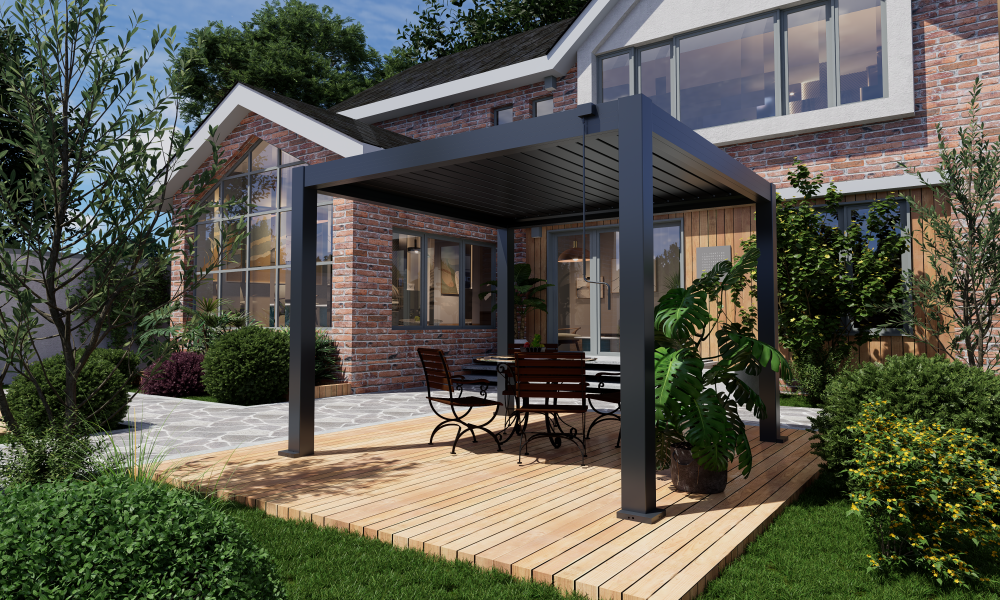
A pergola on deck often begins as a very ordinary thought. The deck is already there. The table is already there. The back doors already open onto the space most evenings. What is missing is a bit of protection, a bit of softness, and a bit more confidence that the area will still feel good when the weather changes at the wrong time. That first idea is easy to love. Still, the projects that age well are never built on the idea alone. They are built on what sits underneath it: the deck frame, the fixings, the drainage path, the exposure to wind, and the way the space still needs to work when doors open, chairs move, and daily life passes through without much ceremony.
That is why this topic deserves more than a quick style comparison. Most homeowners are not really looking for a lecture on aluminium sections or a parade of product features. The real interest is simpler and more practical. Will the deck still feel open, not crowded? Will the structure look believable on the space instead of dropped on top of it? Will the threshold stay comfortable in rain? Will the deck still feel safe and settled a year later, not just polished in the first week? Those are the questions that matter in real life, and they are the questions that should shape the plan from the beginning.
For Australian homes, this kind of project makes particular sense because decks already carry so much of everyday outdoor life. They sit close to kitchens, living rooms, rear sliders, and garden views. They hold breakfast for ten minutes before the day starts. They hold late dinners when the heat inside finally drops. They hold that quick pause after work when somebody steps out with a drink and does not want to stand in full glare or light rain. The deck is already doing half the work of an outdoor room. A pergola can finish that job, but only when the structure and the use of the space are read honestly.
Everpergo’s public range helps with that comparison because it is centred on all-aluminium louvred pergolas with manual or motorised options, freestanding or wall-mounted layouts, custom sizes, and accessory options like frameless glass doors, wind blinds, and LED strip lighting. The useful move, though, is not to start with the most attractive product page. The useful move is to let the deck lead the conversation first. Once the deck condition, usable footprint, walking lines, and weather behaviour are clear, the pergola choice usually becomes far easier and far more convincing.
Why this upgrade feels different from other outdoor projects
The reason a deck pergola matters so much is simple: the deck is already part of life. It is not a random structure in the far corner of the yard. It sits where the house spills outward. It catches the first step outside in the morning and the last bit of air before bed. Even when nothing special is happening, the deck is still where someone leaves a mug for two minutes, shakes off a tea towel, checks the rain, or stands for a quiet phone call after dinner. That familiarity gives the project a different kind of weight. The pergola is not arriving to create a whole new habit. It is arriving to make an old habit easier.
That is why a pergola on deck often feels more rewarding than expected once it is done well. The change does not need to be dramatic. A lunch table that used to be too hot at 1 pm becomes comfortable. A threshold that always felt exposed during light rain becomes calmer. A raised deck that looked good but felt slightly too open begins to feel more settled and more intentional. These are not giant transformations in the abstract, but in day-to-day life they carry real weight. Small improvements at the back door tend to be used far more often than bigger improvements further away from the house.
There is also a deeper reason this project can feel so satisfying. A deck already has the bones of an outdoor room. It has a floor level, an edge, a direction, and a relationship to the house. Add the right roof line and the space starts to read more clearly. It no longer feels like a platform that happens to sit outside. It feels like a place to inhabit. A place for breakfast, for dinner, for a bit of shade, for a bit of shelter, for one more ten-minute conversation before going back inside.
The trap is assuming that because the finished result looks effortless, the planning can be casual. It usually cannot. The spaces that feel the calmest later are often the ones that were thought through most honestly at the start. The deck was checked. The threshold was respected. The path of water was noticed. The route to the stairs still made sense. A deck project works best when the reality of the site is allowed to lead the mood of the design.
Read the deck first, not the pergola brochure
Before comparing pergola models, colours, or accessories, the deck itself deserves a quiet read. Not a quick glance. A proper read. That means looking at the deck as a structure rather than a styling surface. A fresh oil coat, newer composite boards, or a clean set of outdoor chairs can make a deck look more settled than it really is. The important story often sits below: in the joists, the bearers, the access to the underside, the old repair that still carries a slight colour shift, or the edge that has always felt just a little more springy than the centre.
The best first inspection is ordinary and physical. Walk the whole deck slowly. Walk the perimeter. Pause at the corners. Stand near the stairs. Move back toward the house. Then do it again later in the day when the light changes and the deck shows a little more of its weather history. Notice any bounce, any creak, any patch that seems to hold dampness longer than the rest. Notice which corner always catches leaves after wind and which board line tends to darken after rain. These are quiet details, but they are far more useful than staring at size charts too early.
A deck also tends to reveal what kind of coverage it actually wants. Sometimes the whole footprint does not need a roof. Sometimes the meaningful zone is the threshold plus the table, while the outer edge benefits from remaining more open. Sometimes the space near the stairs needs to stay clear because that movement line carries far more traffic than expected. In other words, the deck often suggests the shape of the answer before the product pages do.
- Walk the edge and corners to check for bounce, movement, or creaks.
- Look for darker timber, slow-drying patches, or recurring leaf build-up.
- Stand at the back door and trace the natural route to the table and stairs.
- Check whether the underside is accessible for inspection or reinforcement.
- Picture where posts would ideally land, then compare that with what the structure below can likely support.
That last point matters more than it first seems. A decking pergola does not succeed because it covers the maximum area. It succeeds because the deck, the fixing logic, and the daily use of the space all agree with one another. Once that alignment is there, the product comparison becomes useful. Before that, it is mostly wishful thinking with a price attached.
Support, load, and bounce: what the deck is really being asked to carry
A deck may look visually ready for a new structure long before it is structurally ready for one. That is why load path matters so much. The idea is straightforward: once the pergola is installed, where does the force actually go? The posts, the frame, the roof, and the weather acting on them all need a believable route back through the deck and down into real support. If that route is clear, the project usually feels solid from the start. If it is vague, the finished space can look good while never fully feeling settled underfoot.
This is also why a deck can feel perfectly acceptable for ordinary entertaining and still deserve extra care before a pergola goes on top. Chairs, a dining table, people moving around, and the occasional barbecue create one kind of use. A permanent roof structure creates another. Concentrated loads and ongoing forces from wind and weather are different from casual foot traffic. The difference is not always visible in the first week, but it often shows itself later in the quality of movement, the feeling of firmness, and the general sense that the whole setup either belongs there or is only pretending to.
Bounce is part of that story. A slight spring does not automatically mean the deck is unsafe. It does mean the structure is telling a story. If that small spring appears at the corners, near the stair head, or along an outer edge where posts might naturally want to sit, it deserves attention. This is one of those moments where the honest reaction matters more than optimism. A deck that already communicates movement under normal conditions may need a more careful pergola footprint than first imagined.
That is why the size of a pergola should follow the deck, not the other way around. A large roof over a weak edge does not feel luxurious. It feels questionable. A slightly tighter footprint landing over stronger support points often feels much more convincing. It also tends to preserve walking lines and furniture space more effectively, which improves the whole daily experience rather than just the visual impression.
Everpergo’s public range makes sense once these questions are settled because it offers clear steps in scale and function: P120, P180, and P180 Pro, plus manual or motorised operation, freestanding or wall-mounted layouts, and custom sizing. The flexibility is useful because not every deck wants the same answer. Some spaces benefit from restraint. Others can credibly hold a larger, more ambitious setup. The key is letting the deck tell the truth first.
Fixing method and post location: where a good project quietly wins or loses
Post position sounds like a technical issue until the deck is actually used. Then it quickly becomes a comfort issue, a circulation issue, and sometimes a mood issue as well. A post can be technically acceptable and still sit exactly where the body wants to turn with a tray in hand. It can be perfectly symmetrical and still make the whole deck feel more crowded than necessary. It can line up beautifully on a drawing and feel immediately awkward once the first chair is pulled back for dinner. That is why post location is not just a structural note. It is one of the most human parts of the design.
The best post positions are usually the ones that work with how the space is already used. That may mean letting go of a bit of symmetry. A post moved slightly to protect the route from the back door to the table is often the better choice. A post shifted toward a stronger support point below is often the better choice too. The deck does not need mathematical neatness nearly as much as it needs believable structure and easy movement.
Fixing method matters for the same reason. The conversation is not really about whether the base plate looks neat on top of the deck. The real conversation is what sits below it and what it is actually being fixed to. A deck board is a finish surface, not the whole story. The important questions are the ones underneath: access to the subframe, potential reinforcement, relationship to joists or blocking, and how the preferred post positions align with real support rather than purely visual intent.
This is also where freestanding and wall-mounted layouts need to be read practically. A wall-mounted setup can feel seamless when the threshold, drainage path, and relationship to the house are cleanly resolved. A freestanding setup can be the better answer where the deck wants more spatial breathing room or where the house connection complicates the site more than it helps. Neither is universally superior. The better choice is the one that simplifies the deck rather than fighting it.
A simple way to test future post locations is to mock them up loosely before final decisions. A chair, a planter, or a cardboard box can do enough to reveal whether a position feels calm or frustrating. Then the deck can be walked normally: out the door, toward the stairs, around the table, back again. Real movement exposes bad logic very quickly, and that is exactly what makes the exercise worthwhile.
Drainage and thresholds: where rain turns a nice idea into a practical one
Rain is often the moment when a deck tells the truth. On a bright afternoon almost any layout can look convincing. In wet weather, the site starts revealing whether the planning actually respected the way water moves, where the deck dries first, and how the threshold behaves once the weather turns. That is why drainage deserves far more attention than it usually gets. A pergola should not only keep part of the deck drier. It should improve the logic of the whole wet-weather experience around the space.
Most homes already have one or two known weak spots. There may be a patch near the back doors that stays dark until midday. The top step may always feel a little slick in winter. One corner may trap leaves after wind, then stay damp longer than expected. A pergola changes this water story. Sometimes it improves it beautifully. Sometimes it concentrates runoff into one area that becomes much more noticeable than before. That is why the better question is not just whether the roof sheds water, but where that water goes once it leaves the structure.
Thresholds deserve special care because they carry so much unplanned use. This is the zone where groceries are set down, dogs wait to be dried off, school bags get dropped for a second, and somebody steps out half-distracted to look at the weather. That area should feel generous enough for all of those small interruptions. If the deck suddenly feels tight right at the doors because the roof was pushed too close to the house, the inconvenience gets noticed very quickly.
A pergola on deck is at its best when wet-weather use feels calmer, not more complicated. That means looking at the first few metres outside the doors during or after rain and paying attention to what is already happening. Which corner dries first? Which route still feels like the natural path to the stairs? Which spot would still feel safe and comfortable with a tray in hand? Those observations are often more useful than any static drawing.
This is especially relevant when accessories are part of the plan. A more sheltered setup with glass doors or added side protection can transform comfort, but it still relies on the basic site logic being sound. Good roof performance and poor deck drainage do not cancel each other out. The best results come when the pergola and the deck behave like one coordinated system in rain.
Pergola on timber deck vs pergola on composite deck
This comparison matters because the deck surface changes both the look of the project and the way the condition of the deck gets read. A pergola on timber deck often carries immediate warmth. Grain, texture, and the softer tone of timber can balance the clean lines of an aluminium roof in a really satisfying way. It tends to feel settled, natural, and less clinical. Timber also has one practical advantage during planning: it reveals more. It shows weathering. It shows where moisture tends to linger. It shows where old fixings have left a story. Those clues can be helpful because they make the deck easier to read honestly.
The caution with timber is not that it is a poor match. Quite the opposite. A pergola on timber deck can be one of the strongest visual combinations. The caution is that timber tells on itself, and that story should be listened to. Darkened sections, cupping, patched boards, or slightly uneven lines near the house can point to conditions that deserve a slower structural look. The beauty of the boards should not distract from the condition of the frame below, because it is the frame that carries the project.
A pergola on composite deck shifts the picture in a different way. Composite often looks cleaner, more consistent, and more contemporary over time. That makes it attractive for homes where the deck needs to stay visually tidy with less day-to-day effort. The challenge is that composite can hide more of the condition story. The surface may look excellent while the real questions are still sitting below in the subframe, the fixing logic, or the wet-weather behaviour at the edges. That does not make composite a problem. It just means the inspection has to look beyond the top layer.
There is also a subtle style difference worth mentioning. Timber usually softens the whole outdoor area and sits naturally with planting, older brickwork, or more traditional homes. Composite can lean more architectural and minimal, especially when paired with frameless glass doors, wind blinds, and sharper rear façades. Both directions can work beautifully with Everpergo’s public pergola range. The better base is not the more fashionable one. It is the one that is structurally sound, drains sensibly, and suits the feel of the home.
In practice, the choice is not between a “good” surface and a “bad” surface. It is between a surface that reveals its condition more easily and one that asks the inspection to go a little deeper. Either way, the important question remains the same: can the deck honestly support the plan and still feel good under normal use?
Wind, privacy, side weather, and the movement lines nobody plans on paper
Many outdoor discomforts arrive from the side rather than above. A deck can be dry enough and still feel hard to love because a late-afternoon crosswind makes dining fussy, or because one edge feels too exposed to a neighbouring line of sight, or because the western sun still cuts across the chairs in a way that makes the whole space feel sharp. A pergola can improve all of these conditions, but only when those conditions are identified honestly first.
Movement lines are part of that honesty. The strongest test is to use the deck before the pergola exists. Carry something outside. Walk to the table. Turn toward the stairs. Step back to the house. Repeat the same path at a normal pace, not like a careful inspection. This is often the moment when the real pressure points appear. A post near the threshold may suddenly feel too close. The route past the dining chairs may seem narrower than expected. A corner that looked generous in a plan may feel dead and unhelpful in the body.
Wind and privacy need the same sort of direct observation. Many decks feel very different at 10 am and 5 pm. The weather that matters most is often the weather that arrives later in the day, when people actually want to sit outside. A deck that seems fine at midday can become restless and exposed by dinner time. That is where accessories stop being extras and start becoming practical layers of comfort.
Everpergo’s public options are useful here because the system is not limited to the main roof alone. Accessories like wind blinds, frameless glass doors, and LED strip lighting can shape how the space handles side weather, privacy, and evening use. The best way to think about them is not as decoration. They are comfort tools. They solve specific frictions: glare, gusts, exposure, and the feeling that the deck disappears as soon as the sun goes down.
A pergola on deck works best when it keeps some openness while removing the worst of the discomfort. That balance matters. The deck should still feel outdoors. It should still breathe. It should still keep a view where possible. The goal is not to shut the weather and the garden out. The goal is to take the hard edges off the parts that stop the deck from being used naturally.
Who it suits and how to choose the right Everpergo setup
This kind of project suits homes where the deck already matters. That sounds obvious, but it is useful. If the deck is already the place where meals, quick breaks, or after-work pauses tend to happen, the return from better protection is usually strong. If the deck currently goes underused because it feels too exposed, too hot, or too dependent on perfect weather, the case becomes even clearer. The pergola is not trying to invent importance. It is responding to importance that the space already has.
Smaller decks often benefit from clarity rather than scale. The goal may be to protect the dining area and soften the threshold without making the deck feel boxed in. That kind of brief can point toward a more compact direction where the main reward is everyday usability. Mid-sized family decks often ask for a stronger balance between shelter and openness. They want enough coverage to handle rain and sun better without losing the natural movement around stairs, rails, and back doors. Larger entertaining decks can justify more substantial coverage, but only when the structure below and the circulation above both support it.
This is where Everpergo’s public range becomes genuinely helpful. The brand offers all-aluminium louvred pergolas across P120, P180, and P180 Pro, with manual or motorised operation, wall-mounted or freestanding layouts, and custom sizes. That flexibility matters because a deck rarely wants a default answer. It wants the answer that matches its strength, shape, and daily use. Sometimes that answer is smaller and simpler. Sometimes it is broader and more feature-rich. The point is fit, not escalation.
A pergola on deck nearly always works best when the sizing comes after the deck is measured properly. Standard modules can provide a starting point, but decks are rarely blank rectangles. Stairs interrupt one side. Balustrades shape the edge. Door openings take breathing room. A barbecue or bench zone may already own one corner. Custom sizing matters precisely because real outdoor spaces are so specific.
The choice between manual and motorised control is also easier when it comes from daily life rather than feature comparison. A compact deck that mostly wants one preferred setting may not need much more than simple operation. A bigger family deck that changes character across the day, or a setup where convenience matters because the roof will genuinely be adjusted often, can make motorised control feel more natural. Neither choice is more “serious.” The better choice is the one that suits the rhythm of the home.
The same practical logic applies to accessories. Glass doors, wind blinds, and LED strip lighting should be chosen because they solve a real need: side weather, privacy, or evening use. When they answer a real need, the deck feels more complete without feeling overworked.
How the space gets used better after installation
One of the most satisfying parts of a good deck pergola is that the improvement usually shows up in ordinary moments. Breakfast drifts outside more often because the morning light feels gentler under the roof. The table gets used on weeknights, not only on special weekends. The threshold feels calmer, so the back doors stay open longer. The deck starts holding the kind of small, useful moments that make a home feel more generous without ever becoming performative.
Furniture often works better once the roof line defines the space. The key is not to overfill the deck just because it feels more protected. The better approach is usually to keep one clear path from the house to the main seating zone and one clear line to the stairs or the outer edge. That simple discipline makes the deck feel larger than crowding every corner with chairs, planters, and side tables. The goal is use, not display.
This is also where a decking pergola starts to prove its value beyond shade. It can hold the mood of the space together. Even on days when the weather is only slightly off, the deck remains available. A little drizzle no longer empties the table immediately. Harsh midday light can be softened. A side gust can be managed with the right accessory strategy. The space becomes less dependent on good luck, and that reliability is often what turns it into a genuine part of the home.
Lighting deserves a mention because it changes behaviour more than most people expect. Once the deck stays visible and welcoming after dusk, it stops being a daytime-only zone. A quiet drink, a slower dinner, or even ten minutes outside once the house settles all become easier. That is why integrated lighting can be such a practical addition. It extends the useful hours of the space instead of simply dressing it up.
The best use tip is surprisingly plain: treat the finished deck like a room, not a showroom. Let it hold the ordinary. That is when the project feels most worth it.
Maintenance and installation notes that are actually useful
Maintenance becomes much less intimidating once it is framed properly. A good pergola should not turn the deck into a fussy space. In fact, Everpergo’s public positioning leans the opposite way: all-aluminium louvred systems designed for Australian outdoor conditions, with custom options, accessory flexibility, and stated warranty coverage on the main structure and motorised systems. On a deck project, though, the healthiest mindset is to think about the pergola and the deck as one combined outdoor setup. They experience the same weather, the same runoff, and the same daily use. They should be checked together too.
The useful routine is simple. After heavier weather, look at the runoff zones. Notice whether one area stayed damp longer than expected. Check around post bases for leaf build-up or debris that slows drying. If the deck is timber, pay attention to darkening, swelling, or changes in how boards dry. If the deck is composite, focus a little more on the edges and hidden moisture behaviour rather than assuming the clean surface tells the whole story. Five minutes of attention at the right time usually does more good than a long maintenance session done too late.
Installation expectations should also stay grounded. Everpergo does not directly provide installation services. What the public FAQ does confirm is something more useful for deck projects: the company can recommend experienced installers and provide detailed installation guides and technical support. That is the right tone for this kind of work because deck conditions vary too much for blanket promises to be helpful. The site matters. The deck matters. The fixing logic matters.
Local support can make the process easier too. Everpergo publicly states that it has a warehouse, showroom, and office in Dandenong, Melbourne, plus delivery and support across Australia. That matters when the decision involves real measurements, finish choices, and custom sizing rather than just clicking the first attractive option online. It also helps when the project needs a few practical conversations before a final direction becomes obvious.
The smoother projects are usually the ones that stay realistic from the beginning. The measurements are honest. The deck is read properly. The installation support is used where it helps. Nothing is forced. That steadiness tends to show up in the finished result.
What to confirm before ordering
This is where a deck pergola project usually becomes much clearer. Start with the usable deck zone rather than the full deck size. The whole footprint may not all be appropriate for cover once thresholds, stair approaches, and circulation lines are respected. Then take a few honest photos. One from inside the back doors. One from the outer edge looking toward the house. One or two from below if the deck structure can be seen. Practical site photos usually answer more real questions than a rough sketch.
Then note the things that genuinely shape comfort. Which side gets the strongest afternoon wind? Which corner takes the hardest glare? Where does rain already cause trouble? Which route gets used most often from inside to outside? Is the bigger priority a dining zone, a sheltered threshold, a more private corner, or a stronger all-round outdoor room? These answers decide the layout more accurately than broad ideas about wanting something “modern” or “premium.”
By this stage, a pergola on deck stops feeling like a vague aspiration and starts feeling like a well-shaped decision. Freestanding or wall-mounted becomes easier to judge. Manual or motorised becomes easier to judge. Accessories either earn their place or quietly fall away because they are not needed. That is the value of doing the site thinking first.
- Measure the usable deck area, not only the total deck footprint.
- Mark door openings, threshold zones, stair locations, and furniture areas that already work well.
- Take wide deck photos from above and, if possible, from below.
- Note the strongest wind side, harshest sun angle, and current rain trouble spots.
- Decide early whether wind blinds, glass doors, or lighting are part of the plan.
- Use the FAQs and Contact page to confirm deck conditions and final dimensions before ordering.
This does not slow the process down. It protects the process from guesswork. Once the deck condition and the real usable size are clear, nearly every later choice becomes easier to trust.
Further reading
Back to top ↑FAQ
Can any existing deck take a pergola?
Is a pergola on timber deck harder than a pergola on composite deck?
What gets missed most often before installation?
Does Everpergo install pergolas directly?
The best pergola on deck starts with the deck itself
A deck can become one of the most enjoyable parts of a home once the structure above it matches the way the space actually works. That means reading the support below, respecting the runoff path, protecting the threshold, preserving movement lines, and choosing a layout that feels calm in ordinary use instead of simply impressive in a product image.
The practical next step is straightforward: gather clear deck measurements, a few wide photos, and notes about stairs, doors, wind, and rain. Then use Everpergo’s main enquiry path to confirm deck conditions and final dimensions before the configuration is locked in. A well-planned pergola on deck is the one that feels natural from the first week onward.


Share:
Pergola Attached to House: 7 Planning Tips Before You Buy
DIY Pergola vs Modular Aluminium Pergola: What Saves More?