

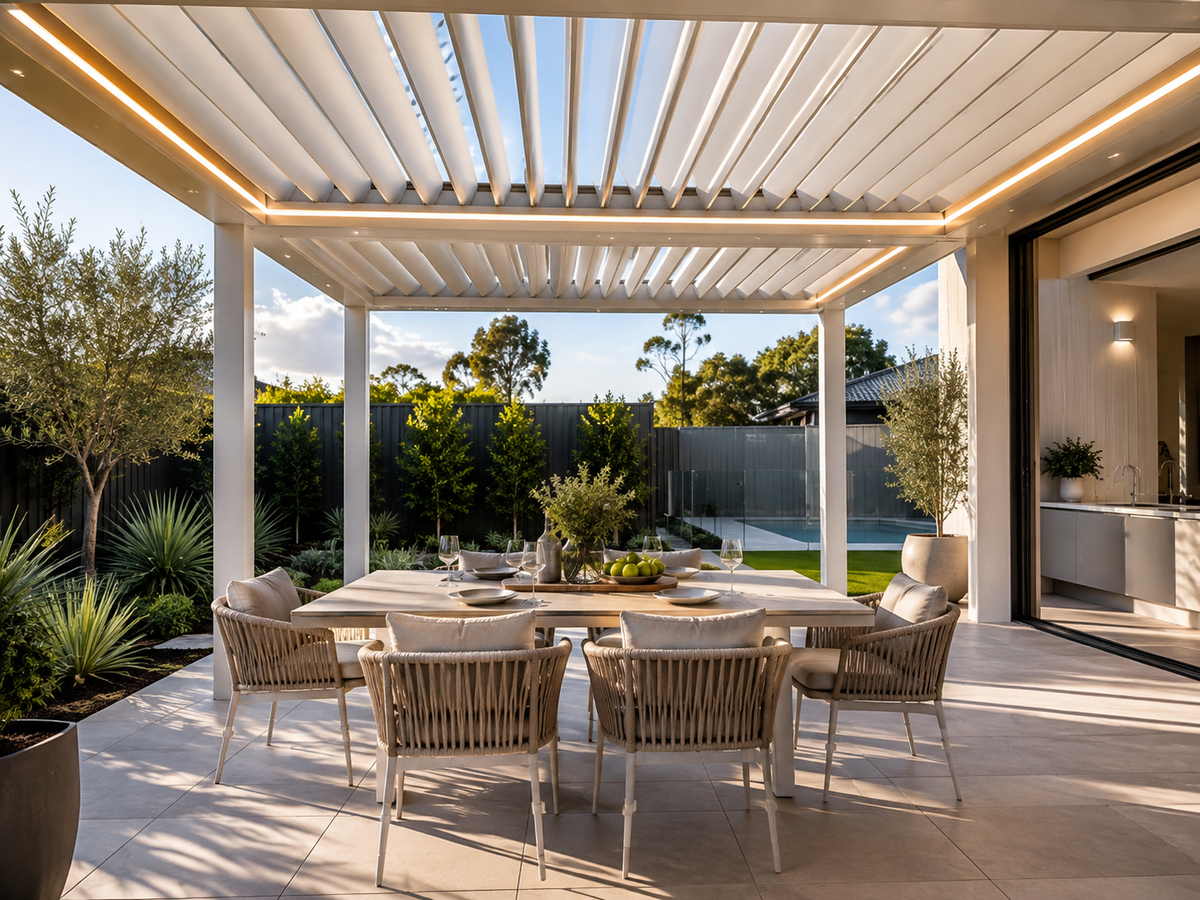
A bioclimatic pergola can make outdoor dining practical through much more of the Australian year, but that does not mean one roof position, one furniture layout and one set of accessories should stay unchanged from January to July. In many temperate parts of Australia, a 1:00 pm summer lunch calls for shade and airflow, while a winter lunch may benefit from greater solar access. In tropical regions, year-round shade, humidity and wet-season rain may be more important than the conventional four-season pattern.
The useful way to plan the space is around real meals. Louvre position changes with the sun. Chairs move when late light reaches eye level. One exposed side may need protection in autumn, while the same side is better left open on a mild summer evening.
Lighting belongs in that seasonal routine as well. Dinner at 7:00 pm can begin in full daylight during summer, yet the same clock time in winter is already an evening-lighting situation. Multi-season use works because the space adapts, not because every feature stays permanently switched on or closed.
The dining priority changes with the season
Summer
Shade the table while keeping warm air moving.
Autumn
Watch low evening sun and exposed sides.
Winter
Bring useful daylight back when conditions allow.
Spring
Make smaller adjustments as weather shifts.
Summer: Reduce Heat Without Losing Airflow
Summer makes overhead shade the obvious priority, especially around lunch. The problem is that a shaded table can still feel uncomfortable when warm air sits under the roof and every side has been screened. Shade and ventilation need to work together.
Start with the hour the table is actually used
The maximum temperature shown for the day is only part of the picture. A breakfast table used from 7:30 to 9:00 am may receive gentle morning light and need very little overhead shade. The same patio used for a 1:00 pm family lunch can behave completely differently.
Dinner introduces another change. Around 5:30 or 6:00 pm, the sun can begin travelling below the most effective overhead shade line. A roof that handled midday perfectly may no longer stop light reaching faces from the western edge.
A typical summer dinner can change three times
Shade the eating area rather than every part of the patio
A large outdoor space often contains more than one activity. The six-seat table may sit near the house, while a lounge chair or barbecue occupies the outer side. Treating the whole footprint as one identical shade zone can make the area darker and more enclosed than necessary.
The dining area deserves the strongest shade when food is on the table. If the dining table and lounge seating share one louvre section, the roof setting needs to balance both uses. Furniture placement can help manage the difference, while independently controlled roof sections should only be considered where the selected configuration supports them. After lunch, the roof can be adjusted again as the space is used differently.
That everyday flexibility is the practical value of a bioclimatic pergola. The roof follows the activity below rather than forcing every meal into one permanent condition.
Furniture can do part of the work too. If western light reaches the two outer chairs around 6:00 pm, moving the table 400 or 500 mm deeper into the covered area may be enough to place those seats behind the shade line.
Rotating a rectangular table can produce an equally noticeable change. Two people facing a low western sun may spend dinner squinting while the seats sitting side-on remain comfortable. Turning the table by 90 degrees is a small adjustment, yet the effect can be obvious at eye level.

Keep a clear path for warm air
The roof is not the only thing controlling comfort. An outdoor kitchen, a high cabinet, dense planting and a lowered side blind can all interrupt natural air movement. The effect becomes much easier to notice halfway through a long lunch.
Keeping one useful side open can make more difference than adding another layer of summer enclosure. A pergola does not need to look closed to feel finished. Open edges are part of the comfort strategy when they allow breeze to move through the dining zone.
Manual or motorised depends on how often the roof moves
A manual roof can suit a simple routine perfectly well. If the louvres move once before lunch and remain there until the table is cleared two hours later, frequent powered adjustment is not central to the experience.
For longer meals that move from afternoon sun into cooler evening air, a motorised pergola can make the adjustments feel more natural. Convenience matters because easy roof movement is more likely to become part of the meal rather than something left untouched once everyone has sat down.
Autumn: Control Low-Angle Sun
Autumn changes the problem from above to the side. Midday can feel considerably easier than it did in January, yet a 5:30 pm dinner may suddenly become awkward when lower sunlight begins travelling under the roof line.
Closing the louvres farther does not always help. If the light is already entering below the outer beam, extra overhead shade may only make the rest of the patio darker while the exposed chairs continue to receive glare.
Overhead sun
Louvre angle can directly change the shade over the table.
Low side sun
Table position or targeted side protection can matter more.
Look at the table from seated height
Low-angle sun is easiest to understand from a chair rather than from a standing position. A beam of light may pass across the table at face level while the floor around it looks comfortably shaded.
One end of a six-seat table may receive all the discomfort. The four seats closer to the house can remain comfortable, while the two western chairs sit directly in the evening sun. That is a local problem, not a whole-roof failure.
A small position change deserves to be tried before more equipment is added. Moving the table 300 to 500 mm inward can shift the exposed chairs behind the existing shade line. Rotating the seating direction may also keep direct light out of the line of sight.
Reflected light can be just as annoying. Pale concrete, light-coloured tiles or a glossy table surface can bounce late sun upward. A matte runner, different seating orientation or slightly deeper table position can reduce that effect without changing the roof at all.
Side protection should solve one clear exposure
If the western edge creates the same problem through several autumn dinners, side protection starts to earn its place. The key is repetition. One unusually bright Saturday is not the same as a pattern that appears every evening between 4:45 and 6:15.
A Wind Blind is useful in this kind of situation because the problem is directional. It can address the exposed side while the other edges remain open. That is usually a better fit for outdoor dining than treating every side as something that needs permanent closure.

The same edge may also become the windy side later in the evening. Napkins start moving. Food cools faster. The two seats nearest the boundary feel noticeably less comfortable than the chairs closer to the house.
Winter: Bring Back Light and Shelter
Winter calls for a different instinct. After several months of reducing sun, it is easy to leave the roof in a heavily shaded position out of habit. On a clear July lunch, that can make the dining area darker than the surrounding garden for no useful reason.
A bioclimatic pergola does not turn an outdoor area into an indoor room, and winter planning should not pretend otherwise. Temperature, wind and side exposure still belong to the outdoor environment. The advantage is the ability to use daylight and shelter more deliberately.
Think about winter dining in this order
A winter lunch should begin with daylight
Around noon on a clear winter day, sunlight can be the most useful comfort feature in the space. Keeping the louvres in a strong summer-shade position may leave the table under a dark roof while the lawn a few metres away sits in bright light.
Wall-mounted patios deserve another check. A pergola beside sliding doors or large windows can influence daylight inside the adjoining room as well. A roof position that feels shaded outdoors may also darken the kitchen or living area immediately behind it.
Looking from both sides helps. One view comes from the dining chair. The other comes from inside the house around the time the patio is normally used. That simple comparison often makes the winter setting much clearer.
More light does not mean keeping the roof fully open regardless of conditions. Low winter sun can still create glare, especially later in the afternoon. The useful position is the one that admits daylight until that light becomes intrusive.
Light rain and side exposure are separate problems
A winter lunch can begin under a bright sky and meet a short shower twenty minutes later. The adjustable roof provides a way to respond from above, but that does not make the dining area a sealed room.
Cushions, plates or chairs close to an open edge may still be exposed when rain travels sideways. The useful response is to distinguish between what is happening overhead and what is happening through one side.

Spring: Respond to Fast Weather Changes
Spring is often the season that tests how easy the pergola is to adjust. A lunch can start under strong sunshine, pass through ten minutes of cloud, catch a short gust and return to bright conditions before coffee is served.
One fixed setting rarely suits a changeable spring afternoon. Small adjustments can help balance shade and daylight during normal conditions. Strong winds and storms are different: roof and blind operation should follow the manufacturer’s instructions and the limits of the selected configuration, rather than comfort preferences alone.
Small roof movements suit a changing afternoon
Imagine lunch beginning at 12:30 pm. Strong light over the first half hour may justify noticeable shade. Cloud then passes across the sun, and the same roof position suddenly feels darker than necessary.
A motorised setup may suit that behaviour when adjustment happens regularly. A roof that rarely moves after breakfast has different needs. The decision should follow frequency, not the assumption that more automation is automatically necessary.
Wind becomes obvious through small details
Spring gusts often reveal themselves at the table before the air feels particularly strong. A linen napkin lifts. Smoke from the barbecue changes direction. A light serving board begins moving toward the outer edge.
Those small signs are useful because they show exactly where the exposure comes from. Saying that a backyard is “windy” is much less helpful than noticing that most gusts arrive across the southern side between 1:00 and 3:00 pm.
The roof should not be expected to solve horizontal wind. Its job is above the table. Once a repeated side direction has been identified, the side can be considered separately rather than changing the louvres again and again.
Where Side Protection Makes a Difference
Once the seasonal patterns are clear, the question is how much side protection the dining area really needs. A sheltered courtyard and an open, elevated deck can feel quite different at the same dinner hour, even with the same pergola overhead.
Closing every available side “for all seasons” is a much weaker strategy. Natural airflow drops. Views narrow. Warm summer air can become more noticeable because the outdoor dining area has lost too much of its openness.
Before adding a side blind, check three things
Direction: does the problem repeatedly come from the same side?
Timing: does it appear during the hours the table is normally occupied?
Furniture: can moving the table solve part of the problem first?
Existing walls and planting already change the wind
The side of a pergola is never just an empty opening on a plan. A boundary fence two metres away can slow the breeze. Dense planting can soften one direction. A neighbouring wall may make another side considerably more sheltered.
An elevated deck with open boundaries behaves differently. Wind can reach the dining area with little obstruction, especially around the outer chairs. The same blind arrangement does not automatically suit both settings.
Cooking changes the airflow picture
Many outdoor dining areas share space with a barbecue or preparation bench. Once cooking begins, airflow becomes easier to see. Smoke moves toward one boundary. Warm air gathers under one part of the roof.
A side blind that seems useful while the patio is empty can alter that path when the barbecue is hot. That does not mean the blind is unsuitable. It means the arrangement should be judged while the area is being used normally.
The serving route needs the same attention. A blind, planter or storage unit should not make the path between cooking and dining awkward. When someone is carrying a hot plate, an extra 300 mm of clear space matters more than it does in an empty photograph.
Where gas, electrical work, structural changes or other site-specific installation issues are involved, the relevant requirements should be checked by an appropriately qualified professional. Seasonal comfort planning should not replace proper site assessment.
Dining After Dark, from Summer to Winter
Evening dining is where the difference between seasons becomes impossible to ignore. A 7:00 pm meal in January may begin under a bright sky. At the same time in July, the entire table already depends on artificial light.
Lighting should follow that routine instead of being treated as decoration added after the pergola is chosen. If meals regularly continue for one or two hours after dusk, ambient light becomes part of everyday use.
Light the meal, not the whole backyard
The dining table needs enough light for plates, faces and chair movement to remain easy to see. It does not need to be as bright as an indoor preparation bench. Excessive brightness can make the surrounding garden disappear into a black background.
A softer layer around the pergola frame usually suits relaxed dining better. LED Strip Lighting follows the structure instead of placing one large fitting directly over the centre of the table. That keeps the roof line visually cleaner.

Seated eye level is the right position for checking glare. A light line that appears subtle while standing may become distracting from a chair, especially when glasses, cutlery or a polished table reflect it.
The route to the table counts too
A path that looks obvious at 4:00 pm can become difficult to read after dark. Chair legs, dark posts and a step near the house can all blend into the background if light only reaches the centre of the table.
Electrical installation needs to suit the actual outdoor environment and local requirements. Appropriate professional confirmation is important where power and outdoor exposure are involved.
Living with a Pergola Through the Seasons
Outdoor dining habits tend to shift quietly over the year. Summer dinners run later, winter lunches make the most of the daylight, and extra chairs appear when friends visit. A bioclimatic pergola works best when the space can respond to those changes without becoming another household chore.
When the table is full, space matters
Chair clearance still needs to remain practical. A table moved inward should not block the sliding door or force people carrying plates to squeeze past occupied chairs.
A normal dining route should be tested with the chairs pulled back, not tucked neatly under the table. The occupied footprint is the real footprint.
What a season outdoors leaves behind
Seasonal cleaning does not need to chase a showroom finish. Loose leaves and garden debris around the roof deserve attention because they are easy to see and easy to remove before they build up.
Soft furnishings need a quick reset too. Damp cushions stacked against a post after winter rain can make the next sunny lunch less convenient than it should be.
A seasonal reset can stay simple
- Write down the two most common dining periods.
- Check sun from each regular chair position.
- Identify the side where breeze or low sun repeats.
- Move the table if a small change improves the dining zone.
- Clear visible leaves, pollen and light garden debris.
- Remove furniture that narrows useful circulation.
- Test the louvres and evening lighting at the time meals actually happen.
Which Pergola Setup Fits the Dining Pattern?
Model choice becomes easier once the dining footprint and daily roof-control needs are clear. The P180 offers manual and motorised configurations with single-layer louvres, while the P180 Pro features motorised operation and double-layer louvres. Both are available in multiple sizes, so the decision should consider the actual layout, preferred control method and selected roof construction—not size alone.
Roof-control frequency matters as well. If one position handles most of a meal, the control decision can remain simple. If the roof regularly changes between afternoon shade, evening light and later airflow, easier adjustment deserves more weight.
P180
GOOD FIT WHEN
The dining layout calls for adjustable shade with a choice between manual and motorised control. P180 also offers freestanding and wall-mounted configurations, making it a useful starting point for a range of everyday patios.
View P180P180 Pro
GOOD FIT WHEN
Motorised roof control and double-layer louvre construction are priorities. P180 Pro is worth comparing for larger entertaining layouts or projects requiring its specific configuration, with the final size and installation suitability confirmed for the site.
View P180 ProA family that mostly enjoys weekend lunches may be happy with a straightforward roof and an open outlook. A household that entertains well after sunset may place more value on easy adjustment and well-positioned lighting. Neither setup needs every available accessory to feel complete.
The better test is whether each feature would earn its place during an ordinary week, not just look appealing on a specification sheet.
FAQ: Multi-Season Outdoor Dining
How can a bioclimatic pergola support outdoor dining across seasons?
The useful part is the ability to change the outdoor setting rather than keeping one fixed arrangement all year. Summer usually needs stronger shade over the table while preserving airflow. Winter can benefit from bringing more daylight through the roof when conditions allow.
How should louvres be used differently in summer and winter?
Summer use usually focuses on keeping direct sun off the dining zone without unnecessarily closing the entire outdoor space. Once the evening cools, a more open position may feel better.
When is a wind blind useful for outdoor dining?
A Wind Blind makes sense when one side repeatedly receives uncomfortable breeze or low-angle sunlight during normal dining hours. A western side that becomes difficult around 5:00 pm through several autumn dinners is a clear example.
Does multi-season use require motorised control?
No. The deciding point is how often the roof position changes during normal use. A roof adjusted once before lunch may work well with manual control.
What should be planned for evening dining?
Start with the actual dinner time and the route between the house, barbecue and table. Lighting should support food, faces, chairs and movement rather than simply making the roof as bright as possible.
From Dining Habits to the Right Pergola
Choosing a bioclimatic pergola should begin with how the outdoor dining area will actually be used, not with a list of extras. The most helpful starting points are when meals usually happen and where the afternoon sun reaches the table.
The footprint matters as much as the roof itself. A six-seat table may fit comfortably on a plan, yet feel crowded once everyone pulls out a chair. The available length and width need to accommodate the meal, not simply the furniture.
Photos add context that dimensions alone cannot show: how the area meets the house, where afternoon sun enters and whether a freestanding position makes more sense.
How the pieces come together
What helps when discussing your pergola layout
- Overall available length and width.
- Dining table length, width and chair pull-out area.
- Main summer and winter dining times.
- The direction of strong afternoon sun.
- The side that receives the most repeated breeze.
- Photos showing the house connection, open sides and furniture layout.
- Whether meals commonly continue after sunset.
Those details make the next step much clearer: compare the pergola size and control method first, then decide whether side protection or integrated lighting solves a real seasonal dining need.
Discuss the Pergola Layout
Share:
Visiting a Pergola Showroom: What to Test Before Choosing P120, P180 or P180 Pro
Pergola for a New-Build Home: What to Plan Before Landscaping Is Finished