

Louvre Roof Pergola Benefits for Sun, Rain and Airflow
Some outdoor areas look good in a listing photo and still end up underused in real life. The morning light is lovely until it turns sharp. Lunch feels too bright by noon. A warm deck keeps holding heat into the afternoon. A light shower sends everyone back inside even though the weather clears fifteen minutes later. These are not dramatic design failures, but they are exactly the kind of everyday frustrations that decide whether a patio becomes part of daily living or remains something admired through the glass.
This is where a louvre roof pergola starts making sense in a more human way. It is not only about adding overhead cover or choosing a cleaner-looking structure. It is about giving the outdoor area more useful moods across the day. A brighter morning coffee. Softer midday shade. Better airflow in the late afternoon. A little more confidence when the weather turns. In Australian homes, where light, warmth, breeze, and quick weather shifts all matter, that kind of flexibility is often more valuable than a fixed solution that only feels right for one moment.
The most helpful way to judge a pergola is not by asking whether it looks impressive on its own. The better question is whether it makes outdoor life feel easier, calmer, and more natural. That means looking beyond specs alone. People want to know what the space will feel like at breakfast, during family lunches, after school, while reading outside, when friends come over, or when the weather is uncertain but still good enough to enjoy. That is what this guide is really about: not just product language, but the lived experience of using a louvre roof pergola well.
Why adjustable control matters more than most pergola articles admit
Many pergola guides begin with materials, dimensions, finishes, and product families. Those things matter, but they are rarely what households notice first once the structure is actually installed. What gets noticed first is much simpler. Does the patio feel easier to use at different hours of the day? Does it feel too dark, too bright, too still, or suddenly more welcoming? Does the outdoor area invite people into it, or does it still require timing, compromise, and a bit of luck?
That is why adjustable overhead cover is such a meaningful difference. A fixed roof gives one answer. It gives one shade condition, one level of openness, one visual weight, and one atmosphere. Sometimes that is enough. But in many Australian homes, the outdoor space does not ask only one question. Morning light may be welcome in winter. Midday shade may be essential in summer. Late afternoon glare may come in from the side. Breeze may matter almost as much as shade. A quick shower may not be reason enough to abandon the area entirely.
A louvre roof pergola responds better to these changing conditions because it is not locked into one permanent mood. The roof can open when light and air are welcome, shift when the sun becomes harsher, and close further when weather moves in. This flexibility sounds technical when described too narrowly, but in practice it feels emotional and everyday. The patio becomes less fragile. It becomes something people can trust a little more.
That trust is a bigger part of outdoor living than most buyers first realise. People do not use a backyard only for parties or weekend dining. They use it for ten-minute moments. Coffee before work. A quiet seat after dinner. Kids moving in and out between the lawn and the table. Reading in half-shade. Taking a call outside when the interior feels stuffy. The best pergola decisions improve those small moments first. If that happens, the bigger entertaining moments usually follow naturally.
This also explains why buyers often search using slightly different phrases but are trying to solve the same real-life problem. Some type louvre roof pergola. Others type louvered pergola, pergola with louvered roof, or aluminium pergola for patio shade. Underneath the wording is the same hope: to create a space that is more usable across changing light, temperature, airflow, and weather without making the home feel cut off from the outdoors.
Once the conversation shifts from “What structure should I buy?” to “How should the outdoor area behave?” the decision becomes much clearer. It stops being only about features and starts becoming about rhythm, comfort, and daily life.
Sun, glare, and comfort are about timing, not just shade
People often say they want more shade, but that is not always the full story. Sometimes what they really want is gentler light. Sometimes they want less glare on the outdoor table. Sometimes they want the patio floor to stop radiating heat upward in the afternoon. Sometimes they want to protect the area without making the room beside it feel permanently dim. These are all slightly different problems, and they are worth separating because the best pergola solution depends on which discomfort is actually happening.
Morning light can be one of the pleasures of outdoor living. It wakes up the patio, makes coffee outdoors feel better, and gives the space a softer start. But the same sun that feels good early can become far less welcome later. By midday, surfaces start reflecting light harder. By early afternoon, deck boards and paving may hold more heat than expected. By late afternoon, especially in exposed western positions, the problem is no longer the overhead sun alone. It is the angle of the light, the brightness in the eyes, and the strange habit of chairs being dragged a little further every half hour.
That is why “maximum shade” is not always the smartest goal. Better shade is the smarter goal. Better shade means the patio stays comfortable without feeling sealed off from the day. It means the area can remain open, bright, and visually connected to the garden while still offering relief when sunlight becomes too hard. A louvre roof pergola is especially useful here because it allows the outdoor area to sit in that more nuanced middle zone between fully open and fully closed.

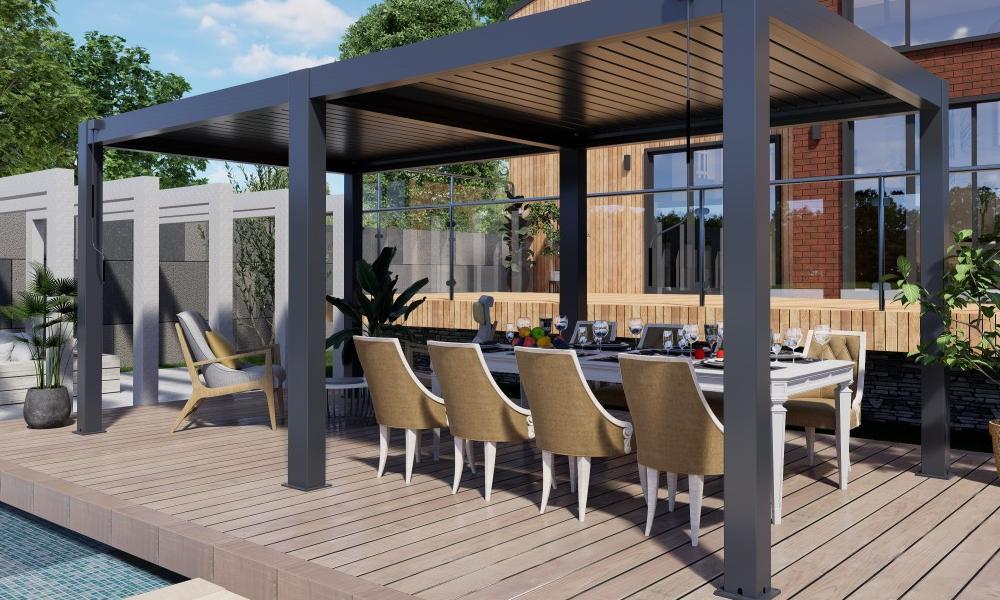
The image above helps explain the point well. The setting feels protected, but not shut down. The structure creates calm without making the area heavy. That is often the difference between a pergola that looks finished and a pergola that feels good to sit under for longer than ten minutes.
What readers usually want to know about sun comfort
They do not usually want a technical description first. They want to know whether the space will still feel inviting once the sun shifts. They want to know whether lunch can happen without glare, whether the sofa will become too hot, whether the patio still feels pleasant after 2 pm, and whether the room inside the house will remain bright enough. These are the questions worth answering honestly.
Signs your issue is mostly direct sun
Seats become uncomfortable quickly, people avoid the middle of the patio, and surfaces feel too exposed before the day is even especially hot.
Signs your issue is glare and reflected heat
The patio still feels harsh even when there seems to be enough shade, and brightness bouncing off decking, paving, or glazing is what really causes discomfort.
A practical judgement trick
Do not assess the patio at the nicest time of day. Assess it at the most annoying time of day. Stand there when you usually start feeling uncomfortable. Look at where the light lands, what surfaces are holding heat, and whether the problem is too much exposure overhead or too much brightness from the side. That simple observation often tells you more than a week of browsing product pages.
For many homes, the right pergola is not the one that creates the darkest possible shade. It is the one that allows better control of brightness, temperature, and atmosphere without flattening the space into one permanent condition.
Compare first, then customise the fit
If you are still deciding between different pergola styles or levels in the range, start with comparison first. Once the broad direction is clearer, moving into a custom path usually becomes much easier.
What rain protection really means in everyday use
Rain is where many outdoor areas reveal whether they are genuinely useful or merely decorative. Plenty of patios work well on perfect days and fall apart the moment a small weather change arrives. That is frustrating because most real-life outdoor use does not happen only in ideal conditions. It happens on mixed days, uncertain afternoons, and weeks where the forecast never quite settles.
A louvre roof pergola can make a meaningful difference here because it gives the space more overhead protection when conditions change. A lunch does not have to end immediately because of a passing shower. Outdoor cushions do not always need to be rushed inside at the first sign of drizzle. The area can remain part of the home for more of the year instead of working only during a narrow band of weather.
At the same time, the honest version is always more useful than the exaggerated one. Rain does not arrive the same way in every backyard. Wind direction matters. Exposure matters. The depth of the furniture placement matters. A tucked patio beside the house behaves differently from a freestanding deck structure near an open lawn. So it is better to think in terms of increased usability rather than unrealistic perfection.
This matters because buyers are often not asking for “stormproof outdoor living” in the dramatic sense. They are asking whether the patio can stay comfortable during the kind of weather that most often interrupts normal life: a quick shower, a slightly uncertain afternoon, a cloudy day with changing conditions, or a weekend where the sky cannot decide what it is doing.
How to picture rain comfort more realistically
Before buying, imagine the “dry zone” rather than the whole patio. Which area really needs to stay useable? Is it the dining table nearest the back door? A smaller sofa corner? The route people take from the kitchen to the outdoor setting? Once you know which part of the outdoor area matters most in mixed weather, the pergola decision becomes much more practical.
That question often leads to better layout decisions too. People sometimes choose a structure based on total span alone, but real comfort is often determined by how deeply the key furniture zone sits under the roof and how exposed the edges are when wind pushes rain sideways.
Thinking this way leads to more grounded expectations and better results. It also prevents disappointment later, because the pergola is being chosen for the way people actually live rather than for a fantasy of flawless conditions.
Why airflow quietly changes the whole experience of a patio
Shade gets most of the attention in pergola shopping, but airflow is often the reason one covered area feels easy to stay in while another feels strangely flat. Many patios become less comfortable not because they are too bright, but because the air stops moving. Warmth lingers. Upholstery feels still. The roof protects the space, yet the whole atmosphere starts to feel heavier than expected.
That is where a louvre roof pergola often feels more liveable than a fixed overhead solution. With adjustable louvres, the roof can sit partly open and let warmth rise away while allowing breezes to move through the seating zone. The effect is subtle but powerful. People may not describe it in technical language, but they feel it almost immediately. They stay seated longer. Meals go on more comfortably. The area feels less boxed in and more like an outdoor room that still belongs to the garden.

The freestanding look above explains the appeal well. The structure gives definition and comfort, but it does not trap the space. The experience still feels outdoor, not enclosed. That balance is one of the reasons this style is so attractive in Australian settings, where people usually want relief from the weather without losing the openness that made the yard appealing in the first place.
When airflow matters even more than buyers expect
It matters on warm evenings when direct sun is already gone but the patio still feels stuffy. It matters in outdoor dining zones where body heat, food, serving benches, and nearby cooking all add warmth. It matters in homes where the backyard gets enough shade already, but the covered area still feels heavy and underused. It matters in shoulder seasons too, when one small adjustment can make the difference between sitting outside and deciding not to bother.
A simple test for your space
Go outside late in the day, after the strongest sun has eased. If the area still feels warmer, flatter, or more stagnant than the open yard nearby, airflow deserves more weight in your pergola decision. At that point, the goal is not just overhead cover. The goal is a structure that protects while still letting the space breathe.
This is also why many buyers end up valuing adjustable louvres more after installation than they expected before buying. Light control is easy to imagine. Better airflow is harder to picture until it becomes part of everyday experience. But once it does, it often becomes one of the most appreciated benefits.
Who this style suits best in real Australian home life
Not every home needs the same pergola, and not every outdoor area needs the same level of flexibility. That is important, because broad “best pergola” advice often becomes unhelpful the moment a real site is involved. A compact rear patio beside the kitchen behaves differently from a wide deck that needs to hold both dining and lounging. A courtyard with neighbouring walls will feel different from an exposed backyard edge. A home used heavily for family dinners will want something different from a garden corner meant for quiet reading and coffee.
In practice, a louvre roof pergola suits homes where one outdoor area has to do more than one job. It suits the patio that shifts from breakfast light to lunchtime shade to evening dining. It suits the deck that gets too hot or too bright at one time of day and too still at another. It suits homes where the outdoor area is not an occasional extra, but part of how the household actually lives.
It also suits homes where the visual relationship between indoors and outdoors matters. A heavy fixed roof can sometimes make the rear façade feel darker and more shut off. An adjustable pergola often feels cleaner and more responsive because it helps the outdoor area behave differently through the day instead of imposing one static visual condition on the house.
Smaller homes often benefit because one footprint needs to work harder. Larger homes benefit because a pergola can create clear zones without overbuilding the entire yard. In both cases, the appeal is the same: flexibility that feels useful rather than showy.
Often a strong fit for
Homes with changing light conditions, active patios near the kitchen, outdoor dining zones, wide decks, and households that actually use the yard through the week.
May matter less when
The outdoor area already feels balanced all day, the use is very occasional, or a fixed condition genuinely suits the site and the household routine.
That distinction matters because the right pergola is not the one with the most talking points. It is the one that solves the right daily problems in the most natural way.
How to judge your own space before getting lost in options
People often start with model names, colours, or general inspiration photos. Those can be helpful later, but the strongest decisions usually begin with site reading. In other words, what is actually happening in the outdoor area right now, and what needs to improve?
A useful way to do this is to stand outside at two or three different times that represent real life rather than perfect timing. Early morning, midday, late afternoon, and early evening are all worth checking if those are the periods when the patio is most used. Do not think only about how the space looks. Think about how it behaves. Where does the light fall? Which surfaces hold heat? Where do people naturally sit, and where do they avoid sitting? Which route do people take when carrying food or moving from the house into the yard?
Four questions that make the decision much easier
- When is the outdoor area least comfortable? Be specific about the hour, not just the season.
- What is causing the discomfort? Direct sun, glare, reflected heat, trapped air, uncertain weather, or lack of usable cover?
- How many different uses need to happen in the same footprint? Coffee, reading, family meals, entertaining, working outside, or children moving through the area?
- Does the patio need one fixed condition or several different ones across the day?
These questions sound simple, but they remove a lot of confusion. If the outdoor space needs multiple different conditions depending on time and weather, then adjustable louvres are likely solving something meaningful. If the patio wants only one stable condition all day and all year, then flexibility may matter less.
Another good trick is to think in terms of “where life actually happens.” Buyers sometimes focus on total dimensions too early, but comfort usually depends more on the key activity zone than on overall area. The important question is not just how big the pergola could be. It is where the table, chairs, lounge seat, and walking path all sit in relation to sun, breeze, and the house.
This way of judging a space also helps when deciding whether custom sizing is worth it. Sometimes a standard pergola size looks fine on paper but feels slightly awkward against sliding doors, deck edges, or furniture layout once the site is considered properly. That is often when a custom route becomes less of a luxury and more of a practical fit decision.
Attached or freestanding? The answer depends on movement, not trend
Layout changes the whole experience of a pergola. A wall-mounted structure and a freestanding structure can both be beautiful, but they do not organise life in the same way. One tends to feel like an extension of the house. The other often becomes a destination in the yard. Neither is automatically better. The right one depends on how people move, where the outdoor area sits, and how the home wants to connect with it.
When attached usually feels strongest
A pergola attached to the house often works best when the goal is to smooth the transition between inside and outside. It is especially useful beside kitchens, dining rooms, or living areas where food, family activity, and daily use move back and forth constantly. In these cases, a wall-mounted pergola can make the patio feel less like a separate platform and more like an outdoor continuation of the home itself.
This is also the layout that often benefits households who want reliable daily use rather than only occasional entertaining. It makes it easier to step out for breakfast, keep an eye on children, move dishes outdoors, or continue a meal outside without the patio feeling detached from indoor life.
When freestanding often feels better
A freestanding pergola creates a destination. That can be exactly what a wider yard or deck needs. It gives a sense of place. It marks out a lounge zone or dining zone more deliberately and can feel especially calm in garden settings where a little separation from the house improves the atmosphere rather than reducing convenience.

The image above shows how one pergola can bring order to a larger outdoor area. It is not just providing cover. It is creating zones. Dining and lounge seating can sit under the same structure because the proportions allow the space to breathe. That feeling of ease is what buyers should pay attention to.
A simple layout judgement method
Picture the furniture first, then draw the movement around it. Chair pull-back space. The route from the door to the table. The path toward the lawn or pool. The side that gets the harshest weather. The corner where people naturally gather. Once those are clear, the attached-versus-freestanding choice usually becomes much more obvious.
In other words, the best layout is the one that supports how the site is used, not the one that simply looks most dramatic in isolation.
How to choose well without getting trapped in specs alone
Specifications have their place, but they are rarely the whole story. Buyers often become overloaded by model comparisons, measurements, and feature language before they have clarified what kind of outdoor experience they actually want. A better way to choose is to combine logic with lived use.
Start with the behaviour of the space. Does it need to handle changing sun? Does airflow matter? Is daily dining important? Is the site visually close to the house? Is the footprint awkward enough that custom sizing could prevent the whole result from feeling compromised? Once those questions are answered, model comparisons become much easier because they are being judged against real needs.
This is also where the temptation to over-focus on parameters can be unhelpful. Readers usually do not care about numbers in isolation. They care about whether the pergola will feel too heavy, too small, too enclosed, too inconvenient, or simply right. That is why better buying advice often sounds less like a spreadsheet and more like a site conversation.
Three useful filters before choosing any model
- Use frequency: Is this a daily-use patio or an occasional-use zone?
- Comfort priority: Is the biggest issue shade, rain flexibility, airflow, or visual integration with the home?
- Fit quality: Will a standard size feel clean on the site, or will custom proportions make the result significantly better?
Another important distinction is between features that sound good and features that will actually be used. Adjustable louvres are most valuable when the household will genuinely respond to changing conditions during the day. That is usually the case when the patio is active and the site has variable light or warmth. If the pergola will almost never be adjusted, then the reason for choosing it should still be clear in terms of comfort and layout, not just because the feature exists.
The most successful choice is usually not the one with the longest list of talking points. It is the one that feels easiest to live with once the excitement of shopping has passed.
How to use a louvre roof pergola better after it is installed
A well-chosen pergola can still be underused if it is treated like a fixed object. One of the biggest differences between a patio that feels ordinary and one that feels genuinely enjoyable is the small habits people develop after installation. In other words, the best results do not come only from buying well. They also come from using the structure in a more thoughtful way.
Adjust for the hour, not just the season
One common mistake is to set the roof once and leave it there because the patio “looks right.” But the point of a louvre roof pergola is not to hold one permanent setting. Different hours often want slightly different conditions. A more open position may feel beautiful in the morning. A more protective angle may be better at lunch. A lighter adjustment in the late afternoon may bring back airflow and softness.
Think in zones, not in one big blanket of use
The inner part of a pergola usually behaves differently from the outer edges. Dining often works best a little deeper under the roof. A relaxed chair or lounge setting can often sit closer to the perimeter if the site is sheltered enough. Once people recognise this, the patio begins to feel more intentional and easier to use.
Leave more breathing room than you first expect
Over-furnishing is one of the quickest ways to make a pergola feel smaller and stuffier than it is. Outdoor areas nearly always benefit from being one piece simpler than first imagined. Better airflow, cleaner movement, and a calmer visual rhythm usually matter more than squeezing in one extra item of furniture.
Use roof position to shape mood as well as comfort
This is something people enjoy more after living with the pergola for a while. A slightly more open setting can make the patio feel lighter and more connected to the sky. A slightly more protected setting can make a dining area feel calmer and more grounded. The roof changes atmosphere as much as function, and that is part of what makes the outdoor area feel richer over time.
Plan evening use early
A patio that works beautifully in daylight can still feel unfinished after dark. Lighting, furniture placement, and circulation matter here. Softer, more deliberate lighting often performs better than trying to flood the entire area with brightness. The goal is not spectacle. It is comfort that invites people to stay.
That is the quiet success most readers are really looking for. Not a structure that only photographs well, but a space that begins to feel normal in the best way.
Planning, care, and long-term value are part of the decision too
The practical side of pergola ownership is not the most glamorous part of the conversation, but it matters. Buyers usually want something that looks refined, handles everyday weather sensibly, and still feels like a good decision after years of normal use. That means the planning stage, the fit, and the aftercare all deserve some attention.
Good planning starts by being realistic about how the project will be delivered and used. A pergola does not live on the screen. It lives beside doors, paving, furniture, garden edges, and family routines. The more honestly those things are considered early, the better the final result tends to feel.
Long-term satisfaction also depends on choosing a structure that does not become burdensome to maintain. One quiet advantage of an aluminium pergola is that buyers are often looking for a solution that stays visually sharp while remaining practical for ordinary life. In a good project, the pergola feels robust and architectural without asking for constant attention.

The image above shows that feeling well. The pergola is generous enough to support daily living, but it still looks settled and calm. That sense of belonging to the house is often what separates a truly successful project from one that feels like a later bolt-on.
Simple habits that help the pergola stay enjoyable
- Keep the area around the structure clean and easy to move through.
- Check the roof area and drainage path as part of normal outdoor upkeep.
- Review furniture placement seasonally rather than assuming the first arrangement is perfect forever.
- Pay attention to how the patio is actually being used, then adjust settings and layout accordingly.
Long-term value is not only about durability. It is also about whether the pergola continues to support better outdoor living months and years later. The strongest projects tend to improve ordinary routines so consistently that the structure stops feeling like a purchase and starts feeling like part of the home.
Extended reading
Once the broad idea feels right, the next useful step is usually to compare, browse, and then narrow into the most suitable direction for your site.
Compare pergola models side by side
Useful when you want a clearer sense of the range before deciding on layout, positioning, and custom fit.
Go to CompareExplore the aluminium pergola collection
Useful for seeing the broader style direction and understanding how different pergola settings feel visually.
View CollectionStart customising your pergola
Useful when the site needs a cleaner fit, better proportions, or a more tailored solution than a standard size can offer.
Open Custom PageFAQ
Is a louvre roof pergola worth it for changing Australian weather?
For many homes, yes. The main reason is flexibility. Instead of giving one fixed condition all day, a louvre roof pergola can better respond to stronger sun, changing airflow needs, and uncertain weather. That usually translates into more usable outdoor time rather than a patio that only works on perfect days.
What is the real difference between a fixed roof pergola and a louvre roof pergola?
A fixed roof gives one permanent answer. A louvre roof pergola gives a more responsive one. The practical difference is that light, shade, openness, and comfort can be adjusted to suit the moment more naturally, especially when the site changes noticeably across the day.
How do I know whether my patio really needs adjustable louvres?
Look at when the area feels least comfortable and why. If the same patio wants different conditions at different times, such as morning openness, midday shade, better airflow later, or more confidence in mixed weather, adjustable louvres are likely solving a real problem rather than just adding a feature.
Is attached or freestanding better?
Neither is automatically better. Attached pergolas usually feel stronger when the patio needs to work as an extension of the house. Freestanding pergolas often feel better when the goal is to create a separate destination within a wider yard, deck, or garden setting.
What should I focus on more: specs or daily use?
Daily use should lead the decision. Specs help once the real needs are clear, but the strongest choice usually comes from understanding how the patio behaves, how the household lives, and what kind of comfort needs to improve most.
What makes a pergola feel disappointing after installation?
Usually it is not one dramatic failure. It is small mismatches: the patio still feels too bright, too still, too crowded, or too disconnected from the home. That is why judging the site honestly and thinking through movement, furniture, light, and routine matters so much before buying.
The best pergola decisions usually prove themselves quietly
A better breakfast outside. Softer midday light. More comfortable family lunches. A patio that still feels inviting after the weather shifts. These are small things, but they are exactly what determine whether outdoor living becomes part of daily life. A well-chosen louvre roof pergola does not only look refined. It helps the space work better, feel better, and invite people into it more often.
If you are choosing between styles, layouts, or levels of customisation, it usually helps to compare the range first, browse the wider collection second, and then move into customisation once the site requirements are clearer. That order tends to produce a more confident decision and a better fit.
Share:
Covered Pergola vs Open Roof: Which One Fits Your Backyard?
Freestanding Pergola or Attached Pergola: Which Should You Choose?